

From Innovation to Impact: What Will It Take to Expand Nigeria’s Proven Health Solutions?
Related Stories




Days before the Future of Health Conference, Emergency Response Africa sent an ambulance to a woman who was seven months pregnant. She gave birth to a preterm boy in the ambulance. The ambulance crew then tried to find a facility where both mother and newborn could receive care. The first facility they reached lacked the equipment to care for the baby. Staff at the second facility believed he had little chance of survival. A third facility admitted him. He sadly passed away an hour after admission.

“I would have loved to tell a perfect story about how our intervention saved the mum and baby, but sadly, more often than not, the negative outcome is still the reality, in spite of best efforts,” said co-founder and CEO Folake Owodunni.
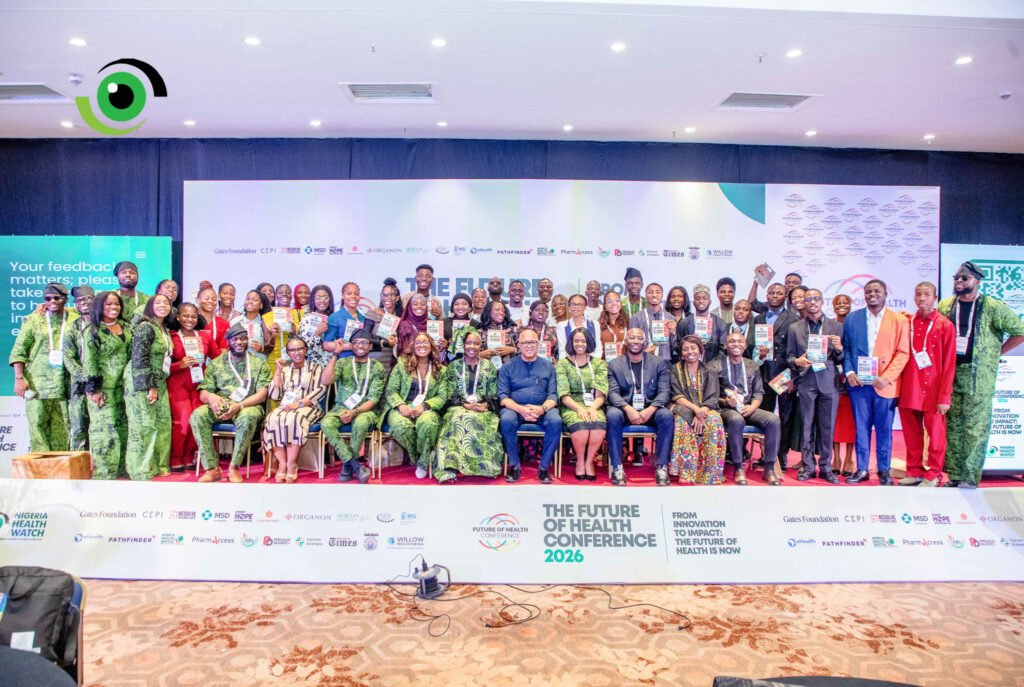
This established the central question from the conversations at Nigeria Health Watch’s 11th Future of Health Conference, held in Abuja on 29 October 2026. What should count as the success of innovation when a patient still cannot get effective care?
The theme, “From Innovation to Impact: The Future of Health is Now”, reflected the progress innovations are already delivering and the work needed to extend their benefits. Nigeria has promising interventions that are improving care, but their wider impact depends on reaching more people and addressing funding and delivery bottlenecks that limit their potential to expand.
Who carries the risk?
When the first Future of Health Conference convened in 2015, the objective was access to quality care without leaving Nigerians “financially disadvantaged”, Managing Director Vivianne Ihekweazu recalled. Eleven years later, progress has been made, but that ambition remains out of reach for many Nigerians who still bear the financial burden of accessing care
Achieving universal health coverage depends on financing arrangements and services working together.
This emphasises National Health Insurance Authority (NHIA) Director General Dr Kelechi Ohiri’s call to move “beyond just saying people are covered and counting numbers”.

In his keynote address, he explained that providing emergency obstetric care without an upfront deposit shifts the financial risk. Whether that protection lasts depends on treatment being available and health care providers being paid consistently.
Nigeria’s Sector-Wide Approach is working toward aligning government and partners around national priorities. For patients, this should mean continued protection as they move between facilities.
Private investment creates a similar challenge. “Before results, zero partners. After results, four partners,” said Funke Falade, Vice President of the Nigeria Sovereign Investment Authority, recalling its demonstration projects: a cancer centre in Lagos, diagnostic centres in Kano and Umuahia, built to bring advanced cancer treatment and diagnostic imaging to Nigerians. Public capital helped to establish credibility before others invested.

But commercial viability and patient affordability are different achievements. Government purchasing and insurance must be connected, otherwise, additional capacity can remain out of reach for poorer patients.
Contracts for publicly funded services should specify which patients and services are covered by public funding, how providers will be paid, and what charges patients may still face. Long-term maintenance agreements matter because a scanner that cannot be repaired is no longer additional capacity.
Make routine care the destination
“Innovation is not about shiny things. Innovation is about fixing issues,” said Zuri Health’s co-founder and CEO, Ikechukwu Anoke. Distribution partnerships expand reach, but screening can uncover conditions that require treatment long after the outreach ends.

mDoc’s experience exposes that boundary. Head, Office and Hub Operations, Pamela Egbo, reported that 44.7% of members referred for in-person care completed referrals. This figure does not explain every missed visit, but it shows that digital engagement cannot substitute for completed care.
“We always have a human in the loop,” she said. The referral system being developed with Lagos State’s Primary Health Care Board makes that human connection an institutional question. Who follows the patient, and who confirms treatment occurred?
Project HOPE’s antenatal work in Bwari offers another approach. Diagnostics combined with training, mentoring and referral arrangements across existing primary health centres. “It doesn’t just end at delivering this equipment,” said Country Director, Dr Chidimma Anyanwu.
The implication extends beyond ultrasound. Procurement creates an ongoing obligation to maintain equipment, supervise service delivery and ensure that abnormal findings lead to appropriate care. These decisions shape services like routine immunisation and family planning.
A child needs reliable vaccination services and functional cold chains, and a woman opting for family planning needs commodities and competent counselling. Separate innovations can place competing demands on the same staff, facilities and management attention. Integration should make their work easier and the care more continuous.
Nutrition widens the question beyond health facilities to the food households can access. EverGreen for Africa’s Babatunde Oyelana, Head of AI and Digital Solutions, described soil testing being used to inform crop recommendations.
Such evidence can guide farmers’ decisions. Health policy must determine whether the resulting changes improve access to nutritious food, as higher agricultural productivity alone cannot demonstrate that diets have improved.
Evidence must change spending
The conference also questioned what institutions reward. Anjolaoluwa Ayodele, Associate Principal at the Solina Centre for International Development and Research (SCIDAR), examined why promising innovations struggle to survive beyond their pilots, highlighting project-based funding, limited government buy-in and weak links to routine services. Her contribution exposed a question for health sector investment. Who will adopt, finance and sustain an intervention after its initial demonstration?
Choosing what to sustain requires evidence beyond counting activities. Senior Adviser to the Director General of Africa CDC, Dr Erasmus Morah’s HIV example distinguished a corrected estimate of treatment coverage from actually treating additional people.

He proposed “a locally accountable implementation coalition led by a champion and shaped by affected communities”. Better measurement can change the picture without changing a patient’s circumstances.
Continuity can be built into research design, as shown by Dr Ify Aniebo, Founder and CEO of Clusta Genomics, integrating parasite genetic analysis into national malaria surveys. But communicating findings through dashboards is only one part of implementation. The next step is to document a change in surveillance, treatment policy or resource allocation.
Readiness is a public responsibility
“Investment often follows a crisis rather than preceding it,” stated Dr Chidubem Okeke Ogwulu, Senior Manager for Resource Mobilisation & Investor Relations at the Coalition for Epidemic Preparedness Innovations (CEPI). CEPI’s 100 Days Mission, targeting vaccine readiness for initial authorisation and manufacturing, requires capabilities built “years before those 100 days start”.
For Nigeria and Africa, developing vaccines matters alongside financing laboratories, trial sites, regulation and manufacturing. Global partnerships should strengthen local capabilities. Globally, faster vaccine development must be accompanied by financing and delivery arrangements that protect access when global demand exceeds supply.
The same logic applies before an outbreak is recognised. Dr Ameyo Stella Adadevoh (DRASA) Health Trust’s community alerts depend on surveillance officers, laboratories and response teams.
According to the Managing Director, Niniola Williams, its infection-prevention work assesses whether facilities are safe after patients arrive. Community participation can extend public systems, but it cannot replace their recurrent funding.
Nigeria’s planned 2026–2030 immunisation financing package, combining Gavi support with domestic counterpart funding, demonstrates this interdependence. Financing agreements still have to become vaccines delivered through functioning services.
This November, the Joint Annual Review offers an avenue to interrogate such delivery. Nigeria’s health agencies and departments should track completed referrals, outstanding patient charges, operational equipment, and continuity of care after pilot funding ends.
Dr Chikwe Ihekweazu brought the conversations “full circle” during the conference, with an example of what health advocacy can achieve. Recalling the drop in antiretroviral drug prices after the 2000 Durban AIDS conference, he stressed that prices came down because “organisations pushed” for treatment to be more affordable.
Drawing on their own time in government, he encouraged journalists to give readers a balanced picture of how the health system is working. Alongside reporting on where care falls short, he urged them to give readers examples of what has improved “Of course, mix it with the stories of success.”
The NextGen mentorship initiative opened space for new voices. Through NextGen, emerging health leaders can continue the conference’s conversations on how Nigeria funds healthcare and ensures effective services reach those who need them, sustaining its legacy of advocacy for better health.

Federal and state health authorities should assess which innovations are ready for wider adoption and commit funding to their implementation. Health care service providers need to report whether referrals lead to treatment, whether equipment remains functional and whether patients receive the services covered by their insurance or public funding.
Donors should support the transition of successful projects into routine care. After all said and done, the objectives of the Future of Health Conference will be realised when effective interventions remain available after pilot funding ends, reach underserved communities and reduce what families must pay to access quality health care.
Leave a Comment
Your email address will not be published. Required fields are marked *