
The 2026 Future of Health Conference Should Make Innovation Count for Nigerians
Related Stories



In 2015, Nigeria Health Watch held its first Future of Health Conference. Since then, we have seen new policies, technologies, investments and ambitious commitments to transform the health sector. Yet for millions of Nigerians, accessing quality, affordable healthcare remains an everyday struggle.
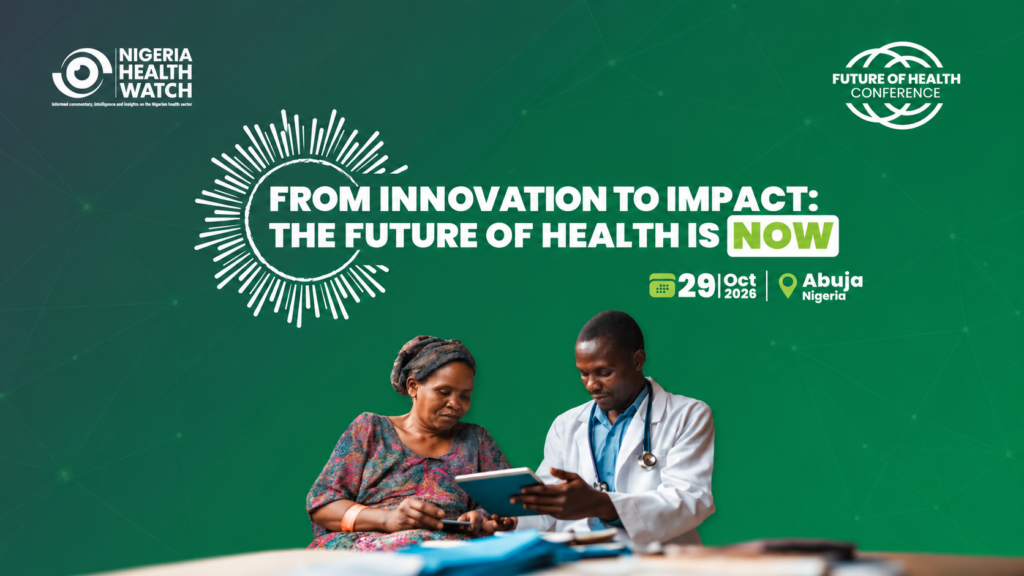
Today, 29 October, the 11th Future of Health Conference returns to Abuja with the theme “From Innovation to Impact: The Future of Health is Now”. From digital health and artificial intelligence to new diagnostics, medicines, and faster ways to develop vaccines, the possibilities for improving healthcare have never been greater. Eleven years on, the challenge is how we turn these innovations into meaningful improvements in people’s lives, at the scale and pace Nigerians deserve.
Getting care without financial hardship
For many Nigerian households, seeking treatment means finding money before finding care and relief. In 2023, out-of-pocket payments accounted for about 72% of Nigeria’s current health expenditure. Whether for an acute illness like malaria or a chronic disease like cancer, medicines and treatment often compete with food and rent. Even when effective treatments exist, they are out of reach for those who cannot afford them.
There are promising efforts to expand access. The Nigeria Sovereign Investment Authority (NSIA) opened its cancer centre at Lagos University Teaching Hospital in 2019. In February 2026, the International Finance Corporation announced roughly ₦14.2 billion in long-term naira financing for MedServe, NSIA’s healthcare subsidiary, to expand diagnostic, cancer and cardiac services. Initiatives such as mDoc’s health coaching and community hubs also offer new approaches to managing chronic conditions.
These are encouraging developments, and the conference offers an opportunity to examine their impact. NSIA’s Funke Falade joins the “Scaling Health” panel, while Zuri Health’s Dr Ikechukwu Anoke will speak on “Innovations That Save Lives Now”. Their experiences offer an opportunity to explore whether patients are achieving better health outcomes, what they actually pay for care and how these approaches can reach more people, particularly those on low incomes.
However, expanding services is only part of the solution. Public financing and effective health insurance are essential to ensuring that Nigerians can afford to use them. On 15 October, the government announced the approval of ₦40.76 billion for the third quarter under the Basic Health Care Provision Fund.
The important questions are how much of this funding will reach health facilities, what services it will cover, and how Nigerians, especially those least able to pay, will benefit without facing financial hardship.
Helping mothers and children survive
Too many Nigerian women and children continue to die from preventable causes. Nigeria’s maternal mortality ratio is at 993 deaths per 100,000 live births in 2023, compared with 1,168 in 2015. In 2024 alone, an estimated 856,000 children died before their fifth birthday.
Despite some progress, under-five mortality has barely changed, from 117.8 deaths per 1,000 live births in 2015 to 115.6 in 2024. These figures are a reminder of how much more needs to be done to improve maternal and newborn care, immunisation, nutrition and treatment of childhood illnesses.
Many of the interventions needed to prevent these deaths are already known. The challenge is making them accessible where and when they are needed. At the conference, Project HOPE’s ultrasound showcase will highlight how technology can improve antenatal care. Organon’s family planning session and MSD for Mothers’ discussion will explore approaches to improving reproductive and maternal healthcare.
These sessions will go beyond showcasing innovations to examine what it takes to deliver them at scale. An ultrasound scan, for example, can identify a pregnancy complication, but saving a woman’s life also depends on timely referral, skilled health workers and access to emergency care. The real test is whether these innovations can become part of routine healthcare and reach the women and children who need them most.
Responding sooner and keeping medicines available
Nigeria confirmed an imported case of Ebola caused by the Bundibugyo virus in the Federal Capital Territory on 20 October, a reminder of the importance of strong epidemic preparedness. Detecting and containing outbreaks requires health facilities that recognise and promptly report suspected cases, reliable laboratories, and response teams equipped to act quickly.
At the conference, the Coalition for Epidemic Preparedness Innovations’ (CEPI) conversation on making new vaccine candidates within 100 days and Resolve to Save Lives’ civil society toolkit session will explore different aspects of outbreak preparedness. The 7–1–7 framework sets targets of seven days to detect an outbreak, one day to notify authorities, and seven days to complete early response actions.
It provides a practical way to measure progress, but meeting these targets requires sustained investment in surveillance, laboratories, health workers and response systems. The challenge is ensuring that Nigeria can detect and respond to threats quickly, wherever they emerge.
Beyond outbreak response, health security also depends on reliable access to essential medicines. Nigeria remains heavily dependent on imported active pharmaceutical ingredients, the substance that gives medicines their therapeutic effect. On 30 October, Nigeria Health Watch and the World Bank Group will examine opportunities for domestic API production. The discussion will explore which ingredients Nigeria can realistically manufacture, how quality can be assured, and what investments and procurement arrangements are needed to make local production sustainable and medicines affordable.
Dr Chikwe Ihekweazu’s “Full Circle” remarks precede the closing call to action. Conferences like this matter. They bring together people who care deeply about improving healthcare, create space for new ideas and partnerships, and remind us that change is possible. If eleven years of convening the Future of Health Conference have taught us anything, it is that the conversations will be lively, the connections meaningful, and the debates challenging.
Our greatest hope is that when everyone returns to their daily work, the ideas, connections and commitments forged in Abuja translate into real progress for Nigerians. Eleven years after the first Future of Health Conference, Nigerians deserve nothing less.
Leave a Comment
Your email address will not be published. Required fields are marked *