
Ekiti State Deploys Digital Solutions and Sustainable Financing to Expand Maternal Health Access
Related Stories




Maureen Moneke (Lead Writer)
Maternal health remains one of the most critical indicators of a functioning health system. In Nigeria, pregnancy often unfolds within a fragile health system; therefore, digital health solutions can go a long way to bridge these gaps, but their success depends on whether they respond to real system needs.
Many women continue to face delays in seeking, reaching, and receiving quality care, particularly in underserved and rural communities where access to quality healthcare is limited and out-of-pocket expenditure is high.
These structural challenges underscore the need for solutions that go beyond access alone, focusing on continuity of care and timely, reliable support for women throughout pregnancy and childbirth.
According to Akinwale Alufa, project Associate at mDoc, “through targeted outreach in Higher institutions, NYSC Camp, churches, markets, and facilities, the Digital Moms Project provide comprehensive non-communicable disease screenings, coaching, and referrals, empowering women with tech-enabled solutions to improve their health outcomes.”
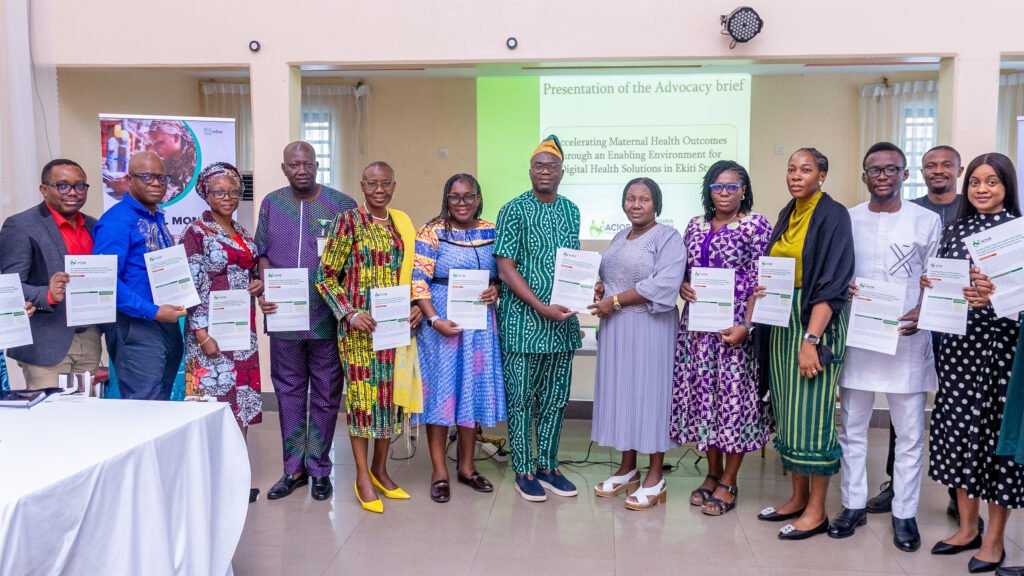
He noted this during the recent Ekiti State high-level stakeholder dialogue on creating an enabling environment for digital health, convened by the ACIOE Foundation and the Ekiti State Ministry of Health and Human Services.
The Digital Mom Project, implemented bymDoc, exemplifies how digital innovation can complement traditional service delivery to improve maternal health outcomes. Launched as part of broader efforts to tackle persistent quality and access gaps, this initiative leverages a suite of digital tools, including the CompleteHealth™ omnichannel platform and NaviHealth AI, to create virtual and in-person support structures that work with women before, during, and after pregnancy.
Digital care supporting maternal journeys
Through CompleteHealth™, women receive continuous engagement, including health education, risk monitoring, and behavioural coaching.
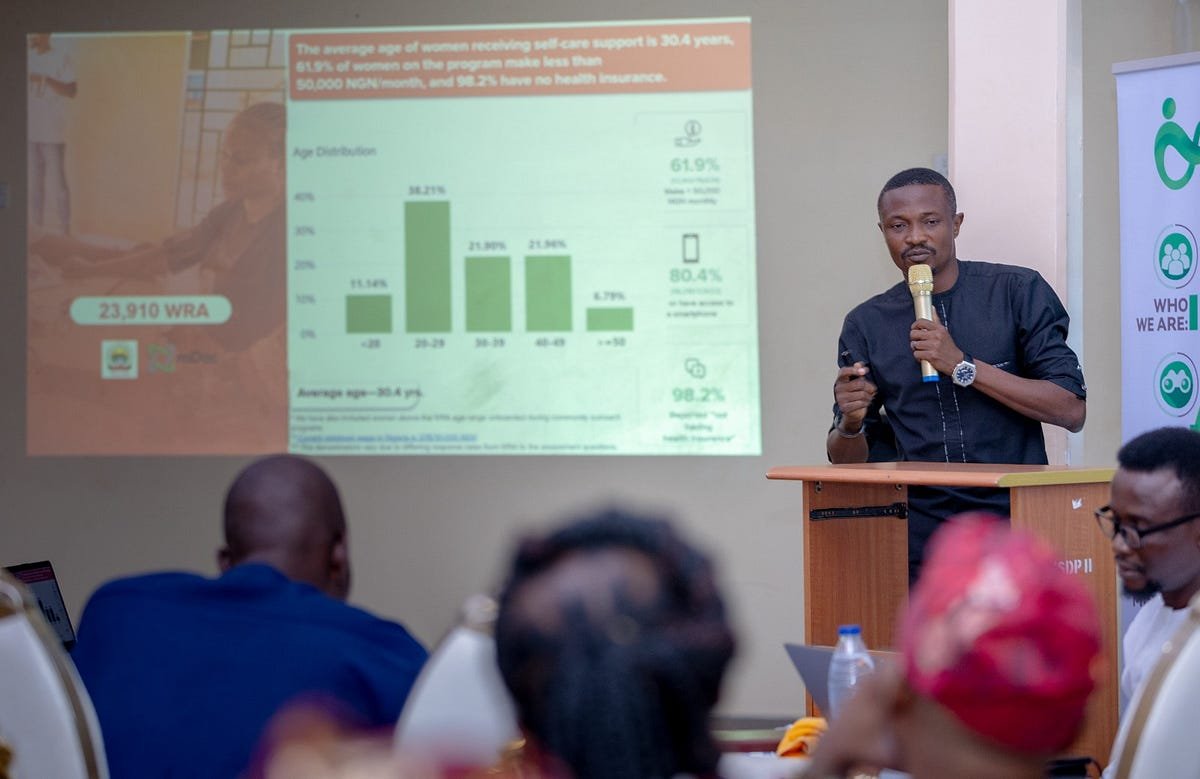
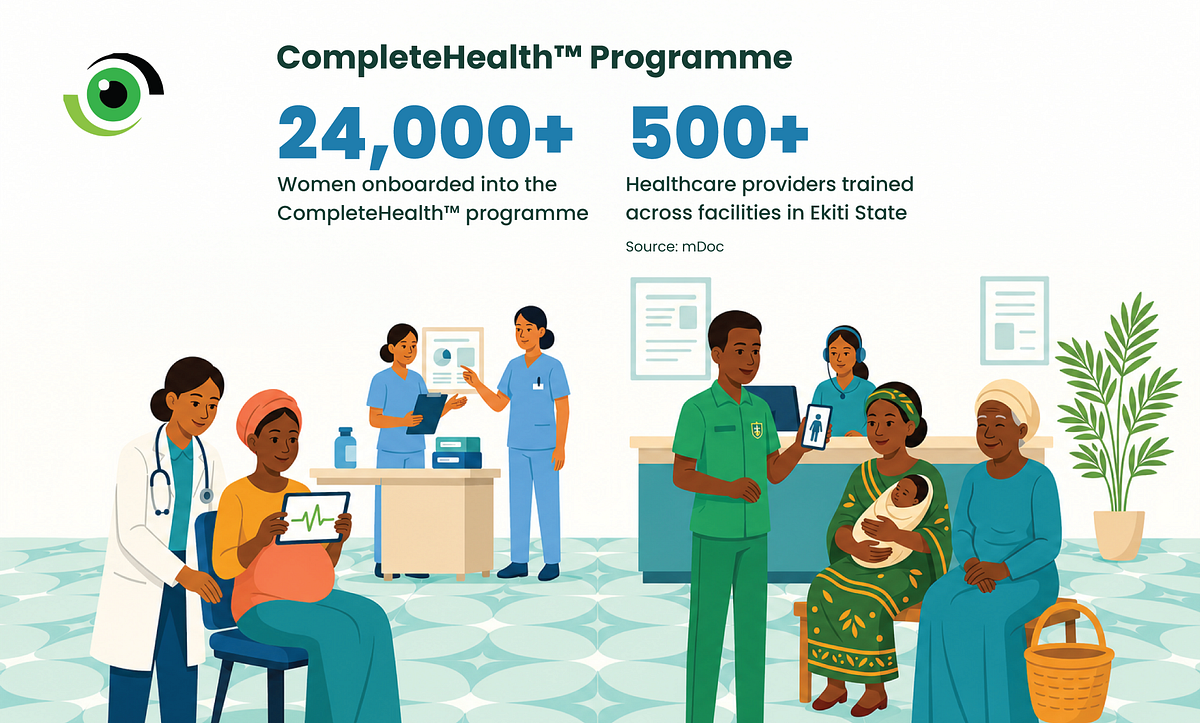
Akinwale noted that, as of January 2026, nearly 24,000 women had been onboarded into the programme, with over 500 healthcare providers trained across facilities in Ekiti State. Programme data presented during the dialogue showed improvements in clinical indicators among enrolled women managing conditions such as hypertension and elevated blood sugar, two major contributors to maternal complications globally.
According to Mr Solomon Chinedu, NaviHealth AI and Data Protection Lead, “we realised that one of the principal components of quality improvement in the health facilities is hearing directly from the recipient of care.”
With the NaviHealth AI platform, women are referred to the health facilities closest to them and can provide structured feedback based on the six domains of quality care defined by the National Academy of Medicine after facility visits. This feedback is integrated into quality improvement processes that help facilities respond to the issues women themselves highlight, shaping service delivery feedback loops grounded in user experience.
Improving quality of care in health facilities requires more than clinical upgrades; it depends largely on incorporating women’s experiences, preferences and expectations into service design and delivery. Evidence shows that the absence of structured feedback mechanisms limits accountability. Maternal care satisfaction reflects how well health systems listen to women, which, in turn, improves the utilisation of health services and maternal outcomes.
Financing Pathways for Sustainable Access
While digital platforms can improve continuity of care and data visibility, without financial protection, many women remain excluded from the benefits of innovation. In Nigeria, financial constraints remain one of the barriers to accessing maternal health services.
Findings from a rapid assessment presented by Simeon Christian, the Monitoring and Evaluation Lead, highlight that private providers play a critical but fragmented role in maternal healthcare delivery. According to Christian, “private facilities frequently absorb costs for indigent patients and assess their ability to pay on a case-by-case basis, which can strain their financial resources.” This practice sustains access in the short term but places financial strain on providers and risks long-term service continuity.

Ekiti State health insurance programme, Ulerawa, demonstrates how pooled financing can expand access when linked with both public and private providers, although awareness and enrolment remain uneven. “What makes Ekiti State health insurance interesting is that you do not have to be an indigene to benefit. For example, if someone travels to Ekiti and requires care unexpectedly, they can still access the insurance,” Simeon said.
Stakeholders signalled growing commitment to align financing with digital innovation. The Permanent Secretary, Ekiti State Ministry of Health, Mrs Olusola Gbenga-Igotun, representing the Honourable Commissioner of Health, noted that the state is committed to establishing a Technical Working Group to support the development of a digital health policy and sustain digital maternal health innovations within the state.
Complementing this, Dr Charles Doherty, General Manager, Ekiti State Health Insurance scheme, affirmed the expansion of insurance coverage, noting that “We are committed to expanding insurance, but expansion is an ongoing process. Late last year alone, we added 50 more public facilities, and we intend to continue expanding.”
Together, these commitments reflect a critical shift. Sustainable maternal health innovation is not defined by new technologies, but by financing systems that ensure every woman can access them without financial hardship.
The Nigeria Digital in Health Initiative aims to unify digital health systems, support the adoption of electronic medical records, and harness data to improve health planning and outcomes. While implementation challenges remain, it provides a foundation that subnational efforts, such as Ekiti State’s, can build on.
Call to action
The journey toward equitable, high‑quality maternal care demands that we invest boldly in both community and digital systems, aligning policy, data, funding and lived experience around women’s health and dignity.
To sustain momentum, stakeholders must prioritise:
· Institutionalising patient feedback mechanisms to ensure maternal services remain responsive to women’s experiences.
· Expanding state health insurance schemes equitably across public and private facilities to ensure financial protection for women of reproductive age.
· Integrate maternal health digital indicators into national health information systems like District Health Information Software 2 (DHIS2) to enable real-time data-driven decision making.
Leave a Comment
Your email address will not be published. Required fields are marked *