

Nigeria’s Lenacapavir Rollout Needs a Safe Pharmacy Delivery Pathway
Related Stories



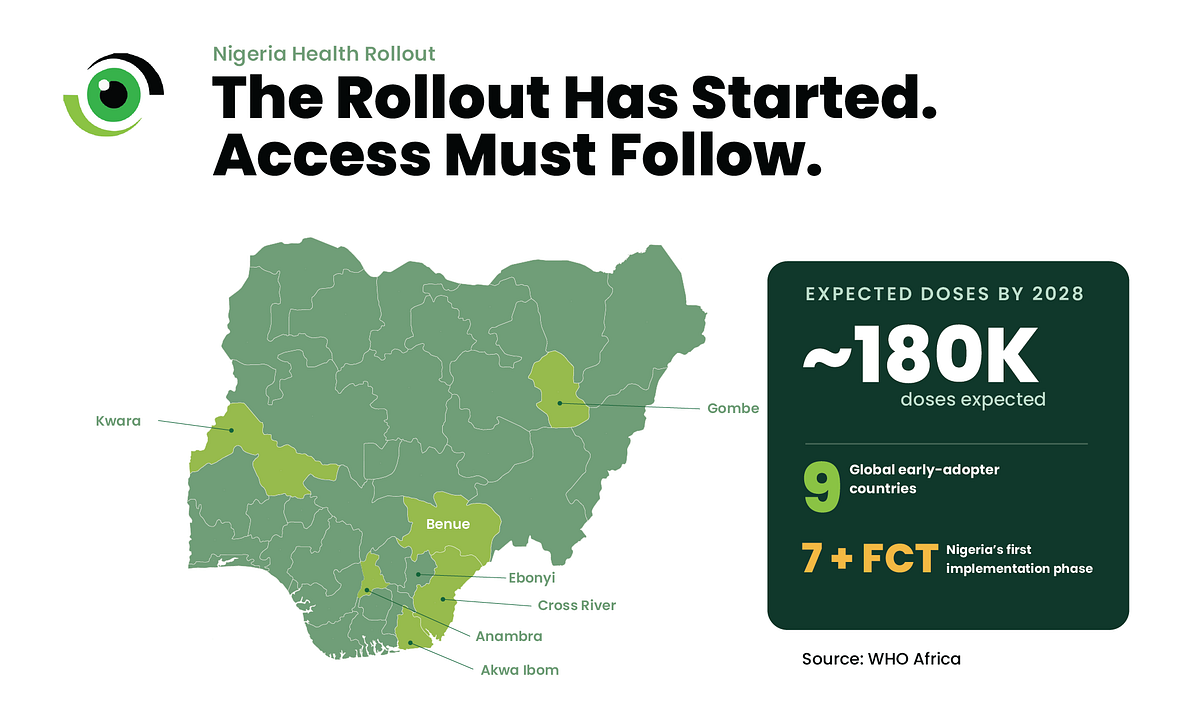
Nigeria has moved from planning to implementing lenacapavir. In March 2026, the Federal Ministry of Health and Social Welfare introduced the twice-yearly HIV prevention medicine in seven states and the Federal Capital Territory. Nigeria is one of nine early-adopter countries and is expected to receive approximately 180,000 doses by 2028.
This is an important advance, but the medicine will prevent infections only if people can obtain it safely, discreetly and consistently. For some Nigerians, the barrier is not the absence of an HIV service. It is the fear of being recognised, judged or delayed at a facility associated with HIV care.
Research on pharmacy-based PrEP (pre-exposure prophylaxis) delivery in Nigeria identifies stigma, limited access to health facilities and restrictive clinic opening hours as barriers to PrEP uptake. A licensed community pharmacy may feel more private and familiar, remain open for longer and be easier to reach.
That raises a practical question for Nigeria’s rollout. Should selected accredited community pharmacies be included in the delivery network for lenacapavir?
What Nigeria’s pharmacy evidence shows
A pharmacy-delivered oral PrEP pilot conducted in Abuja by Bloom Public Health and the University at Buffalo tested the question: ‘What if HIV prevention could meet people where they already are?’ The pilot confirms that pharmacy-based delivery is being explored in Nigeria. However, the full methods and results should be published before their findings are used to support the national scale-up.
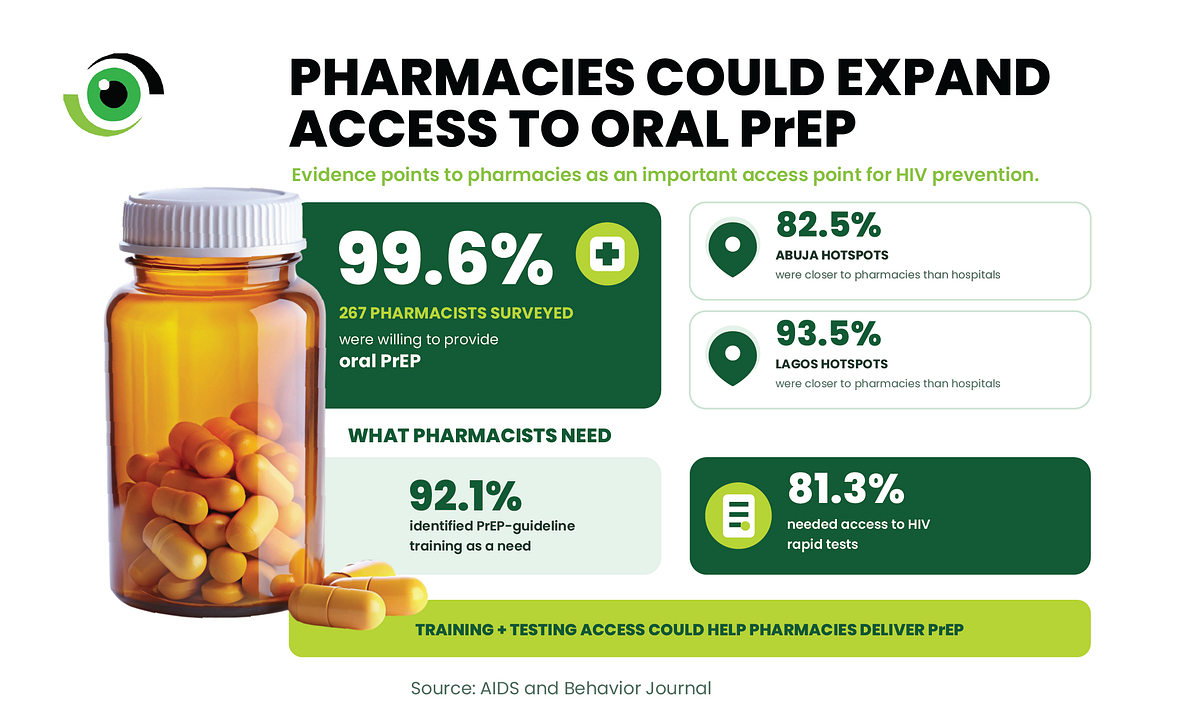
A separate peer-reviewed study of 267 licensed community pharmacists in Abuja and Lagos found that 99.6% were willing to provide PrEP. Most respondents said they would need training on PrEP guidelines, access to HIV rapid-testing kits, counselling support and stronger logistics. The study also found that 82.5% of the mapped sex-work locations in Abuja and 93.5% of those in Lagos were closer to participating pharmacies than to hospitals offering PrEP.
These findings are encouraging, but they do not prove that every pharmacy is ready to administer lenacapavir. The pharmacist survey used purposive sampling and examined readiness to provide oral PrEP, while the Abuja pilot also examined oral PrEP rather than a long-acting injectable.
Lenacapavir requires more than convenient premises. The approved initiation schedule includes oral tablets and two subcutaneous injections. Subsequent doses involve two subcutaneous injections every 26 weeks. Clients must be confirmed HIV-negative before starting lenacapavir and before each subsequent injection.
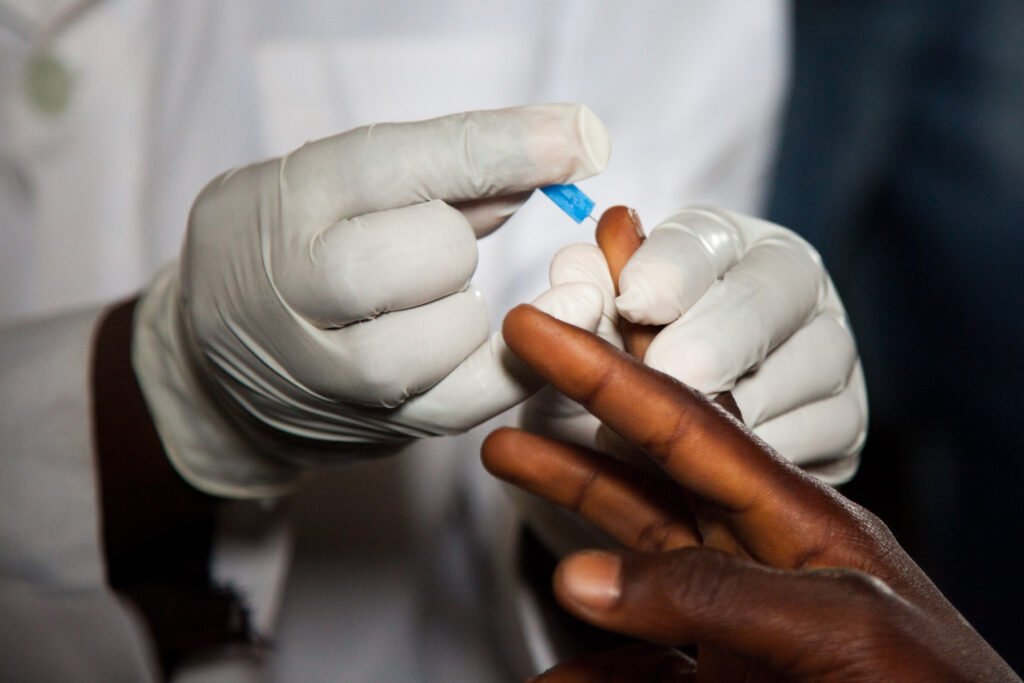
The World Health Organization (WHO) recommends the use of HIV rapid diagnostic tests to support the initiation and continuation of long-acting injectable PrEP.
Build a regulated pathway, not an informal expansion
Nigeria should test pharmacy delivery through a controlled, phased model in locations already rolling out lenacapavir. Participation should be limited to premises licensed and regulated by the Pharmacy Council of Nigeria that meet clear accreditation standards.
Each participating site should have a trained pharmacist, a private consultation space, approved HIV testing, safe injection and waste-disposal systems, secure commodity storage, referral arrangements and the capacity to report into the national HIV information system.
The Federal Ministry of Health and Social Welfare, the National AIDS, Viral Hepatitis and STIs Control Programme, the National Agency for the Control of AIDS, the Pharmacy Council of Nigeria and state authorities should clarify which professionals may initiate, prescribe and administer lenacapavir. Where current rules do not permit pharmacy delivery, the government should establish authorised protocols or amend the relevant rules before expansion.
Pharmacy teams need protocols and training to identify possible acute HIV infection, interpret inconclusive test results, manage missed or delayed doses, check drug interactions, respond to adverse events and refer clients who test positive. WHO’s lenacapavir guidelines identify HIV testing, safe implementation and drug-resistance monitoring as central considerations.
Follow-up is essential because residual concentrations of lenacapavir may remain in the body for 12 months or longer after the final injection. Missed injections, undiagnosed HIV infection or the acquisition of HIV while using lenacapavir alone may increase the risk of drug resistance. Clients who miss scheduled injections must therefore be reassessed, tested for HIV and supported to restart lenacapavir or use another effective PrEP option.
Protect access from becoming another out-of-pocket service
Stated willingness to pay is not the same as the ability to pay. Nigeria should not build a model in which privacy and convenience are available only to people who can afford pharmacy fees.
The country’s HIV prevention strategy reports that, between 2019 and 2021, only 2% to 9% of total HIV expenditure went to primary prevention, compared with 64% to 76% spent on HIV testing and treatment.
Government and partners should therefore define how accredited pharmacies will be paid while keeping lenacapavir free or highly subsidised for eligible clients.
A pharmacy pathway must complement, not replace, public facilities, community programmes, oral PrEP, condoms, HIV self-testing and other prevention options. WHO recommends lenacapavir as an additional PrEP choice within combination HIV prevention, not as a replacement for other methods.
Eligibility should be based on individual risk, informed choice and local epidemiology rather than broad assumptions about all young people. Nigeria’s current strategy reports that adolescents and young people have the lowest HIV incidence and prevalence in the general population, although particular groups of young people may face substantially greater risks because of their circumstances, sexual networks or exposure to structural barriers.
Measure what matters before national scale-up
A pharmacy demonstration should measure initiation, return for the second injection at 26 weeks, HIV testing, safety, referrals, client experience, confidentiality, equity, cost and data completeness. Results should be published, including implementation failures and differences between urban and underserved settings.
The policy test is not only about where services are available, but also about where people actually go. Community pharmacies could help Nigeria bring lenacapavir closer to people who avoid conventional HIV services. But the model will succeed only if convenience is matched by regulation, clinical quality, public financing and accountability.
Leave a Comment
Your email address will not be published. Required fields are marked *