

The Long Life We Wished For: Can Older Nigerians Get the Care They Need?
Related Stories



Beti Baiye (Guest Writer)
LLNP, or Long Life and Prosperity, is a common birthday wish expressing hope for a long, fulfilling life. However, given that Nigeria’s life expectancy at birth ranks among the lowest globally, we need to ask if we are building a health system that helps people reach old age and ensures they can afford the care they need when they get there.
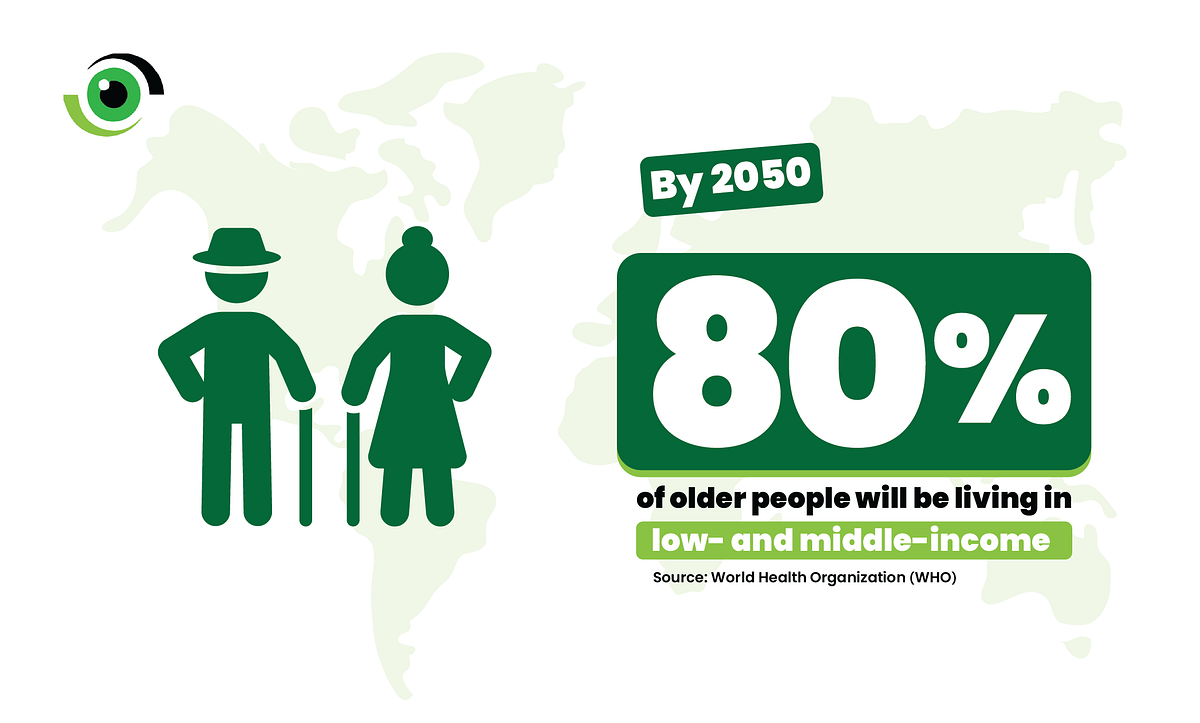
The good news is that all those wishes may have amounted to something, as we are now living in the age of longevity, a time when people across regions are living longer. The global population aged 60 or over is projected to rise from approximately 1.22 billion in 2025 to more than 2.1 billion by 2050, a transformation that is most pronounced in developing regions.
By 2050, 80% of older people will be living in low- and middle-income countries.
What longer lives demand of Nigeria
Therefore, it is fitting that the United Nations chose “The Age of Longevity: Rethinking Systems for Longer Lives” as its theme for the 2026 International Day of Older Persons. It examines how societies must adapt to longer lives, and insists that longevity should be accompanied by healthy, productive, dignified, and equitable ageing.
In the UK, the theme is simpler and more local — “What’s on your doorstep?” — a question about the people, places and services that let older people keep living an active, connected life close to home, and the barriers that shrink that doorstep for those who cannot easily go further.
The observance, established by the UN in 1990 and shaped since by the Madrid International Plan of Action on Ageing (2002), calls for greater inclusion, dignity, and participation of older persons in building fairer societies across generations.
What does this mean for Nigeria? Longer lives affect almost every system around us — healthcare, pensions, social protection, housing, transport and even the way we design our communities. Yet, we still largely treat old age as a private family matter, something children will manage when parents can no longer manage alone.
That may have worked when families were larger, communities were closer, and people were less likely to move hundreds of kilometres away from home. It is much harder to rely on now.
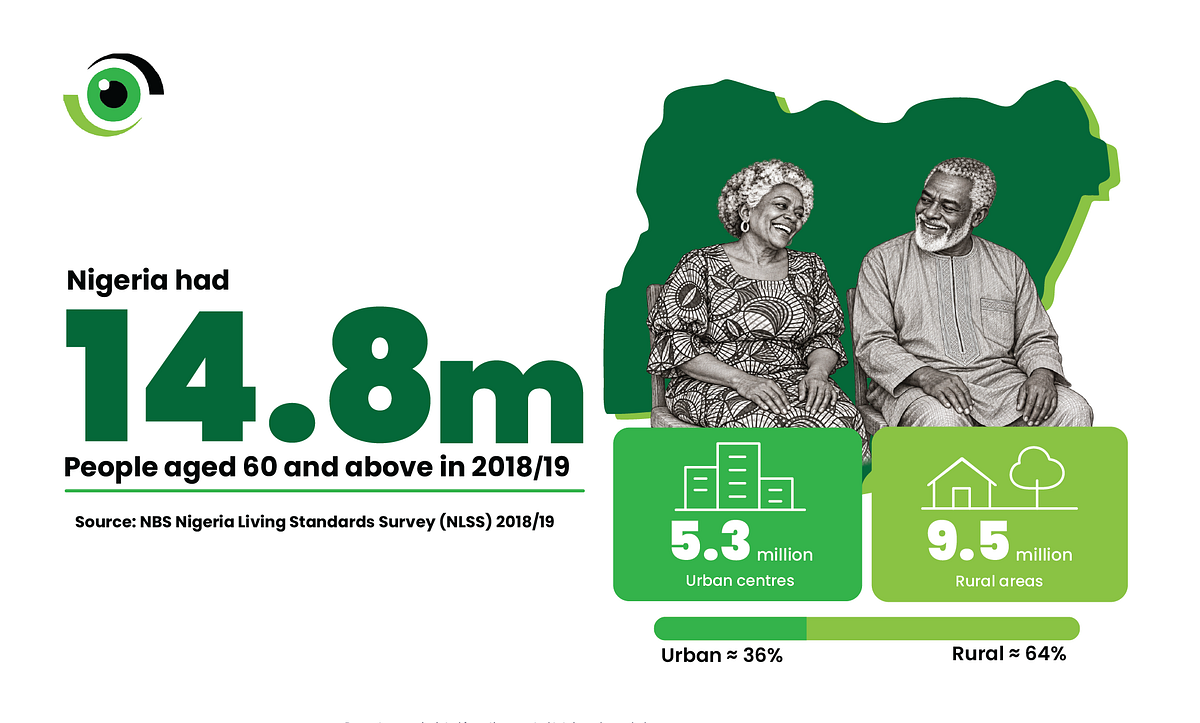
The NBS Nigeria Living Standards Survey (NLSS) 2018/19 estimated that 14.8 million Nigerians were aged 60 and above, with 5.3 million living in urban centres and 9.5 million in rural areas. Using an age bracket of 65 and above, World Bank data estimated Nigeria’s older population at approximately 6.5 million in 2022.
From policy to practice
In recent years, the Nigerian government has put in place a substantial policy and institutional framework for older persons including the National Policy on Ageing, the National Plan of Action on Ageing (2021–2025), the Strategic Roadmap on Ageing (2022–2032) and the National Senior Citizens Centre Act, 2017, which established the National Senior Citizens Centre (NSCC), with the mandate to “identify the needs of senior citizens and to cater for them.”
The challenge, therefore, is not the absence of policy. It is turning this framework into sustained, measurable action that reaches older Nigerians at scale.
In 2023, the Minister of Humanitarian Affairs and Poverty Alleviation announced that President Tinubu had directed the ministry to reserve 10% of social safety-net intervention programmes for older persons. Three years on, there is no record of whether that commitment was met.
In June 2026, the Coalition of Societies for the Rights of Older Persons in Nigeria (COSROPIN) called for improved access to healthcare, expanded health insurance coverage for retirees, and stronger social protection systems for older persons. These are conditions that the social safety net intervention programme should already have addressed.
The Renewed Hope Initiative Elderly Support Scheme, a nationwide programme led by First Lady Senator Oluremi Tinubu and held annually every December since its 2023 launch, with its third edition held in December 2025, represents the most visible direct cash and welfare intervention specifically targeting senior citizens under the current administration.
It is an annual event that, though commendable and impactful, serves only a small fraction of senior citizens and cannot replace a functional social protection system.
There is also the matter of ensuring that health reforms address the systemic barriers — poor rural healthcare access, economic challenges, a shortage of trained workers, and age-unfriendly facilities that prevent older citizens from living healthy, productive, and independent lives.
What needs to change
This age of longevity has placed Nigeria at a critical point where what we do or fail to do will shape whether those longer years are lived well. Much of what is needed will require funding and political will. But one thing costs nothing: calling institutions what they are.
The National Senior Citizens Centre is not a building dedicated to a particular activity, nor is it a facility, or a place where an older person could go for company, a meal, or a health check.
A review of the NSCC’s mandate shows that it is a federal coordinating and policy body responsible for the essential work of identifying the needs of older people, managing data, developing strategies, and coordinating with other agencies.
Renaming it as a Commission or Agency on Ageing would cost nothing and would give the public an accurate picture of what the body actually does.
Nigeria must move from episodic charity to a proper social protection system. The Renewed Hope Elderly Support Scheme is a welcome intervention; however, older Nigerians need a policy-backed intervention with defined coverage targets, public commitments and a clear timeline. The federal government should strengthen the implementation of existing ageing policies and consider additional legislation or amendments where gaps in accountability and enforceability remain.
The NSCC should be adequately funded to fulfil its mandate. The Centre has previously acknowledged that inadequate funding has constrained its ability to effectively carry out its statutory mandate, while lawmakers have also raised concerns about its funding. An agency responsible for identifying the needs of older Nigerians and coordinating programmes to improve their wellbeing needs the resources to do so effectively.
The National Assembly should advance the Older Persons Rights Bill, 2025 (HB 2098), towards enactment. An earlier version was passed by both chambers of the 9th National Assembly, however stalled without presidential assent. Reintroduced in 2025, the Bill received a public hearing in November 2025 and seeks to provide health and economic relief while strengthening the social and civil rights of older Nigerians.
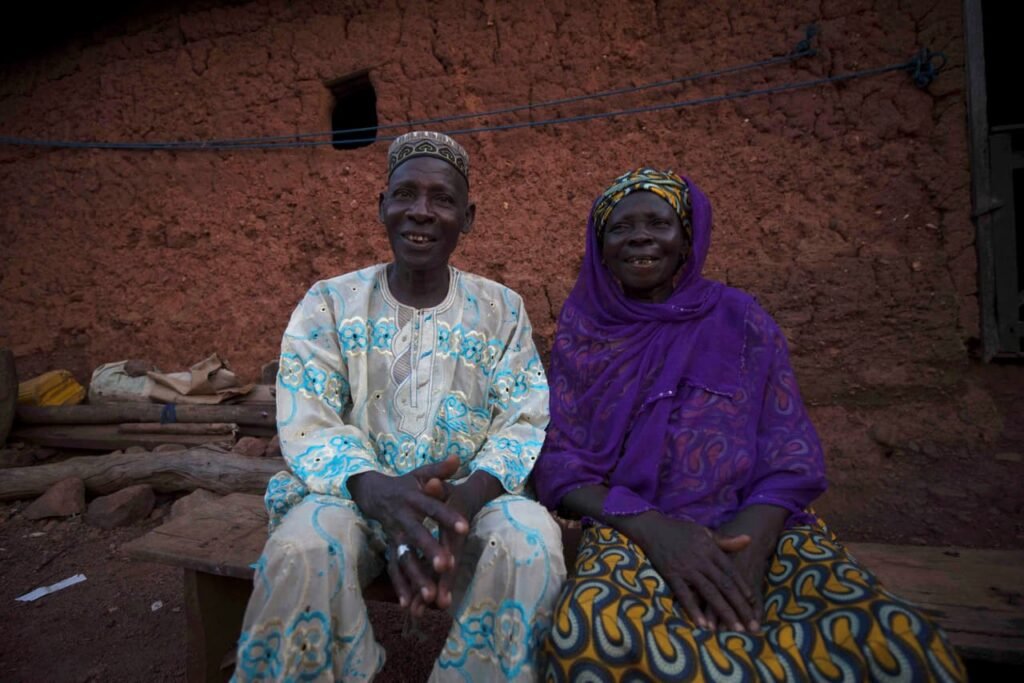
Perhaps the most important consideration as we rethink our systems for longer lives is that every intervention should carry a rural mandate. If longer lives are to be healthy, productive and dignified, our policies must reach beyond the cities and into the communities where most older Nigerians live.
Over time, Ralph Waldo Emerson’s words in his essay “Social Aims” have been paraphrased into the shorter, popular version: “What you do speaks so loudly, I cannot hear what you say.” So, can we commit to letting what we do speak as loudly as our policies?
This October, as we push for more to be done at the national level, we can start where we are. Walk to an older person’s doorstep, in a rural community, and see for ourselves what is, and what is not there.
Leave a Comment
Your email address will not be published. Required fields are marked *