

World Heart Day: Nigeria can bring sickle cell care closer to children
Related Stories




Jagat Narula and Bente Mikkelsen (Guest writers)
Last week at the United Nations, the Governments of Nigeria and Uganda, with the World Health Organization (WHO), UNICEF, Africa CDC, St. Jude Children’s Research Hospital, and the World Coalition on Sickle Cell Disease, launched OneSCD, the first global partnership dedicated to sickle cell disease (SCD).
Nigeria was at the heart of discussions because no other country has as much at stake. Around 150,000 Nigerian babies are born with sickle cell disease every year, roughly one in every three affected births globally.
Sickle cell disease is also a cardiovascular disease
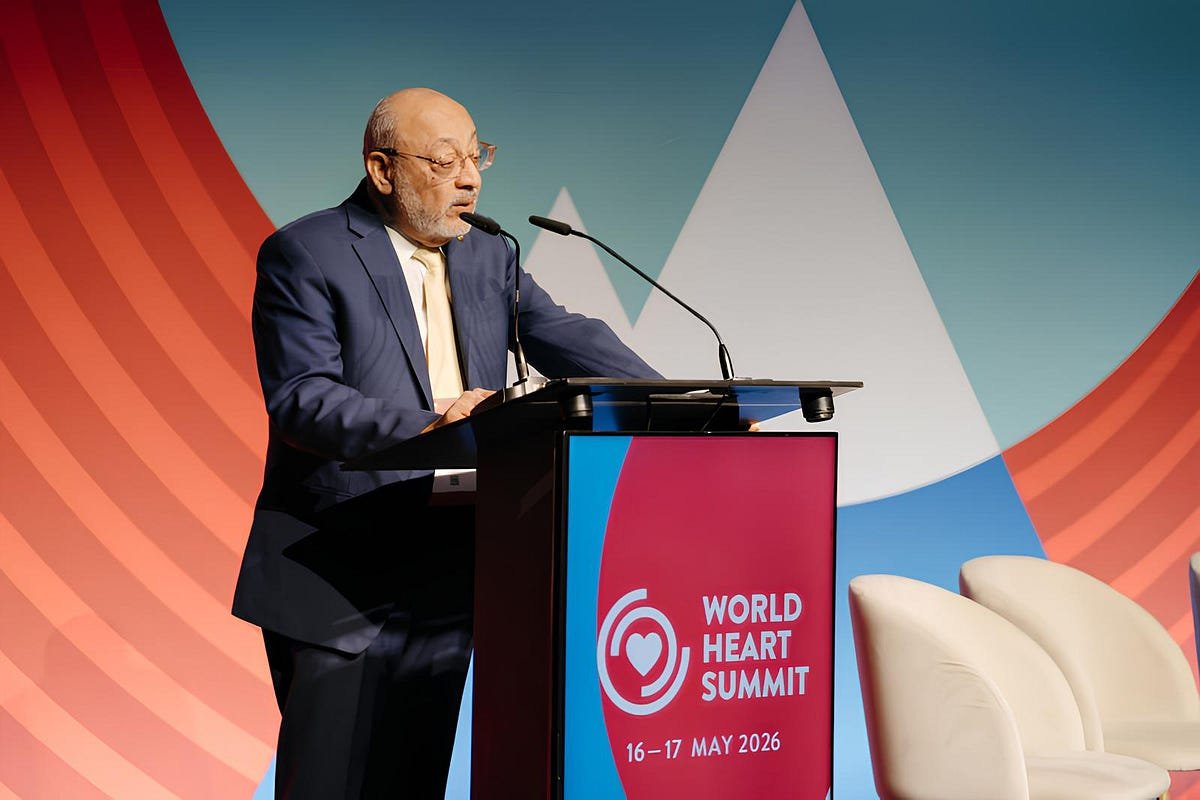
Dr Narula spoke on behalf of the World Heart Federation, and Dr Mikkelsen spoke on behalf of both the World Heart Federation and St. Jude Children’s Research Hospital. Together, we presented a message that may sound strange. Sickle cell disease is as much a cardiovascular disease as it is a blood disorder, and we intend to treat it as one.
After all, its most serious complications are cardiovascular. Without screening, one in ten children with sickle cell anaemia suffers a stroke before twenty, the most common cause of stroke in Nigerian children. Adults who survive childhood often develop high pressure in the arteries of the lungs, a stiffening of the heart muscle, irregular rhythms, clots, and sudden death.
The scale of the issue is stark. The Global Burden of Disease study estimates that sickle cell disease contributes to 376,000 deaths worldwide each year. Hidden within these stats are major global health inequalities. In countries with newborn screening, 95% of children survive, but in parts of Nigeria, up to 90% of untreated children die before their fifth birthday. That gap is not biology, but a diagnosis nobody made and a tablet nobody supplied.
The tablet in question is hydroxyurea, a generic medicine that can cost just a few naira a day. It halves painful crises and chest complications and was proven safe and effective for African children in the REACH trial. In a separate trial run in Kano and Kaduna, called SPRING, Nigerian investigators showed the world something new: that hydroxyurea alone, without the blood transfusions, prevents stroke in children whose brain artery scans show them to be at risk. The scan is a transcranial Doppler, a portable ultrasound that takes fifteen minutes.
The Nigerian trials should give us hope. Screening, a scan and a tablet: three tools, all cheap, all proven, largely on Nigerian evidence.
Bringing care closer to children
Why, then, do so few Nigerian children receive them? Because sickle cell disease has been filed, for seventy-seven years, under haematology, which in Nigeria lives only in teaching hospitals, while the children live in villages.
But there is another way forward, which Nigeria has been building. In 2020, the Federal Ministry of Health and Social Welfare, with WHO and Resolve to Save Lives, launched the Nigeria Hypertension Control Initiative in Kano and Ogun, putting simple protocols, patient registers, and reliable medicines into primary health centres so that nurses and community health workers could control blood pressure without waiting for specialists.
The same nurse who measures blood pressure can prick a newborn’s heel. The same register that tracks a hypertensive can track a child with sickle cell disease. The same supply chain that delivers amlodipine can deliver hydroxyurea. In Kano, remarkably, the two programmes already operate but have never been joined. Joining them is the single most powerful thing Nigeria could do for its sickle cell children, and it would cost a fraction of building a parallel system.
To support these efforts, the World Heart Federation would publicly advocate for sickle cell disease as the neglected disease highlighted in our 2026 Year of Neglected Cardiac Diseases campaign. Combined with our decision to centre this year’s global World Heart Day celebrations in Abuja, this sends a clear message that the cardiovascular consequences of sickle cell disease, and the disproportionate burden borne by Nigeria, can no longer remain at the margins of the global health agenda.
The World Heart Federation would wholeheartedly support the OneSCD Partnership and commit to advocating sickle cell care on the primary-care platforms that our members and WHO’s HEARTS programme have built for hypertension, starting where the burden is greatest.
The World Heart Federation will carry that commitment to World Heart Day in Abuja on 29 September, where we will call on Nigeria’s cardiac and stroke societies, heart foundations and patient groups to unite behind this practical goal.
Turning global commitments into Nigerian action
Nigeria’s Government has already done much of the hard part on the global stage. Last year’s UN declaration on non-communicable diseases, which Nigeria helped negotiate, explicitly names sickle cell disease among the conditions that primary care must deliver. It’s now a matter of testing that commitment.
This week’s UN declaration on pandemic preparedness promises to keep essential services running “at all times.” No patient’s test that promises more harshly than those that depend on hydroxyurea and monthly transfusions, whose supplies were already deeply strained during the pandemic. Nigeria can now show what those two declarations can mean when put into practice together.
Our recommendation is modest and specific. Put newborn screening, hydroxyurea and Doppler scanning into the hypertension programme’s clinics, beginning in Kano, where the evidence and the infrastructure already sit side by side. Count childhood stroke as a national health indicator. And let no Nigerian child be told that a disease which will give them a stroke at seven is somebody else’s department.
Sickle cell disease is a Nigerian disease and a heart disease. From this week, we’re glad it has two homes.
Jagat Narula is President of the World Heart Federation. Bente Mikkelsen is Director of Global Engagement Strategies at St. Jude Global and Chair of the World Heart Federation Advocacy Committee.
Leave a Comment
Your email address will not be published. Required fields are marked *