
Nigeria’s First Bundibugyo Ebola Case Puts Preparedness Investments to the Test
Related Stories
On 20 October 2014, the World Health Organization (WHO) declared Nigeria free of Ebola transmission. Twelve years to the day, Nigeria confirmed an imported case of Bundibugyo virus disease, a type of Ebola disease, in Abuja. The immediate task is to prevent further transmission. If a patient walks into a private clinic tomorrow, can staff recognise the risk and arrange safe care?
Start where patients seek help
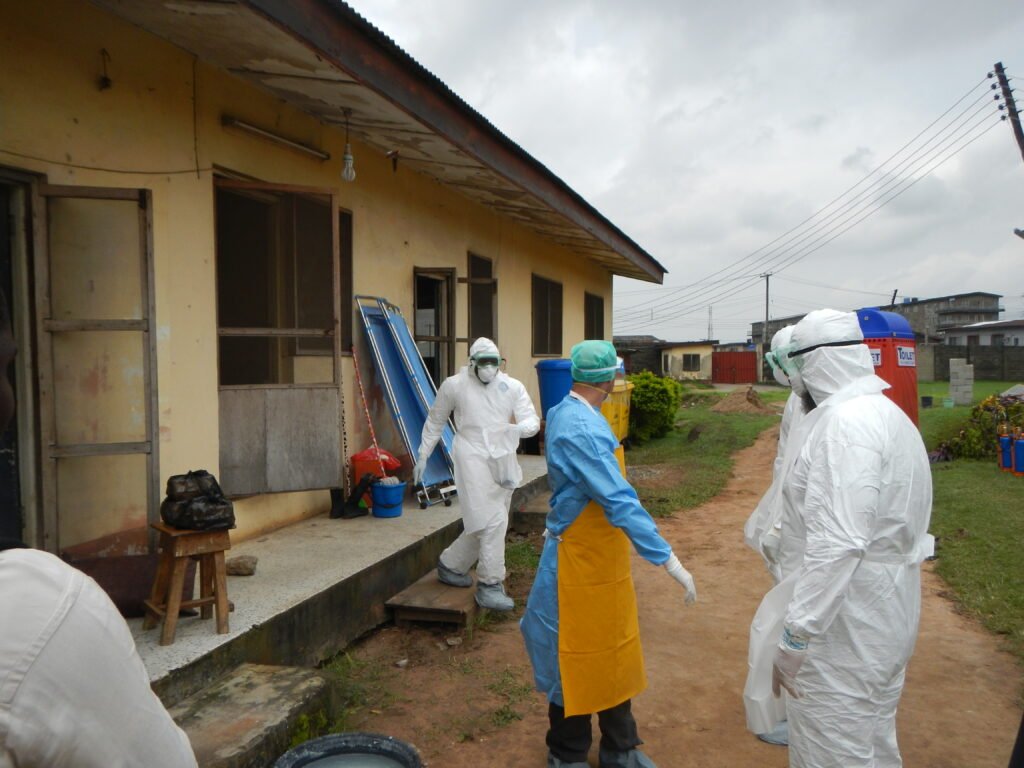
The response begins with reception staff, nurses, clinicians and cleaners. They need appropriate protective equipment, clear instructions and a working number to call. Infection prevention and control (IPC), including hand hygiene, waste disposal, safe cleaning, and access to protective equipment, must be maintained consistently. Clinicians should take a clear history of symptoms and possible exposure.
As international travel reopens, staff should ask early about recent travel. A suspected case requires safe separation, immediate notification and safe transport, if required and arranged through the response team of the national public institute.
By 20 October, Kenya had reported nine confirmed Ebola cases, including one death. All eight subsequent cases, including healthcare workers, were linked to the first patient and were already in quarantine when diagnosed, with no reported evidence of transmission beyond the cluster. Contact tracing helped identify infections early; infections among health workers reinforce the need for consistent infection prevention and control from the first patient encounter.
No vaccine is licensed specifically against Bundibugyo virus. Ervebo, licensed to prevent Ebola virus disease (formerly called Zaire ebolavirus), has been allocated for trials and frontline workers in the Democratic Republic of the Congo (DRC), while its protection against Bundibugyo virus in humans remains unproven.
WHO updated guidance recommends its use against Bundibugyo only within research protocols. Early supportive care can improve survival, and treatment centres now need trained staff and monitoring equipment.
Making infection prevention work in every facility
Nigeria’s response builds on investment in IPC; many will recall the 2014 outbreak, where significant gaps then led to the death of healthcare workers in the facility; the index case was a patient. In 2019, NCDC established Turn Nigeria Orange, a national programme launched in tertiary facilities. By 2023, the network had 41 active facilities with at least one in each state.
However, the latest Joint External Evaluation (JEE) in 2023 identified where further investment is needed. The different scores point to a gap between establishing the programme and ensuring facilities implement these practices and health workers follow them up at all times, at both the national and sub-national levels.
Other issues flagged in the assessment point to inadequate funding and staffing, and a lack of dedicated personnel to manage IPC programmes in state and private facilities. It would be valuable for states to show what has improved since the last JEE assessment and what support is needed to make health facilities safer.

Extending Ebola readiness to every facility in Nigeria
The next challenge is how far these improvements reach. The Global Fund’s COVID-19 Response Mechanism (C19RM) grant supported laboratory capacity, disease surveillance and IPC training, with a focus on preparedness for future outbreaks. How much have those investments been sustained to improve states’ ability to detect infections early and protect patients and health workers?
Where people seek care matters for outbreak preparedness. Both Nigeria’s first Ebola patient in 2014 and the recently confirmed patient in Abuja were treated in private hospitals. While primary health centres and state hospitals are important places where patients seek care, private providers account for a substantial share of healthcare delivery in Nigeria. Readiness in these settings is therefore very critical, as a consultation may occur before anyone suspects Ebola.
In its 28 May advisory, NCDC asked states to prepare public and private facilities and submit readiness updates within 72 hours. These assessments provide a starting point for directing support. Sharing what they show, alongside subsequent improvements, would help governments and partners target facilities that need IPC staff, infrastructure support, or supplies. It would also help provide a clearer picture of how national preparedness translates into protection at the point of care.
Protecting health workers as Nigeria responds to Ebola
Organisations such as DRASA Health Trust are helping to make that connection and have developed national IPC programmes. Founded in memory of Dr Ameyo Stella Adadevoh, who helped contain Nigeria’s first Ebola patient in a private Lagos hospital in 2014 and later died of the disease, DRASA carries a particular history into this work.
Twelve years after 2014, a lasting measure of progress will be whether health workers can recognise a possible case of Ebola and act promptly, confident the health system will protect them as they care for patients.
The task now is to sustain past investments and close gaps in surveillance, staffing, laboratories, and IPC across both public and private health facilities throughout the health system. We have been here before, so these efforts should leave Nigeria better prepared to respond to the outbreak, while also keeping everyday health services safe and accessible.
Leave a Comment
Your email address will not be published. Required fields are marked *