
World Contraception Day: A Safe Start Begins Long Before Birth
Related Stories
Marie Ba and Dr Alain Damiba (Guest writers)
On 31 October, Dakar will open the 2026 Youth Olympic Games, the first Olympic sporting event ever held in Africa. When young athletes enter the arena, most spectators will see only the final moment, the race, the jump, the bout or the finish line. By the time an athlete reaches the starting line, years of support and preparation stand behind that moment.
Behind them are years of early mornings, disciplined training, careful nutrition and recovery from injury. Coaches have watched, families have sacrificed, and someone has made sure there was a place to train and a way to get there. By the time an athlete reaches the starting line, an entire ecosystem of preparation stands behind that moment.
A healthy birth has a starting line, too, and it begins long before pregnancy itself. The chances of a healthy pregnancy are influenced long before a woman reaches the delivery room, including by the health, nutrition, education and opportunities she experiences as a girl.
Across West and Central Africa, modern contraceptive use is preventing unintended pregnancies and reducing pregnancy-related deaths. Investing in those conditions is how we give every child, not only future Olympians, a safer start. World Contraception Day, marked on 26 September, is an opportunity to turn that understanding into policy and investment.
Too often, we begin the story of maternal health with pregnancy or with the moment a woman arrives at a health facility in labour. But a safe pregnancy begins with a girl staying in school with accurate, age-appropriate information about her health, with the freedom to make decisions about her future, and with access to health services where she can ask questions and receive care without fear or judgment.
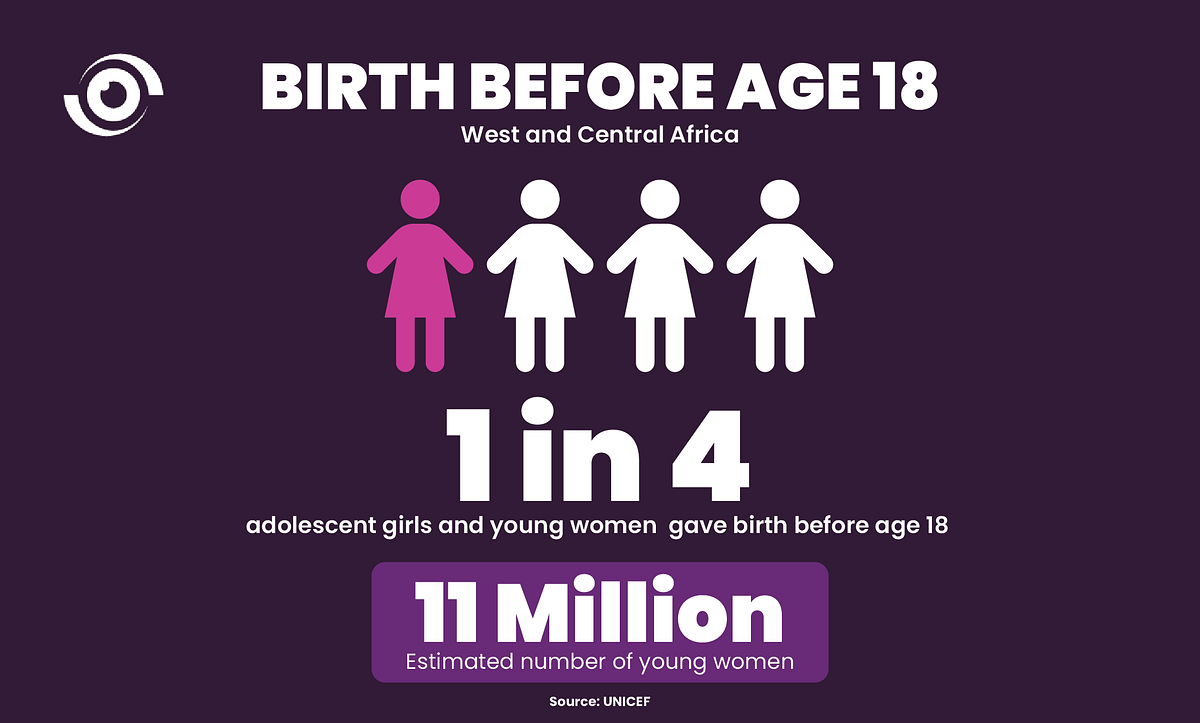
For a young woman, a safe start can mean having the information and contraception she needs to decide whether, when and how many children she wants to have. In West and Central Africa, roughly one in four adolescent girls and young women gave birth before age 18 in 2023, an estimated 11 million young women.
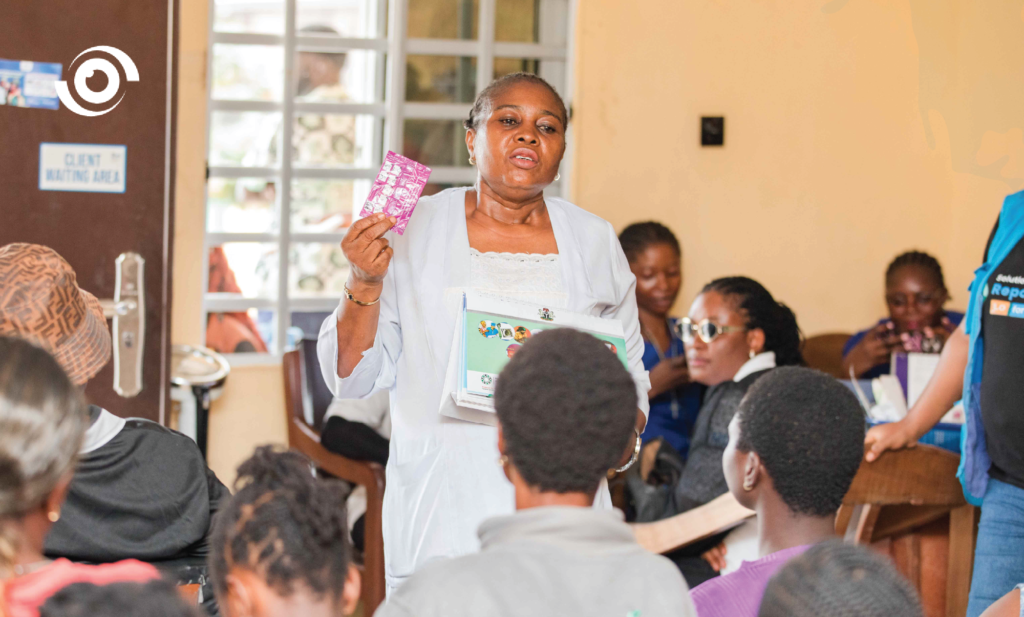
Ensuring that adolescents and young women have access to confidential, respectful, adolescent-friendly sexual and reproductive health services is essential to giving them the information, care, and contraceptive options they need to make these decisions for themselves.
The region has nevertheless made measurable progress, and there is strong evidence about what works. In Senegal, an estimated 900,000 women used a modern contraceptive method in 2025. FP2030 projects that use will prevent 350,000 unintended pregnancies and avert an estimated 640 maternal deaths.
Access to contraception gives a woman, whether in Dakar, Tambacounda or Matam, greater ability to decide whether and when to become pregnant. Contraception also allows women to space pregnancies, reducing risks associated with short intervals between pregnancies.
The World Health Organization (WHO) recommends waiting at least 24 months after a live birth before attempting another pregnancy. Across the 14 West and Central African countries examined by FP2030, more than 10% of births occurred within 24 months of the previous birth.
Evidence from sub-Saharan Africa suggests that unintended pregnancy can be associated with poorer use of maternal health services, including delayed or inadequate antenatal care, although the strength of this relationship varies across studies and definitions of the maternity-care continuum. Women should not have to wait until they are pregnant to start receiving support for a healthy pregnancy.
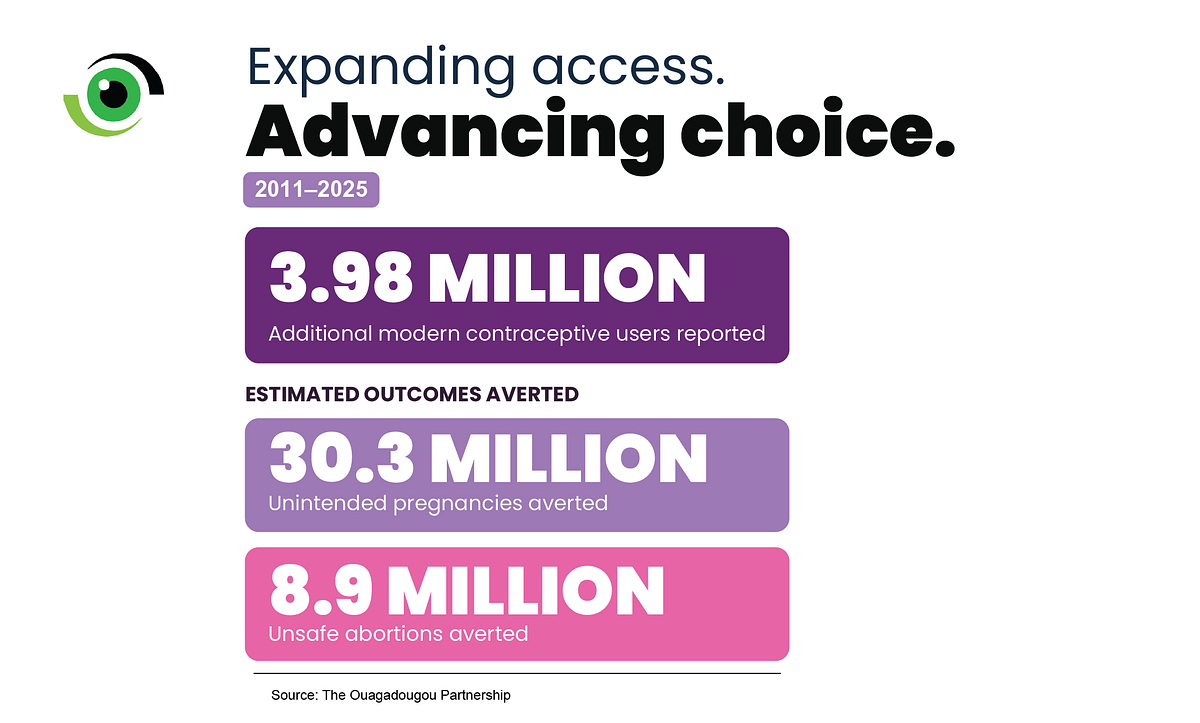
These national gains are part of a wider, coordinated regional effort. Since 2011, the Ouagadougou Partnership has brought together nine Francophone West African countries and their partners to accelerate access to family planning. The partnership reported approximately 3.98 million additional users of modern contraception against its 2025 target. The Partnership also estimates that increased modern contraceptive use between 2011 and 2025 helped avert about 30.3 million unintended pregnancies and 8.9 million unsafe abortions.
This progress is not accidental, and it reflects deliberate policy choices. Burkina Faso expanded free family-planning services nationwide in 2020 after an initial pilot. Côte d’Ivoire formalised free provision of contraceptives in public health facilities in 2024 and, in February 2026, expanded its universal modern contraception initiative from 10 pilot districts to 67 health districts.
Across the Partnership, governments have made commitments to increase domestic funding for family planning, although translating those commitments into predictable budget allocations remains a major challenge. Benin amended its sexual and reproductive health law in 2021, expanding the legal circumstances under which abortion may be authorised. The nine countries have also engaged in national planning and accountability processes linked to FP2030.
When the Youth Olympic Games open in Dakar on 31 October, every athlete on that track will represent years of investment most spectators never see. Protecting a woman’s life and health through pregnancy and childbirth matters in its own right, and it also shapes the wellbeing of her newborn, family and community.
When a mother survives, she is more likely to be able to contribute to her family’s economic well-being and participate actively in her community. When she does not, her newborn has less than a 37% chance of reaching their first birthday. Not every child will become an Olympian. But every child deserves the conditions in which a healthy future is possible, and many of those conditions are established long before birth.
The investment required to get there is more than commodities or clinics. It will require girls and women to have accurate information and genuine reproductive agency, family planning services that are accessible, affordable, voluntary, grounded in rights, and with a reliable choice of methods. It will also require health workers equipped to provide respectful, quality care.
It will require integrating reproductive, maternal, newborn, and adolescent health across primary care, referral systems, and financing, rather than delivering them through disconnected programmes.
Finally, it will take sustained financing for health systems, particularly across West and Central Africa, where a large and growing adolescent and youth population is increasing demand for accessible sexual and reproductive health, maternal health, and primary health services.
The Olympics makes it easy to see that potential requires investment long before it becomes visible. No one looks at an elite athlete and imagines that success happened on the day of the race.
This World Contraception Day, governments across West and Central Africa should protect and increase domestic family-planning budgets, fully fund contraceptive procurement and supply chains, and ensure that adolescents and women can obtain a genuine choice of methods without cost, coercion or discrimination. Donors must also protect essential support as countries build more sustainable domestic financing.
Every champion Dakar will celebrate had support long before anyone was watching. Women and girls deserve that same long-term investment before pregnancy, through childbirth and throughout their lives.
This article is co-authored by Marie Ba, Director of the Ouagadougou Partnership Coordination Unit, and Dr Alain Damiba, Managing Director of FP2030’s North, West and Central Africa Regional Hub.
Leave a Comment
Your email address will not be published. Required fields are marked *