

Finding Ebola Earlier: Can Village-Based Surveillance Strengthen DRC’s Outbreak Response?
Related Stories


“Every death like that points to a chain of transmission we have not yet found.” These were the words of Dr Tedros Adhanom Ghebreyesus on 18 August, as experts met to review the Ebola Bundibugyo virus disease outbreak affecting the Democratic Republic of the Congo (DRC). Every three months after the World Health Organization (WHO) declares an outbreak a global public health emergency, an independent committee of experts meets to assess whether that declaration is still warranted and what measures are needed to bring the outbreak under control. This was the second such review since the emergency was declared.
As of 26 August, DRC health authorities have reported 5,794 confirmed cases and 2,786 deaths across six provinces. However, those figures underestimate the scale of the outbreak. In its Emergency Committee report published on 28 August, WHO said available modelling suggested that the true number of infections could be three to four times higher than surveillance data indicated. This means substantial chains of transmission may remain outside the official count.
The problem is not only that people are dying outside Ebola treatment centres. Many were never identified as contacts of confirmed cases in the first place. That means that transmission is being detected after it has already spread through households and communities. The challenge for responders is how to find cases earlier and closer to where transmission is happening.
When transmission moves beyond known contacts
Contact tracing is essential to Ebola control. Once a case is confirmed, health teams identify exposed people, monitor them for symptoms and quickly test and isolate anyone who becomes ill. This approach depends on knowing where to look which is increasingly difficult in the DRC.
Insecurity, displacement and movement along roads, rivers and mining routes further complicate the work. Insecurity, displacement and movement along roads, rivers and mining routes further complicate the work. WHO’s latest weekly situation report found that 171 of the 302 confirmed deaths reported during the seven days to 23 August, 56.6%, occurred in communities. This points to continuing gaps in early detection, referral and access to treatment, strengthening the case for moving surveillance closer to villages.
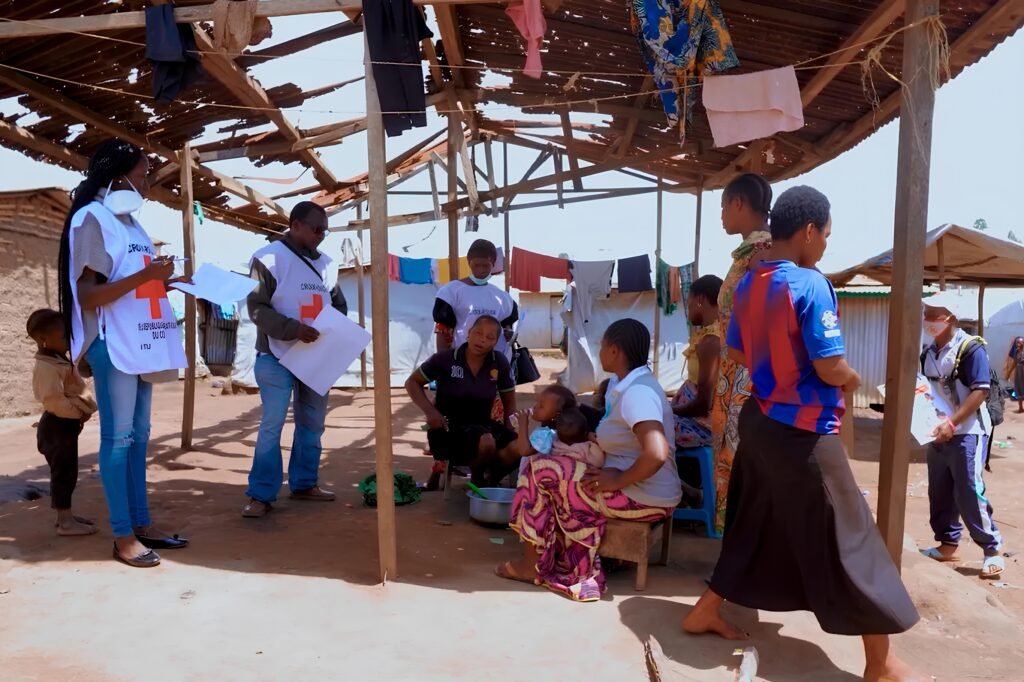
DRC is trying a different approach following a high-level meeting chaired by President Félix Tshisekedi on 5 August, the DRC government, WHO and Africa CDC agreed to move towards a village-centred and community-led response.
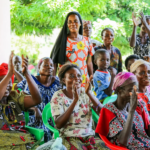
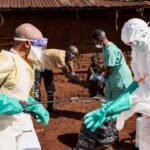
The idea is rather than relying primarily on health teams to trace outward from known cases, the response needs communities themselves to help identify possible cases and deaths earlier. Community health workers, traditional and religious leaders, survivors, women’s and youth groups and other trusted actors are expected to help raise early alerts, follow-up contacts, refer suspected cases, communicate risks and support safe and dignified burials.
The DRC Presidency has described the change as a shift in approach intended to bring communities more directly into surveillance and prevention. Simply, the approach can help find the cases and transmission chains that conventional contact tracing is currently missing.
Turning community knowledge into outbreak intelligence
Community engagement during outbreaks is often understood as explaining public health measures and persuading people to comply. However, communities can do more than receive information, they can generate it. This new approach is testing a strategy where communities also help shape what the response sees and how it acts.
On 11 August, WHO announced a US$3 million Wellcome grant to integrate community-generated evidence alongside epidemiological, laboratory and clinical information. Rapid assessments have already identified practical barriers including ambulance delays, difficulties accessing toll-free hotlines, slow communication of laboratory results, limited reception capacity at treatment centres and inadequate psychosocial support for frontline workers.
When someone develops symptoms but delays seeking care because they do not trust the treatment centre or have poor information, or reaches a facility that is unprepared to recognise Ebola, valuable time is lost before the surveillance system can detect and respond to a potential case which may only become visible after other community members have been exposed. The question is whether communities trust the response, and whether the response is organised enough to detect and act on what communities are saying.
Vaccines will help, but they cannot replace surveillance
Vaccines have been critical to controlling previous Ebola outbreaks, particularly those caused by Zaire ebolavirus. However, the current outbreak is caused by the Bundibugyo virus, for which there is currently no licensed vaccine.
On 20 August, WHO and Africa CDC announced the allocation of 70,000 doses of Ervebo to the DRC. Ervebo is a licensed Ebola vaccine with an established role in responding to outbreaks caused by Zaire ebolavirus. It is not licensed for Bundibugyo virus disease, and it is not yet known whether it provides protection against Bundibugyo virus. However, early laboratory and animal data suggest it may provide some protection, making this an important opportunity to generate evidence to inform its future use.
Of the 70,000 doses, 20,000 will be used in a Phase III trial and 50,000 for health and frontline workers. This creates an opportunity to protect those at greatest risk while generating urgently needed evidence. This is an important development, but it also brings the outbreak back to the same fundamental problem. The response cannot protect people from transmission that it cannot see. In Ebola outbreaks, vaccination can be targeted around detected cases through ring vaccination where contacts of an infected person, and sometimes contacts of those contacts, are offered vaccination. That strategy starts with finding a case and understanding who may have been exposed.
If surveillance detects only a fraction of infections, some vaccination rings may never be identified. People at risk may already be several steps removed from the cases known to the health system. This is why DRC’s experiment with village-centred surveillance matters. Finding infections earlier could help make vaccination more effective by showing responders where the virus is spreading and who is most at risk.
What should success look like?
The village-centred strategy should be assessed by measurable changes, not by the number of meetings held or workers trained. Success would mean an outbreak that becomes progressively easier to see, where more cases are detected early and linked to known transmission chains, fewer unexplained deaths in communities, and ultimately, fewer new infections.
The DRC government and its partners should therefore regularly publish indicators that show whether this is happening, the proportion of new cases already listed as contacts, the number of alerts originating from communities, time from symptom onset to isolation, the number of community deaths, how quickly alerts are investigated, and the proportion of cases identified through active community surveillance.
Uganda interrupted local transmission after 20 confirmed cases and two deaths, with all listed contacts completing follow-up. Uganda’s circumstances were very different, but its experience demonstrates what is possible when most transmission chains remain visible to the surveillance system.
The DRC outbreak is already the largest Ebola outbreak the country has recorded and the second largest globally. The priority now is not only to treat the cases already known, but to find the transmission chains that remain hidden until someone becomes severely ill or dies.
For Nigeria and other African countries that repeatedly manage infectious disease outbreaks, community surveillance cannot be strengthened only after transmission has accelerated. Trusted community health workers, functional referral systems, rapid reporting channels and locally owned data systems must be built, funded, and maintained before the next outbreak begins.
If every unexplained community death points to a transmission chain the response has not yet found, then the DRC’s new approach will be judged by whether those chains are identified earlier before more people are exposed, more cases are missed, and before another death becomes the first sign that transmission was there all along.
Leave a Comment
Your email address will not be published. Required fields are marked *