

Curated Conversations: Professor Jean-Jacques Muyembe-Tamfum on Building Africa’s Capacity to Respond to Epidemics
Related Stories
For more than five decades, Professor Jean-Jacques Muyembe-Tamfum has worked at the intersection of scientific discovery, outbreak response and the development of Africa’s research capacity. The Congolese virologist has helped shape how the world understands and responds to emerging infectious diseases.
Beyond his contributions to Ebola research, his career reflects a wider commitment to building the scientific institutions, expertise and partnerships that enable African countries to respond to health threats on their own terms.
Professor Muyembe was born in 1942 in the Democratic Republic of the Congo (DRC). Growing up in a farming family in the DRC, he was initially drawn to medicine by his father, who encouraged him to become a doctor.
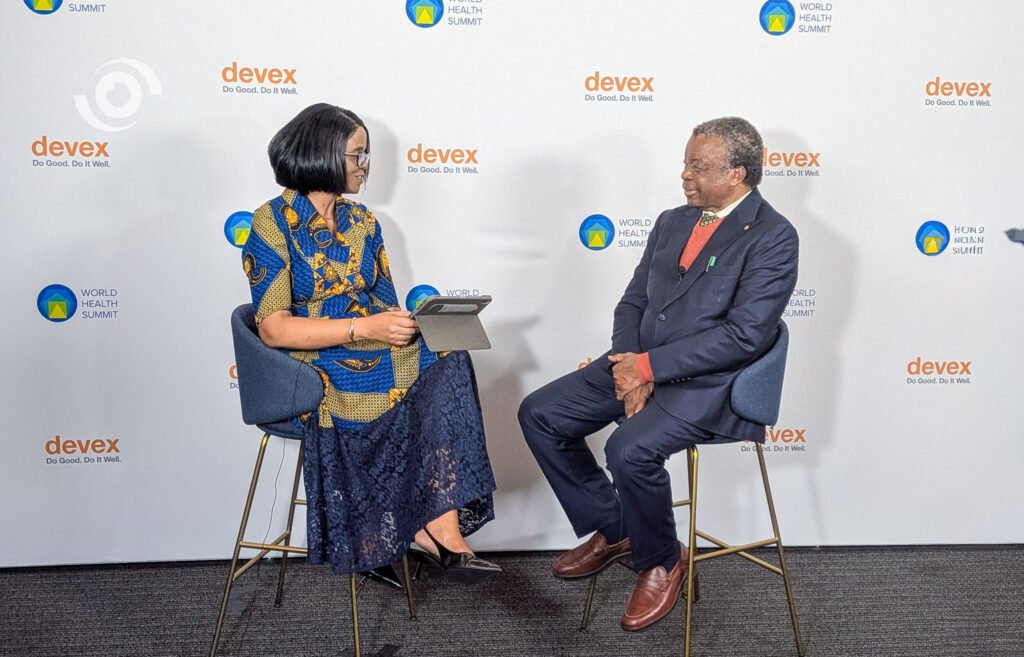
In a recent edition of Nigeria Health Watch’s Curated Conversations, we spoke with Professor Muyembe about his journey into medicine and the experiences that shaped his career. Reflecting on his early years, he recalled, “Becoming a medical doctor was the decision of my father.”
He went on to study medicine at the University of Lovanium (now the University of Kinshasa), where his exposure to the microbiology laboratory sparked an interest in infectious diseases, particularly typhoid fever and diphtheria. He graduated in 1969 before pursuing a PhD in virology at the Rega Institute for Medical Research in Belgium, which he completed in 1973.
For Professor Muyembe, early research experiences were not prestigious in DRC, as laboratory infrastructure and equipment needed to continue his work were not readily available in the country, and he had to adapt.
Rather than remain confined to laboratory research, he became a field epidemiologist, investigating outbreaks and working directly with affected communities. Reflecting on this transition, he explained, “I had to adapt and became a field epidemiologist, which I continue to be today.”
This transition was pivotal. In 1974, he investigated a cholera outbreak in Matadi, followed by an outbreak of bacterial meningitis among soldiers in 1975. These experiences prepared him for the assignment that would define his place in global health history.
From Ebola’s discovery to breakthroughs in epidemic response
In 1976, Professor Muyembe was sent to Yambuku, in northern DRC, to investigate a mysterious illness causing severe disease and deaths. He collected blood samples from affected patients, which were sent to the Institute of Tropical Medicine in Antwerp, Belgium, for further investigation.
There, Professor Peter Piot and fellow researcher Guido van der Groen were among the scientists who isolated and observed the previously unknown virus. Further laboratory investigations involving teams in the United Kingdom and the United States established its identity as a new virus, later named Ebola.
At the time, there were no established diagnostic tests, vaccines or treatments for the disease. Investigators had to rely on basic infection prevention measures and careful observation to understand transmission. As Professor Muyembe recalled during the conversation, “Knowing how the virus transmitted allowed us to break the chain of transmission.”
For him, effective epidemic response could not depend on scientific knowledge alone; it required engaging communities and adapting interventions to local realities. That lesson became even more important during the 1995 Ebola outbreak in Kikwit, where he coordinated national and international response teams.
His familiarity with local authorities, communities and the realities of the DRC helped him lead a complex response. The research undertaken by his team also explored the use of blood transfusions from Ebola survivors, contributing to subsequent investigations into antibody-based treatments.
This line of research eventually informed the development of mAb114, a monoclonal antibody derived from the blood of a survivor of the Kikwit outbreak.
In 2026, five decades after the first recognised Ebola outbreak, Professor Muyembe and Professor Peter Piot were jointly awarded the Virchow Prize for their pioneering contributions to Ebola research, epidemic preparedness and international cooperation. The recognition reflects not only their role in a defining scientific discovery but also the enduring impact of their work on global health security.
Building Africa’s capacity to detect and respond to outbreaks
For Professor Muyembe, strengthening Africa’s ability to investigate and respond to outbreaks has been central to his work at the National Institute of Biomedical Research (INRB),which he has led as Director General since 1998. Established in 1984, the institute has grown into a major centre for biomedical research, disease surveillance, diagnostics and training in the DRC.
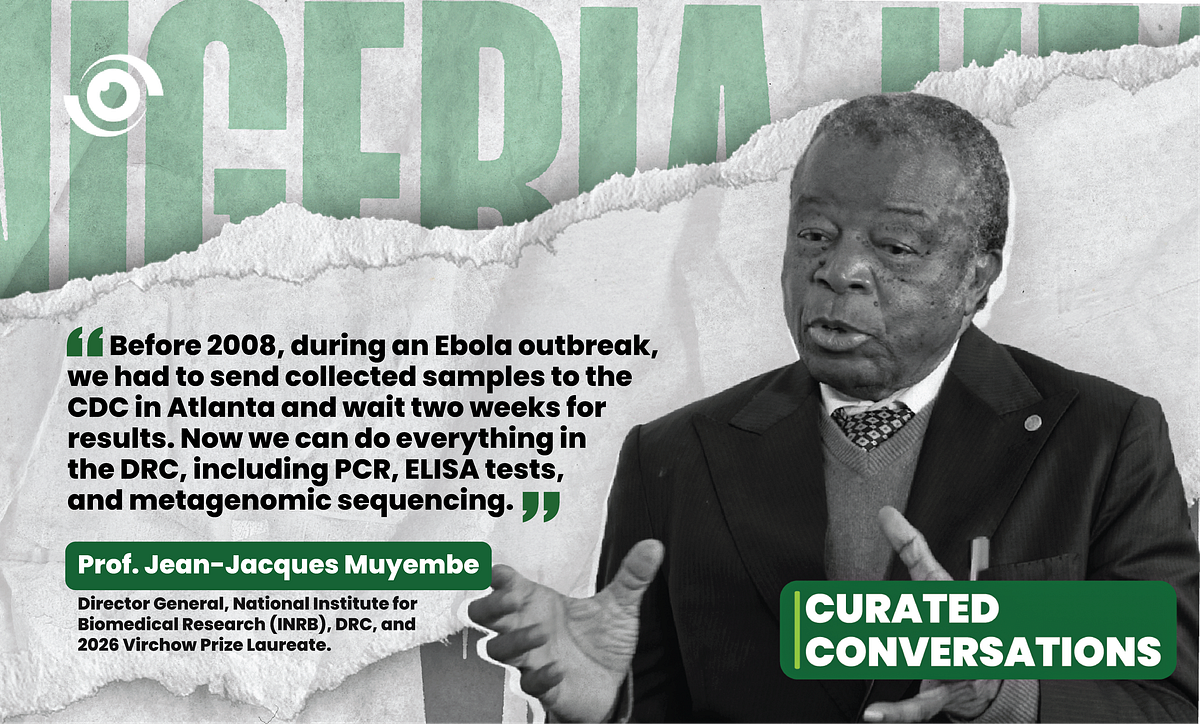
He illustrated the progress in local diagnostic capacity by recalling, “Before 2008, during an Ebola outbreak, we had to send collected samples to the CDC in Atlanta and wait two weeks for results.” He added, “Now we can do everything in the DRC, including PCR, ELISA tests, and metagenomic sequencing.”
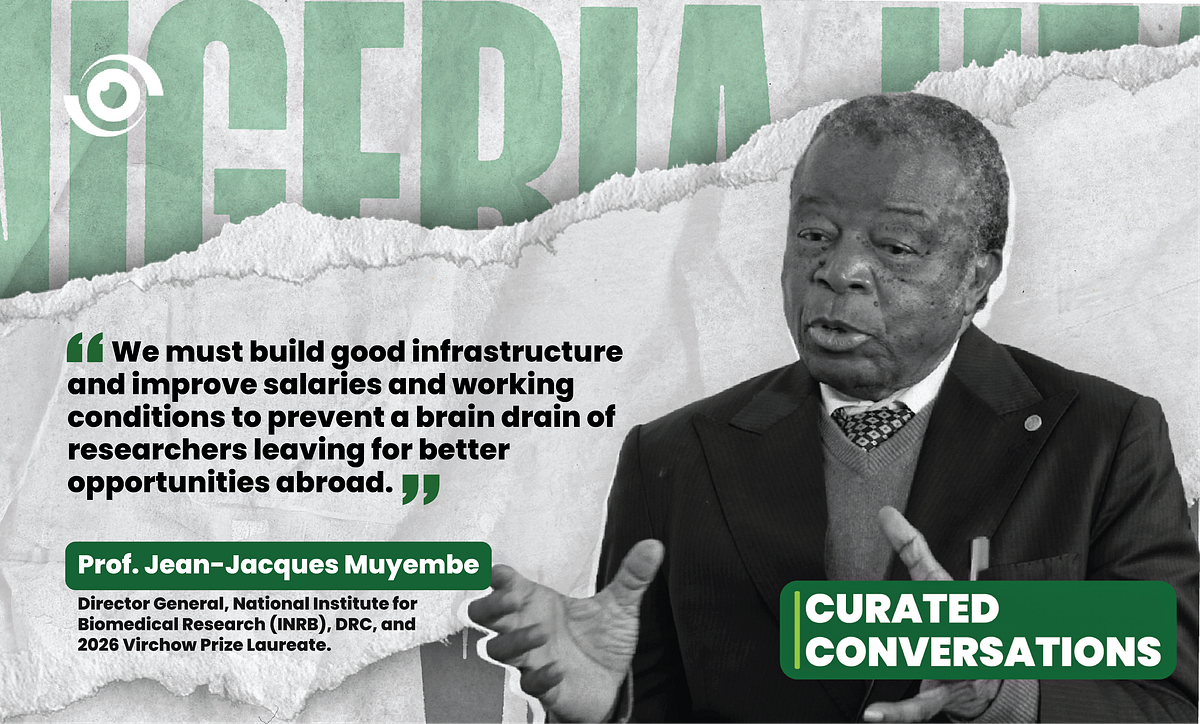
The institute’s scientific workforce has also expanded. As he recalled, “When I started as director, I was the only PhD, but today we have fifty.” However, he stressed that retaining skilled researchers requires sustained investment in the conditions that enable them to work, “We must build good infrastructure and improve salaries and working conditions to prevent a brain drain of researchers leaving for better opportunities abroad.”
Training African scientists for the next epidemic
For Professor Muyembe, training the next generation of African scientists must be a balance of both worlds of field experience and advanced scientific training. As he explained, “Our training strategy requires our scientists to first go into the field to learn how to investigate outbreaks in the difficult conditions of the bush.”
After two or three years in the DRC, he sends them to leading institutions abroad. “They travel to top institutions in Japan, Europe, or the United States to gain experience, and then they return with a combination of field experience and advanced scientific knowledge,” he said. He believes this approach is essential to strengthening pandemic preparedness and research.
Why African scientific leadership matters for global health security
Across five decades, Professor Muyembe’s work has moved from investigating an unknown disease in a remote Congolese village to strengthening a national research institution and contributing to the development of life-saving treatments.
His career illustrates why African leadership in research and epidemic response matters. Countries need the expertise, infrastructure and institutional confidence to identify threats early and act decisively.
During the conversation, Professor Muyembe also challenged the tendency to regard diseases as geographically distant or irrelevant until they cross borders. “We can no longer call a disease exotic and ignore it,”he said, pointing to the 2022 mpox outbreak in Europe as a reminder that infectious disease threats are shared. “The world is a village; what happens in Kinshasa or Ibadan can also happen in Brussels or Paris.”
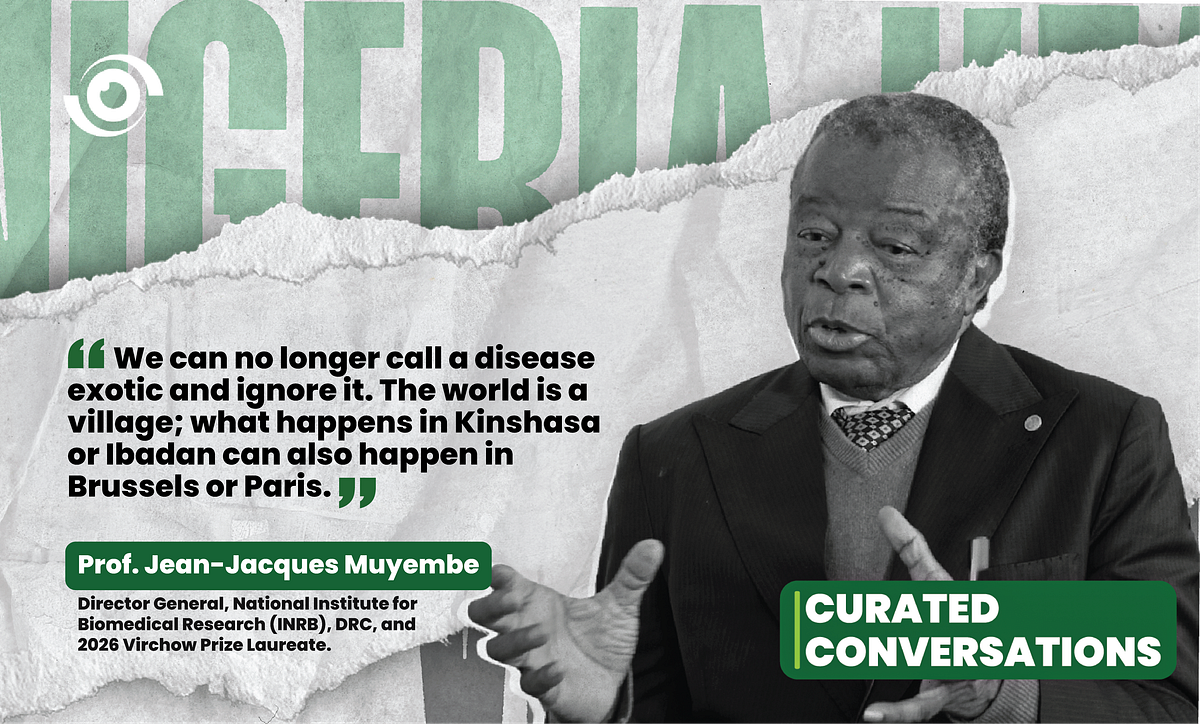
His observation reinforces an important lesson. Strengthening Africa’s scientific capacity is not only a regional priority but also an essential investment in global health security. When African countries can detect, investigate and contain outbreaks rapidly, the benefits extend far beyond their borders.
As Professor Muyembe’s experience demonstrates, epidemic preparedness is not built only during an outbreak. It is built over decades, through research, training, institutional development and the relationships that make collective action possible.
His legacy is therefore not only in helping the world understand Ebola, but also in showing what African scientific leadership can achieve when knowledge is developed, retained and applied on the continent.
Watch the full interview with Professor Muyembe on five decades of discovery and the future of African scientific leadership.
Leave a Comment
Your email address will not be published. Required fields are marked *