

Can Nigeria’s MAMII Initiative Bring Family Planning into Routine Maternal Care?
Related Stories




Nigeria has introduced several policies and programmes aimed at expanding access to contraceptives, from its FP2030 commitment to achieve a modern contraceptive prevalence rate (mCPR) of 27% by 2030, to the National Family Planning Blueprint.
These efforts also include task-shifting and task-sharing policies that enable trained healthcare workers to provide selected contraceptive services, as well as the inclusion of family planning services in the Basic Health Care Provision Fund (BHCPF)’s Basic Minimum Package.
On the other hand, the country has also intensified efforts to reduce preventable maternal deaths through the Maternal and Neonatal Mortality Reduction Innovation Initiative (MAMII). But how can the country leverage these existing opportunities to integrate voluntary family planning services into its broader maternal mortality reduction strategy?

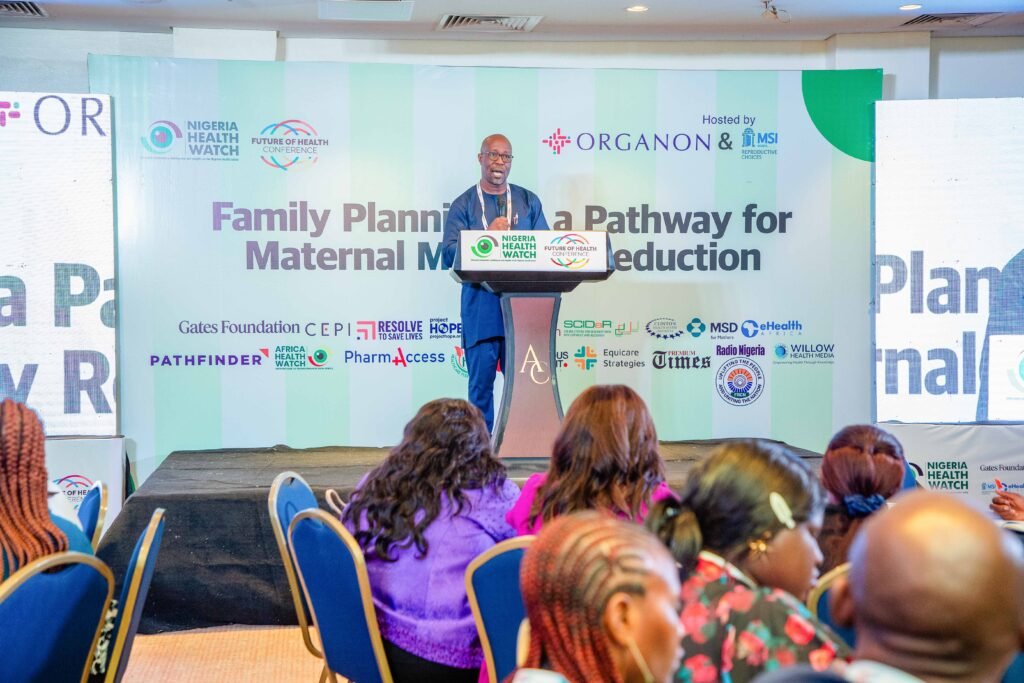
This was the focus of a side event titled ‘Family Planning as a Pathway for Maternal Mortality Reduction’ co-hosted by Organon, a global pharmaceutical company focused on women’s health, and Marie Stopes International (MSI) Nigeria, a non-profit health organisation providing reproductive and general healthcare services across Nigeria, during the 11th edition of the Future of Health Conference in Abuja held under the theme ‘From Innovation to Impact: The Future of Health is Now’
Opening the discussion at the side event, Dr Kingsley Odogwu, Director of Clinical Services at MSI Nigeria, highlighted Nigeria’s persistently high maternal mortality ratio, emphasising that enabling women to plan, space and prevent unintended pregnancies could be an important component to improve maternal health outcomes in Nigeria.
Making family planning part of MAMII’s strategy
Organon’s work in Nigeria has focused on expanding access to family planning information, promoting reproductive health education and strengthening stakeholder collaboration. Similarly, MSI Nigeria has worked to expand access to modern contraceptives and reproductive healthcare services since 2009, particularly for women and girls in underserved communities.
Connecting these efforts, a presentation by Dr Ronke Atamewalen, SRH Lead at the SWAp Coordination Office, highlighted opportunities to integrate voluntary family planning services across MAMII’s six strategic themes, with particular emphasis on sustainable financing, service delivery, community engagement, and accountability.

Launched by the Federal Government in November 2024, MAMII aims to address barriers to quality maternal and newborn healthcare across 172 high-burden local government areas in 33 states, with the goal of reducing maternal mortality by 30% and neonatal mortality by 20% in these areas by 2028.
MAMII adopts a coordinated approach to improving maternal healthcare by expanding access to essential services, strengthening health facilities, supporting healthcare workers, promoting community engagement, and improving accountability. While these interventions remain critical to preventing maternal deaths, expanding access to voluntary family planning services could further strengthen these efforts.
A 2025 study published in The Lancet Global Health estimated that 38.8% of the global decline in maternal deaths between 2000 and 2023 was attributable to reduced fertility, compared with 61.2% linked to improvements in maternity care. The study also estimated that increased contraceptive use prevented approximately 77,400 maternal deaths in the Global South in 2023 alone.
The presentation also highlighted increasing utilisation of family planning services, including a growth in mCPR to 18.3% in 2026. However, increased utilisation does not necessarily mean that services are equally accessible to women across different communities or that the health system can consistently meet demand.
Integrating family planning across the continuum of care
One of the opportunities highlighted during the side event was the integration of family planning services along the maternal healthcare continuum, such as:
1. At the community level, health workers and community-based structures can provide accurate information about contraceptive options, address misconceptions and connect women who want services with appropriate health facilities.
2. During antenatal care, healthcare providers can discuss postpartum family planning options, allowing women to consider their preferences before childbirth.
3. Following delivery, women can receive counselling and access suitable contraceptive methods where available.
4. Post-abortion care offers another opportunity to provide voluntary family planning information and services.
5. Routine immunisation visits can also create opportunities to reach women who may not otherwise return to a health facility specifically for contraception.
6. At the review and response stage, family planning can be integrated into Maternal and Perinatal Death Surveillance and Response (MPDSR) processes to identify missed opportunities and inform actions to reduce maternal deaths.
These entry points could reduce missed opportunities for counselling. However, successful integration depends on ensuring that women receive accurate information, have access to a range of suitable methods and can make decisions without pressure or coercion. It also requires healthcare workers to have the necessary training, time, and resources to provide quality services.

Integrating family planning into MAMII presents an opportunity to hit two birds with one stone; however, achieving both goals will require sustainable financing, stronger collaboration among government agencies, implementing partners and other stakeholders with clear accountability mechanisms. Reliable data on contraceptive availability, service utilisation, workforce readiness and quality of care remain necessary to track progress and determine whether these efforts translate into improved maternal health outcomes.
Aligned with the 2026 Future of Health Conference’s three priorities — innovations that save lives now, scaling what works, and reimagining health systems — the session concluded with participants giving actionable recommendations to advance family planning integration across MAMII’s pillars.
Leave a Comment
Your email address will not be published. Required fields are marked *