
Nigeria Needs a Stronger Evidence System to Track Progress Towards Universal Health Coverage
Related Stories


Yasir Jamal Bakare and Toluwani Oluwatola (Lead writers)
The National Health Insurance Authority(NHIA) announced in July 2026 that enrolment had reached 22.03 million people. For nearly two decades under the National Health Insurance Scheme, coverage remained below 5%of the population.
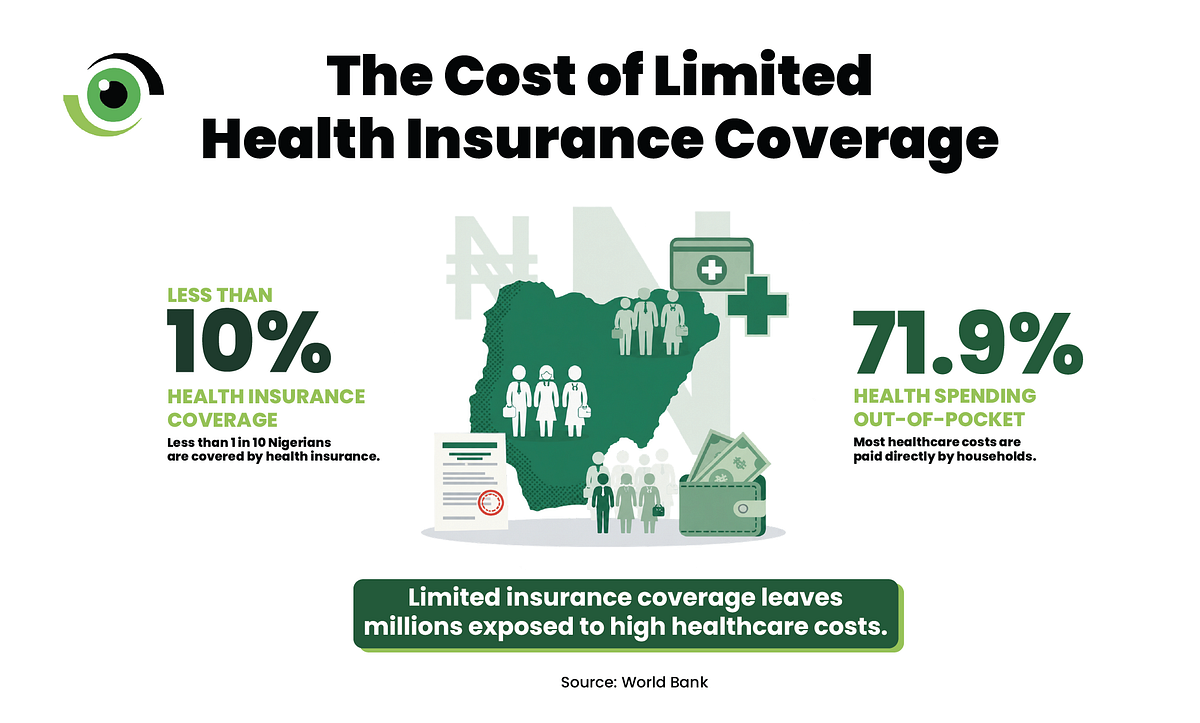
Yet, as coverage grows, a different set of questions begins to emerge. Are insured Nigerians using more healthcare? Has insurance lowered what households pay for healthcare? Which groups are benefiting, and which are being left behind? Do different insurance schemes protect people equally across states? Above all, does rising coverage add up to real progress toward universal health coverage (UHC)?
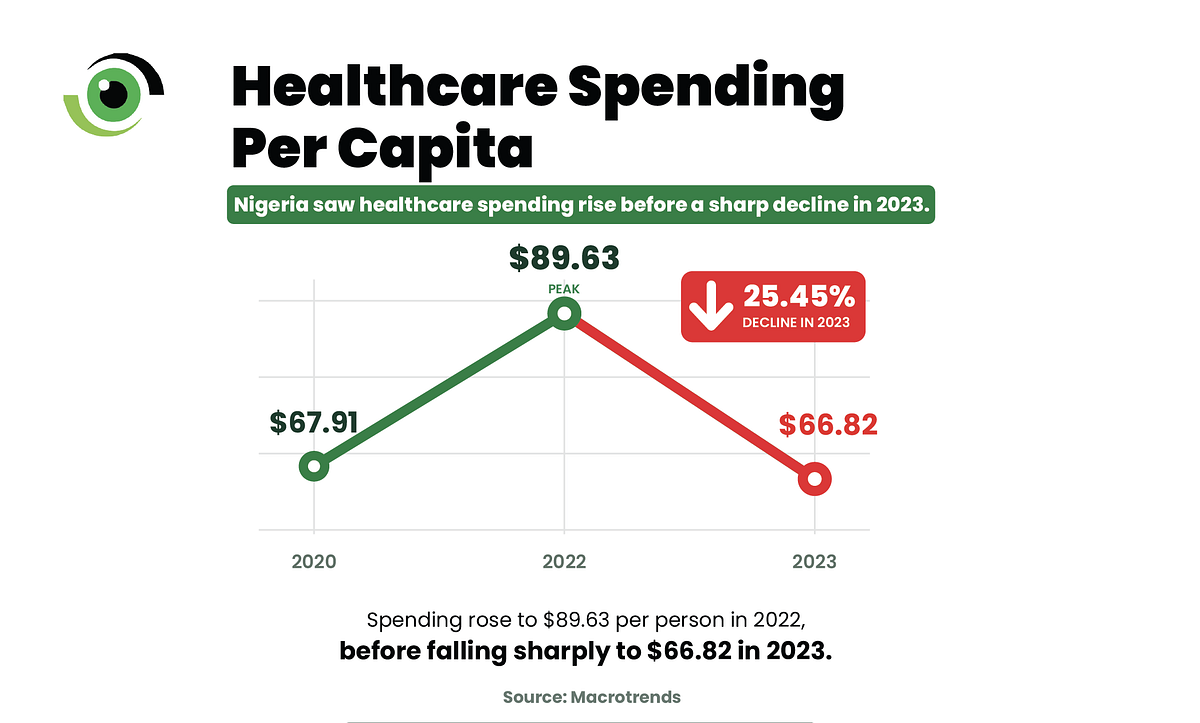
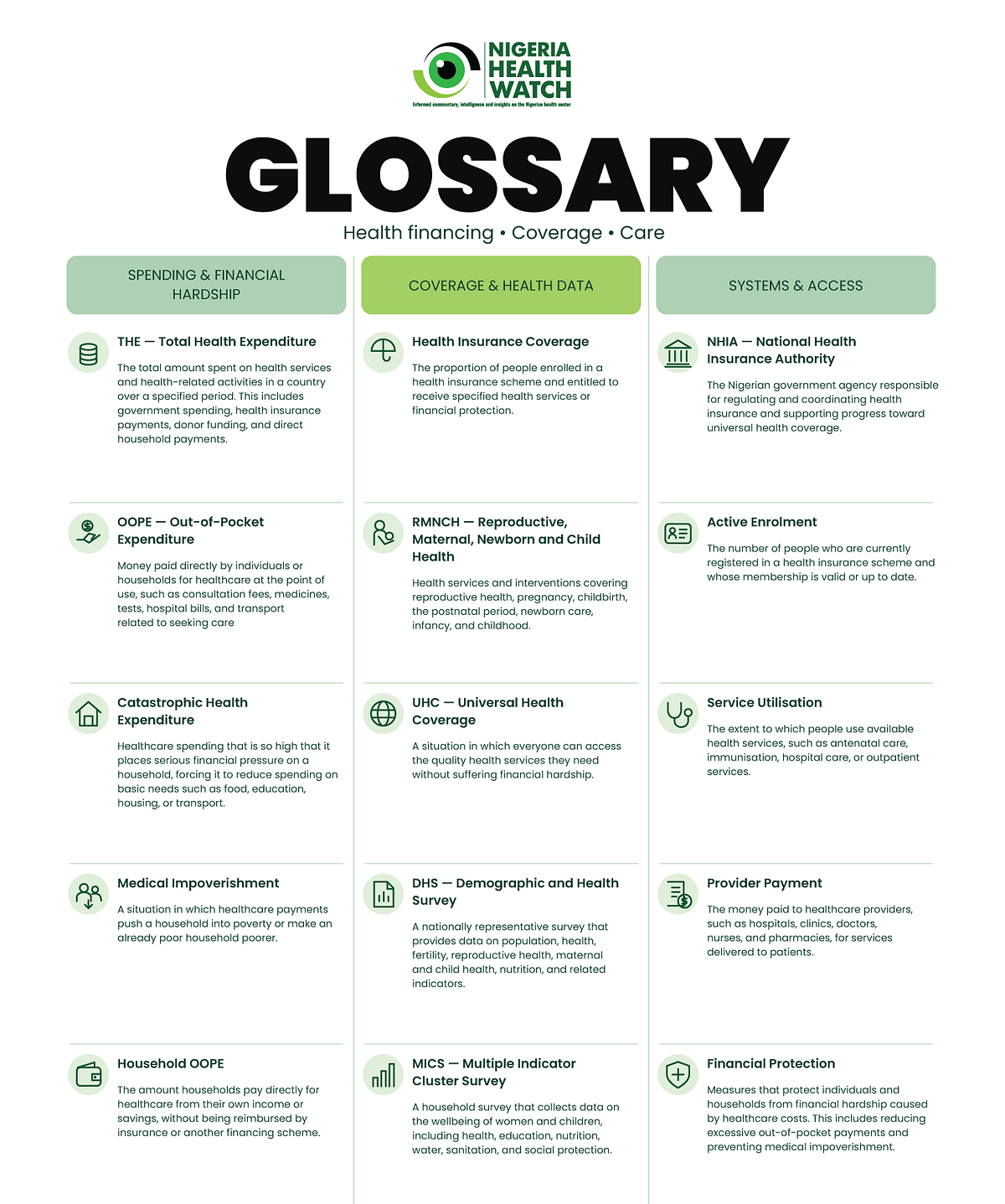
The enrolment figures alone cannot answer these questions. Nigeria needs a data ecosystem that tracks not just who is covered, but how people use care, what they spend, how well insurance protects them financially, and how all of this shifts over time. Interestingly, the good news is that Nigeria is not starting from zero. Most of the building blocks already exist. Assembling them into a working measurement system now matters as much as growing coverage itself.
Four questions, four data streams
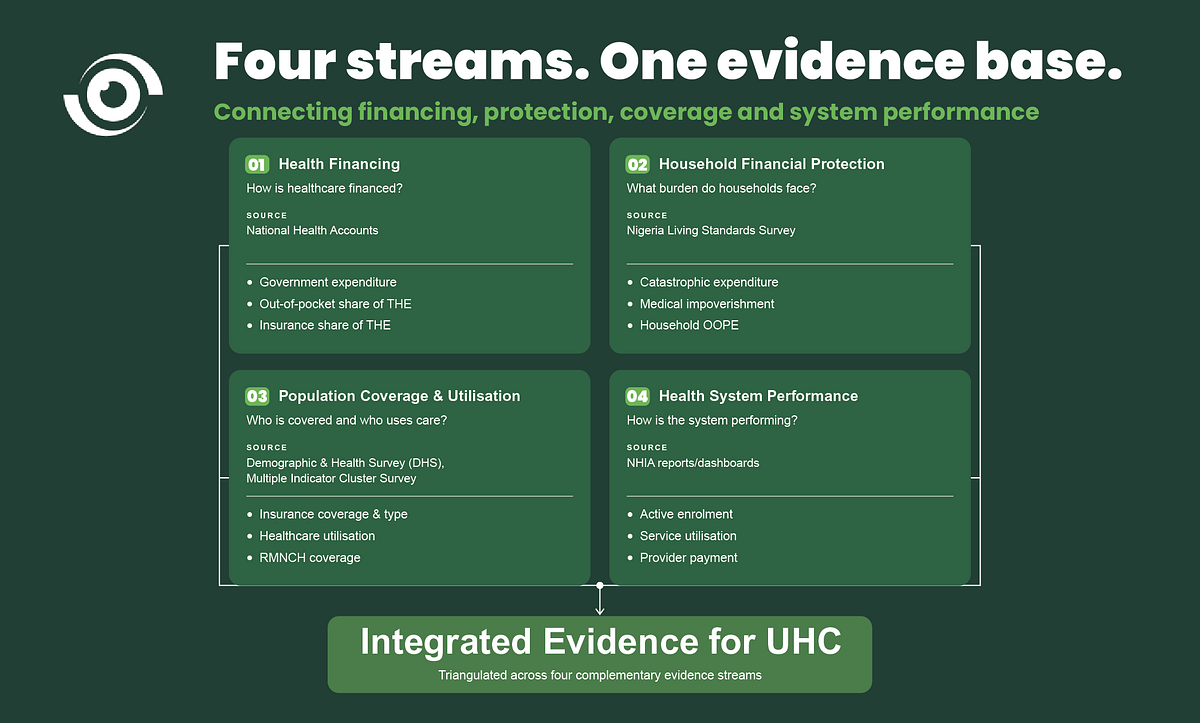
A useful way to think about this is through four complementary evidence streams, as shown in the above figure.
They all answer four distinct but interconnected questions: How is healthcare financed? What financial burden do households carry? Who is covered, and who uses care? How is the health system performing? Because each question probes a different dimension of UHC, no single survey or dataset can answer all four.
Policymakers need to work across all four to develop a more comprehensive picture of Nigeria’s progress towards UHC, and Nigeria has already started building each piece.
1. Financing: Publishing the National Health Accounts on schedule
The National Health Accounts (NHA) is one of the best tools for tracking how healthcare gets financed at the macro level, how much comes from government, households, insurance, and development partners, and how those shares shift. These figures tell policymakers whether the country is weaning itself off out-of-pocket spending and investing more public money in health.
Nigeria already knows how to produce these accounts. The gaplies in the institutionalisation of timely, predictable routine publication.
Without routine publication, researchers and policymakers cannot track financing trends or measure the impact of major reforms. Making the NHA a regularly published public resource should sit at the centre of Nigeria’s UHC measurement architecture.
2. Financial protection: Let the Living Standards Survey do more work
The Nigeria Living Standards Survey (NLSS) shows the costs of illness to families. It lets researchers estimate catastrophic health expenditure, medical impoverishment, and how out-of-pocket spending falls across income groups, some of the most direct measures of whether healthcare is pushing households into hardship.
3. Coverage and utilisation: The mini-DHS just closed a major gap
Here lies the most significant recent development. The latest Demographic and Health Survey (mini-DHS2025–26) added modules on health insurance, healthcare utilisation, and out-of-pocket expenditure.
This, for the first time, gives Nigeria a nationally representative way to track utilisation, inpatient and outpatient out-of-pocket costs, financial protection, and insurance coverage at both national and state levels. This single change materially strengthens Nigeria’s ability to track UHC progress over time.
4. Health System Performance: Enrolment data is a start, not the finish line
Health system performance draws mainly on routine administrative data, and here too, progress is evident. NHIA now publishes quarterly enrolment statistics broken down by scheme and state, a real improvement in transparency. This is providing routinely validated data at this level, indicating a shift in the quality and consistency of reporting, and points to growing institutional capacity within NHIA. This momentum should be sustained.
However, enrolment is only one indication of performance. Nigeria needs regular, aggregated reporting on service utilisation, provider participation, claims patterns, reimbursement, and patient cost-sharing, through annual reports or a public dashboard.
Other countries running large public insurance schemes already do this. Ghana’s NHIA publishes annual reportsthat include national totals for inpatient and outpatient utilisation and spending.
India’s Ayushman Bharat scheme runs a public dashboard that tracks enrolment, claims, and provider participation in near real time. Nigeria should aim for the same standard. Having already built the habit of publishing enrolment data, NHIA should apply the same reporting approach to utilisation, claims, reimbursement, and cost-sharing.
The task now is assembly, not invention
Nigeria has already built many of the pieces of this evidence architecture, including the NHA, the NLSS, the newly expanded DHS, and NHIA’s own reporting. What is missing is routine production, public availability, and the institutional mechanisms to use these four streams together to steer the country’s UHC journey.
UHC is often described as a journey. Every journey needs more than ambition; it needs a reliable way to know whether you are heading in the right direction.
After nearly two decades of slow progress in expanding health insurance coverage, Nigeria needs to recover lost time. Expansion must reach vulnerable groups who are least able to pay for care, while private sector HMOs need to do far more to grow enrolment beyond current their current reach. As coverage expands, the priority must be to ensure that those enrolled are financially protected and can access care. Building the evidence architecture to track whether this is happening could be one of the most important investments Nigeria makes on the road to UHC.
Leave a Comment
Your email address will not be published. Required fields are marked *