
When Facts Are Not Enough: What Really Shapes Trust in Health
Related Stories





Picture a mother in Nigeria who is hesitant to vaccinate her child because she has heard that the vaccine could affect fertility. A family member has shared a frightening story about the vaccine, further questioning its safety. Even though a health worker tells her the vaccine is safe, she is still unsure.
It is tempting to see this as a problem of misinformation or a failure to understand science. But what if the issue is bigger than the information people receive? What if it also has to do with their experiences of the health system, the people they trust and whether they believe scientific progress will make a difference in their lives?
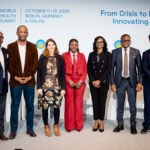
These questions were at the heart of the World Health Summit 2026 side event under the theme, “Does Science Have a Trust Problem?” Drawing insights from the Wellcome Global Monitor 2026, the discussion explored a question: If science has so much to offer, why do some people struggle to trust it?
Trust in science begins with people’s everyday experiences
The Wellcome Global Monitor, which surveyed more than 143,000 people across 140 countries, found that global trust in scientists remains widespread but has declined since the COVID-19 pandemic. The proportion of people who reported a high level of trust in scientists fell from 80 per cent in 2020 to 72 per cent in 2025.

These figures raise an important question about trust globally, and for the Nigerian health system in particular: what does it take for people to trust science, particularly when it relates to decisions that affect their health and that of their families?
For many people, science is not something they encounter in a laboratory or a research paper. They experience it when they visit a health facility, receive a diagnosis, take a prescribed medicine or are advised to get vaccinated. These encounters shape their understanding of the value of science and the confidence they place in the people and institutions that represent it.
Evidence matters, but people need to feel heard
The discussions also highlighted the gap between having evidence and securing public confidence. Referencing the HPV vaccine, where questions about possible side effects became part of a wider debate despite evidence supporting the vaccine, the conversation explored how concerns about potential side effects can persist even when evidence supports vaccination.
This is particularly relevant to Nigeria, where concerns about vaccine safety, fertility and side effects can influence health decisions. When such concerns are dismissed as ignorance, institutions risk overlooking the reasons people find certain claims believable. The result can then be a cycle in which authorities repeat the evidence while communities continue to ignore.
Effective engagement requires listening before responding, explaining what is known and acknowledging what remains uncertain. It also requires treating questions as opportunities for dialogue rather than as challenges to scientific authority.
For health communicators, this means moving beyond measuring success by the number of messages produced, people reached, or impressions generated. These indicators matter, but they do not necessarily show whether people understand the evidence.
Communication should not simply deliver information to communities. It should help institutions understand how communities receive that information, what concerns remain, and what needs to change in the response because when people feel heard, there is a greater opportunity to address their concerns meaningfully. When they feel dismissed, even well-intentioned communication can widen the gap between experts and the public.
Communities cannot be expected to trust blindly
The session also highlighted the role of local scientific capacity and sustained relationships with communities.
Evelyn Gitel of the Science for Africa Foundation highlighted the difficulty of asking communities to trust interventions introduced during an outbreak when their everyday health needs have not been adequately addressed. She emphasised that trust cannot be built around a single intervention while the wider relationship between communities and health institutions remains weak.
For Nigeria, this has implications for how research and public health programmes are designed and implemented. Communities should not be treated only as audiences for scientific messages or recipients of interventions. Their experiences and concerns should help shape the questions researchers investigate, the approaches institutions adopt and the ways findings are communicated.
When scientific work reflects local realities and researchers can explain its relevance to the communities it affects, people have a better opportunity to see how evidence connects to their lives.
This also requires continuity because relationships built through regular engagement and responsive healthcare are more likely to provide a foundation for public confidence than communication that begins only when a public health emergency arises.
Trust must become a health-system priority
For Nigeria, the lesson from the “Does Science Have a Trust Problem?” session is that science communication and health-system performance cannot be treated in isolation.
· Health institutions must communicate clearly about scientific evidence, explain how decisions are made and acknowledge uncertainty where it exists.
· Health communicators must listen to communities, understand emerging concerns and work with credible messengers.
· Researchers and funders must support local scientific capacity and sustained community engagement.
· Policymakers must also address the practical barriers that prevent people from accessing the services through which they experience the benefits of science.
For public health programmes in Nigeria, the question, therefore, should not be only, “How do we make people trust health information?” It should also consider, “What are people experiencing that makes trusting us difficult?”
This means assessing not only whether information has reached its intended audience, but also whether people’s concerns have been addressed, whether communities have been involved in shaping interventions, and whether the health services supporting those interventions are accessible and responsive.
Science remains essential to developing life-saving vaccines, improving diagnosis and informing better health policies. But its potential to improve lives depends partly on whether people can trust the systems through which scientific evidence reaches them.
Leave a Comment
Your email address will not be published. Required fields are marked *