

Beyond Genotype Awareness: Nigeria Must Build a Sickle Cell Response That Serves Warriors
Related Stories


Modupe Babawale (Guest writer)
Every year on June 19, Nigeria joins the global community to observe World Sickle Cell Day. The 2026 theme, “Closing the Survival Gap: Equity in Sickle Cell Disease,” serves as an important reminder that Nigeria must now address the unequal access to diagnosis, medicines, blood, specialised care, and dignity that determines who survives and who suffers.
Every year, the conversation often follows the same pattern, where statistics are repeated, genotype compatibility is discussed, and awareness campaigns remind Nigerians to know whether they are AA, AS, SS, AC, or another haemoglobin type. It is useful and important, but also incomplete.
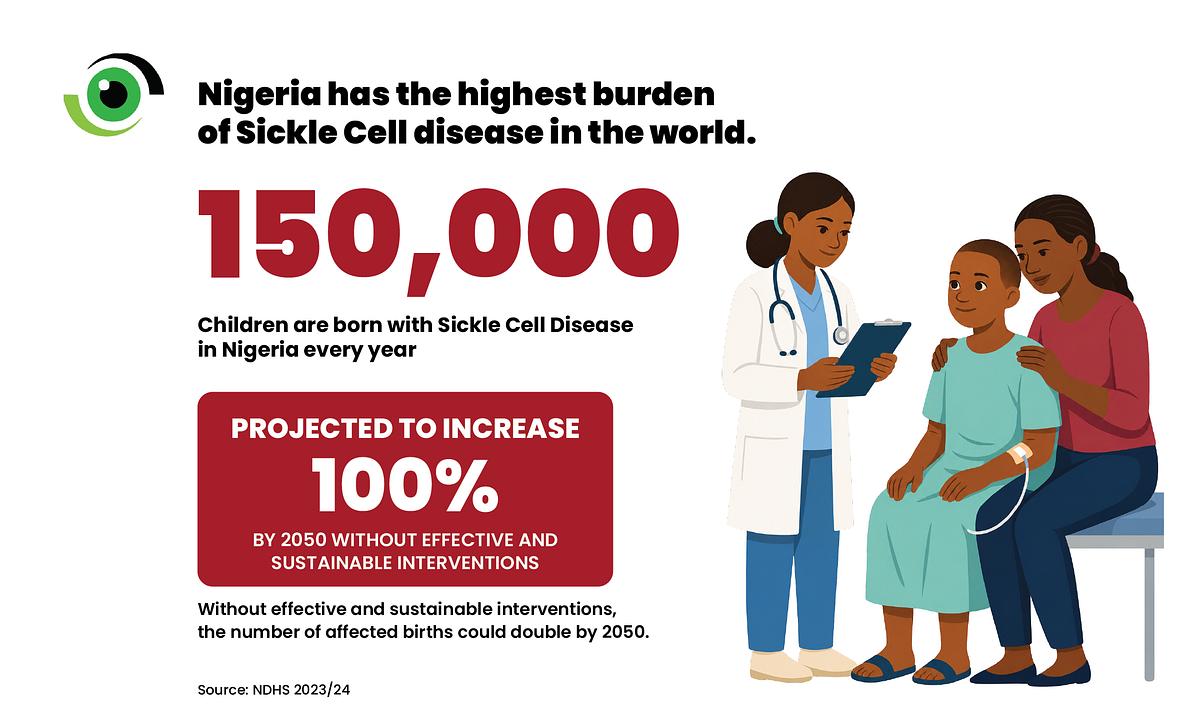
Nigeria has the highest burden of sickle cell disease of any country in the world. Approximately 150,000 children are born with the condition in Nigeria every year, a figure projected to increase by 100 per cent by 2050 without effective and sustainable intervention.
This does not occur because Sickle Cell Disease (SCD) is inherently a death sentence, but because of late diagnosis, inadequate access to medication, a healthcare system that is under-resourced and overstretched, and a public conversation so narrowly focused on prevention that it has left an entire generation of living Warriors behind. I am one of those Warriors, and I have spent the last decade building what the system did not provide.
The gap between awareness and care
The dominant framework for sickle cell awareness and sensitisation in Nigeria is pre-marital genotype testing. “Know your genotype”, that is, if you are AS and your partner is AS, reconsider, seek counselling, understand the risk and make an informed reproductive decision. The logic is sound, and the intention is good. This is correct, in that it is one important way to reduce the risk of affected births.
Yet this framework, repeated loudly and for long enough, has produced an unintended consequence we do not discuss nearly enough. It has framed sickle cell disease primarily as a future problem to be prevented rather than a present reality to be addressed.
When the primary public message is ‘make sure you don’t bring a sickler into this world’, the Sickle Cell Warriors already living with this condition receive a message too, even if it was never intended for them. That message is stigmatising, and it says that your life is the outcome of one we are trying to avoid.
We are subconsciously marginalising individuals already living with sickle cell, which adds to the negative narrative surrounding sickle cell disease. When care is absent, this is stigma dressed as health communication. Sickle cell awareness is more complex, more demanding, and more urgent.
Sickle cell disease is not black-and-white. It is not a uniform experience. Some Warriors live with relatively managed symptoms and full professional lives. Others require frequent hospitalisation, blood transfusions, and continuous specialist care. Most live somewhere in the spectrum between these two realities, that is, navigating a condition that shifts with hydration, stress, weather, infection, and access to medication that is inconsistent at best and unavailable at worst. Understanding this complexity is not a luxury. It is the baseline for any meaningful public health response.
What Warriors actually need
Warriors need quality, affordable healthcare and reliable access to routine and specialised medicines. For example, Hydroxyurea is the most widely recommended medication for managing sickle cell disease and reducing crisis frequency. This is not consistently available in Nigerian pharmacies, and when it is available, it is often unaffordable for low-income patients.
Additionally, access to blood transfusion services, which many Warriors depend on during acute crises, is undermined by chronic shortages in the national blood supply and a transfusion medicine system that is still developing its quality infrastructure.
Beyond these, Warriors also need mental health support. The psychosocial burden of sickle cell disease and chronic illnesses is generally well-documented, but Nigeria’s healthcare system is almost entirely unequipped to address it. Warriors also need financial protection, because the economics of managing a chronic condition in a country without robust health insurance coverage are brutal and relentless.
Warriors need a safe space, peer support, mentorship, and the knowledge that others are also navigating the same terrain and have found ways to thrive. These needs are not being met at scale by any government programme. They are being met, partially, persistently, with whatever resources can be mobilised by nonprofits, community organisations, and Warriors who decided that if the system would not build what was needed, they would build it themselves.
What a real national response looks like
Nigeria does not need another awareness campaign that ends at the genotype level. It needs a coordinated, funded, policy-backed response to sickle cell disease that treats Warriors as full citizens whose health and quality of life are a national responsibility. That means:
1. Subsidised or free access to hydroxyurea and folic acid through the National Health Insurance Authority (NHIA), with Warriors registered on a national database and primary health care (PHC)-linked supply with referral and clinical monitoring.
2. Newborn screening programmes that identify SCD at birth, enabling early intervention rather than late diagnosis. It means training for healthcare workers across all levels, not just haematologists, but general practitioners, nurses, and community health workers on SCD management and on the respectful, dignified treatment of Warriors in clinical settings.
3. Mental health integration into SCD care pathways.
None of this is beyond Nigeria’s capacity. It requires political will and sustained public pressure. These are the daily arithmetic of survival for over a million Nigerians.
To commemorate this World Sickle Cell Day, Nirvana Initiative is hosting the second edition of its Stronger Together Warrior Haven Workshop on 27 June 2026. It is a full-day experience in Lagos State, designed exclusively for Sickle Cell Warriors and their caregivers.
The role of every Nigerian
You do not need to have sickle cell disease to be part of changing this.
Know your genotype, yes, but then go further. If you are a healthcare professional, treat Warriors with the dignity and specificity the condition demands. If you are an employer, understand that a Warrior taking a day or two to manage a crisis is not an unreliable employee; they are managing a chronic condition in a system that was not built for them. If you are a policymaker or a legislator, ask why Nigeria, with the world’s highest SCD burden, does not have a funded national sickle cell programme commensurate with that burden.
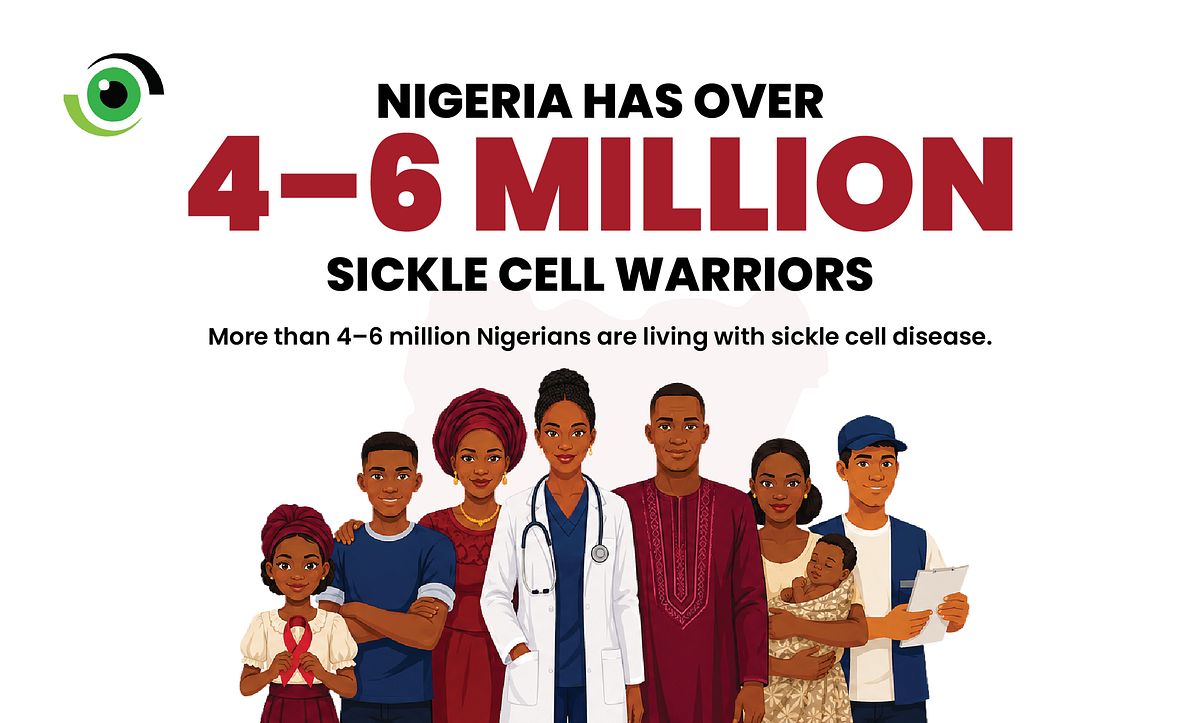
Most importantly, if you are a Warrior reading this, I want you to know that you are not the problem that needs to be solved. You are the person this system needs to start serving properly. Nigeria has over 4–6 million Sickle Cell Warriors. They are scientists and founders, teachers and traders, parents and children, people with full lives and specific dreams, and the absolute right to exist in this country without apology.
We are doing what we can, with what we have, for as many people as we can reach. However, community organisations cannot carry responsibilities that should sit with national policy. It is time our national conversation caught up with that reality.
Modupe Babawale is a Biomedical Scientist and Consultant with a focus on quality management systems, process improvement, and data analysis, and the founder of a consultancy that supports laboratories and diagnostic centres across Nigeria. She is also a Sickle Cell Warrior and founded the nonprofit Nirvana Initiative, dedicated to raising awareness about Sickle Cell Disease and empowering Warriors. She is based in the United States. Follow Nirvana Initiative on Instagram at @nirvana_sci.
Leave a Comment
Your email address will not be published. Required fields are marked *