
Beyond Awareness: Why Nigeria Must Fund a Period-Friendly Future
Related Stories

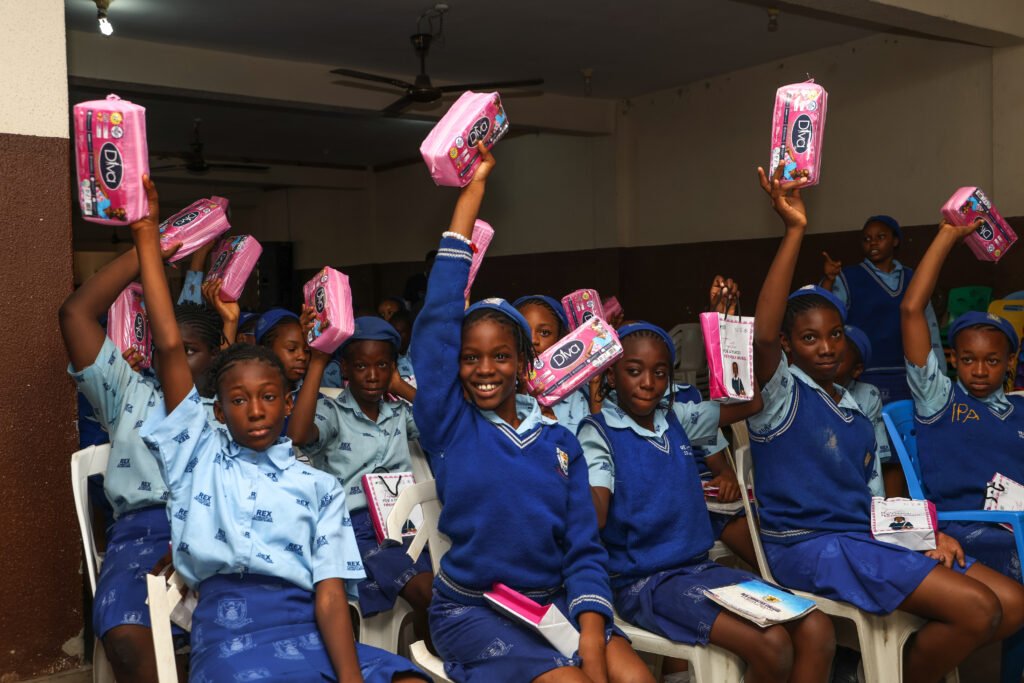
Every year on 28 May, Nigeria joins the global community to observe Menstrual Hygiene Day and its goal of building a #PeriodFriendlyWorld, where menstruation does not limit dignity, health, education, or opportunities. In 2025, the global campaign reached 971 million people, demonstrating how menstrual health has shifted from silence to a widespread public discussion.
But visibility has not yet translated into access. Across Nigeria, too many girls still lack the basics they need to manage their periods safely and with dignity. Menstrual products are too expensive for many families, and even when they have them, schools may not have clean or private toilets, no water or soap and nowhere to throw used pads away.
Many girls also don’t have accurate information about their bodies, or an adult they can ask without embarrassment. This is what period poverty looks like; not only a lack of awareness, but many gaps at once in products, facilities, information, and support.
What girls’ lived experiences teach us about period poverty
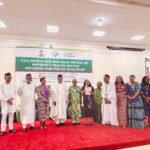
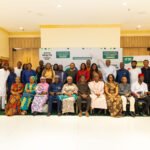
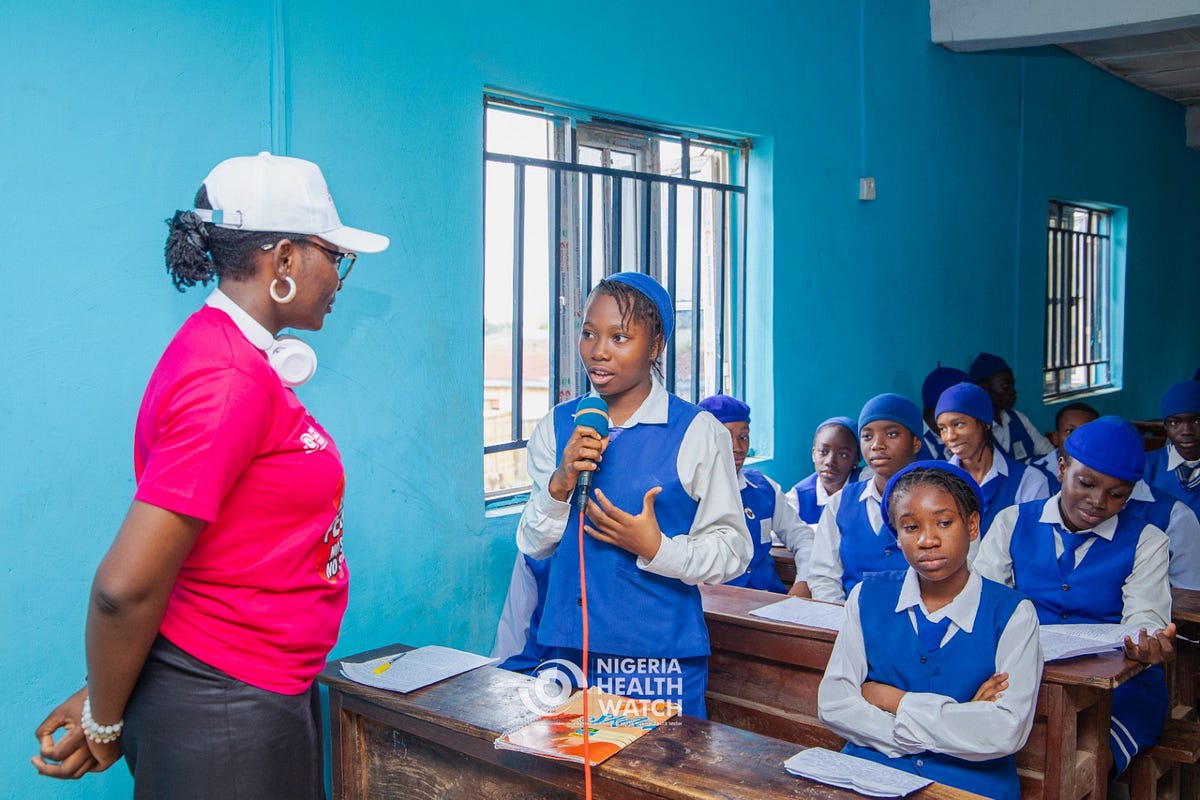
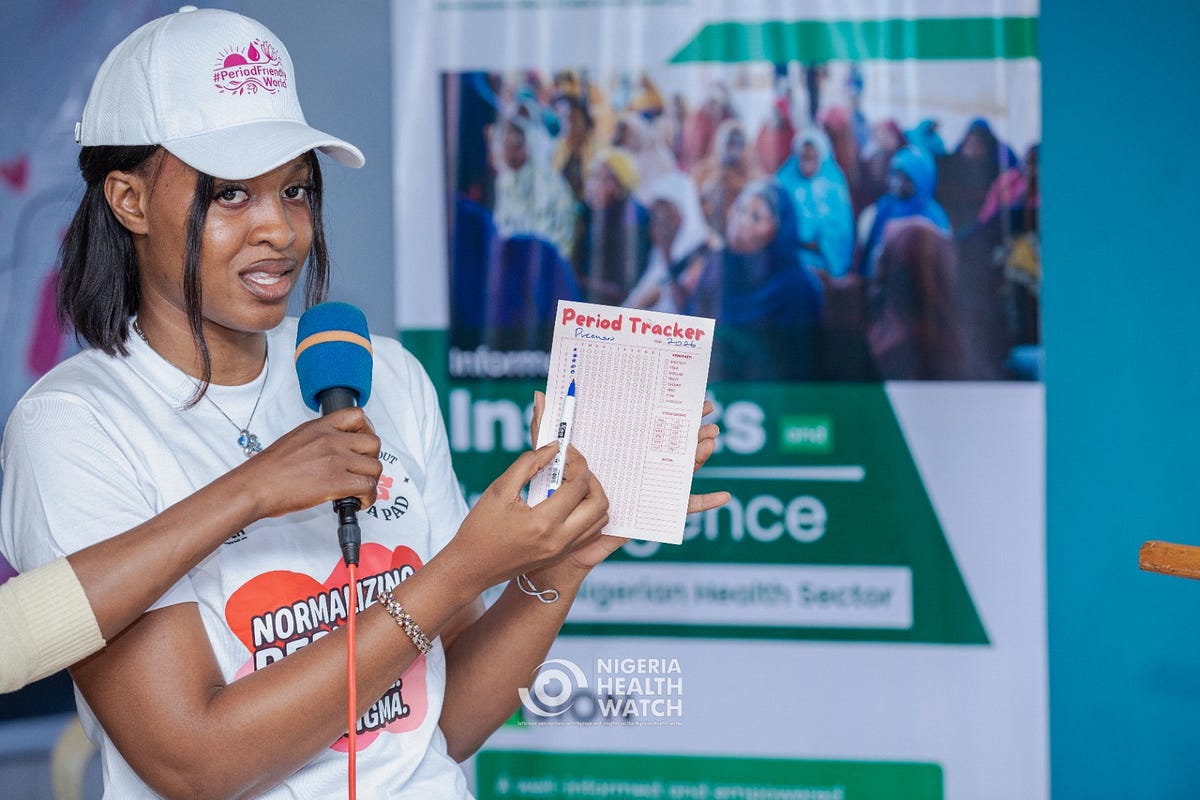
To mark Menstrual Hygiene Day 2026, Nigeria Health Watch, in collaboration with NoGirlWithoutAPad, visited City Royal School in Abuja for an outreach programme centred on menstrual health awareness, education, and support. Fifty students, comprising 30 girls and 20 boys aged 14 to 16, engaged in discussions about menstrual hygiene management, myths, misconceptions, school attendance, confidence, and the support young people need to speak openly about menstruation without shame.
The session revealed how much fear and misinformation girls still manage in silence. “Can disposed sanitary pads be used for spiritual purposes?” a girl asked, explaining that stories she had heard made her afraid to throw used pads into the bin. Her question was not simply about disposal. It showed how stigma, fear, myths, and misinformation can influence the way girls experience their periods.
Several girls also explained that there were no sanitary pads available at school and that the toilets sometimes lacked water, making it difficult to manage menstruation during school hours. Another girl described starting her period at school without a pad and without water in the toilet. She had to leave school. When she got home, her parents were not there, so she asked a neighbour for money to buy a pad and later had to repay it herself.
Reflecting on her experience, she called for increased compassion from teachers and parents. “Teachers should be more understanding rather than saying, ‘Don’t they know they are getting their period today?’ and parents should be more observant and supportive of their children’s menstrual health needs,” she said.
These interactions raise an important question. Is Nigeria’s period poverty mainly caused by limited menstrual awareness, or is it rooted in deeper systemic failures? Awareness is important, but awareness alone cannot end period poverty. A girl may know how to manage her period safely and still miss school if she cannot afford sanitary pads, if her school toilet lacks water or privacy, if there is nowhere to safely dispose of used products, or if she fears being teased for staining her uniform.
The World Bank describes menstrual health and hygiene as a multi-sector issue that requires water, sanitation, and hygiene (WASH) facilities, affordable materials, accurate information, and a supportive environment free of stigma.
Why period poverty is an infrastructure and affordability crisis
For many girls in Nigeria, menstruation still interrupts education because the school environment is not designed to support menstrual health. Only 11% of schools have gender-sensitive basic WASH services; only 8% have separate girls’ toilet compartments with facilities for menstrual hygiene management; and only about 3% have basic gender-sensitive WASH services. These numbers show that the problem is not only about personal knowledge, but also involves the lack of essential infrastructure.
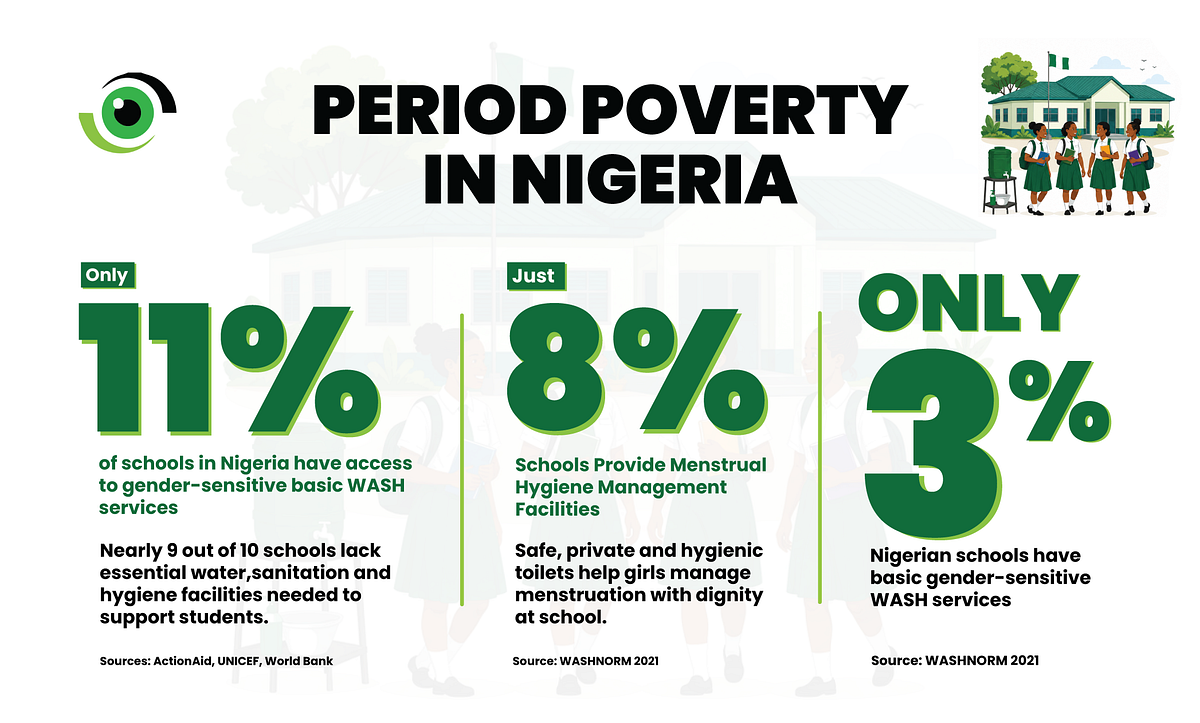
Period poverty is a public health, education, WASH, gender equity, and human rights issue. In Nigeria, it is also closely linked to poverty. 63% of the population in Nigeria, approximately 133 million people, are multidimensionally poor. Poor households in Nigeria spend up to 70% of their income on food. For families already struggling to afford food, sanitary pads can quickly become a monthly expense that is delayed, rationed, or cut.
The high cost of sanitary products became clear when a girl asked whether disposable pads could be washed and reused. That question, “Can I wash and reuse a disposable pad?”, revealed how unaffordable menstrual products are for some students.
This is why period poverty cannot be solved by one-off pad donations alone, even though donations provide immediate and necessary relief. Menstruation is not a one-day event; it happens every month. A period-friendly Nigeria, therefore, needs systems that make menstrual products affordable, accessible, safe, and normal in schools, homes, workplaces, health facilities, and public spaces.
Awareness has increased, but access has not kept up
Across Nigeria, civil society organisations, schools, humanitarian actors, and health advocates have worked for years to raise awareness of menstrual health and reduce stigma. These efforts matter because they create safer conversations, reduce shame, and provide immediate support.
In conflict-affected communities, the International Committee of the Red Cross (ICRC) and the Nigerian Red Cross Society have trained over 800 adolescent girls in IDP settlements and camps in Adamawa and southern Borno to produce reusable sanitary pads. In Lagos, WaterAid Nigeria’s 2023 Menstrual Hygiene Day campaign, supported by Kimberly-Clark, trained 80 teachers across 39 schools on menstrual health and hygiene management, including demonstrations on reusable pads. The practical sessions reached 180 students in six schools.
These efforts show what community-led action can achieve. However, they also reveal the limitations of relying on short-term interventions to address a structural issue. When menstrual health primarily depends on donations, campaigns, and commemorative events, girls remain vulnerable to the challenges of the next month’s period.
Why period poverty persists despite awareness
Nigeria’s Finance Act 2019 added locally manufactured sanitary pads and tampons to the VAT exemption list, signalling that menstrual products should not be regarded as luxury goods. However, tax exemptions alone do not ensure affordability at the point of sale, especially when production costs, transport costs, inflation, and weak consumer protection continue to influence retail prices.
The National Policy on Menstrual Health and Hygiene Management in Nigeria, 2025–2030, represents an important milestone by framing menstrual health as a multi-sector issue that requires education, WASH, affordable products, social norm change, funding, regulation, and accountability.
The policy commits the government to ensuring equitable access to menstrual products, services, WASH facilities, and information, especially for vulnerable and marginalised groups. It also advocates for budget allocations, monitoring, local production, and collaboration across ministries, departments, agencies, development partners, the private sector, and communities.
The more difficult question is whether the policy will be funded, adopted by states, implemented in schools, publicly monitored, and sustained beyond annual commemorations. Policies must be financed, implemented, and evaluated, not just announced.
If a school lacks water, private toilets, soap, disposal bins, trained teachers, and a system for emergency access to pads, then that school is not period-friendly, regardless of how many awareness posters are displayed on its walls.
From outreach to accountability
The Nigeria Health Watch outreach shows what can happen when young people are provided with information, products, and a safe space to express themselves. Students were not passive recipients; they asked questions, shared concerns, and reflected on how menstruation impacts education, confidence, and participation.
The outreach also showed why conversations about menstrual health must involve boys. One boy asked, “How can I help my sisters during their period?” Many girls admitted that they often avoided talking openly about menstruation because they feared being laughed at or embarrassed by their peers. Some boys also acknowledged that menstruation was not something they had previously felt comfortable discussing.
Boys who understand menstruation are less likely to tease, shame, or isolate girls. They are more likely to become supportive brothers, classmates, friends, and future parents. We encouraged the boys to become “Period Allies” by understanding that menstruation is not only a girls’ and women’s issue, but a matter of health, dignity, empathy, and support.
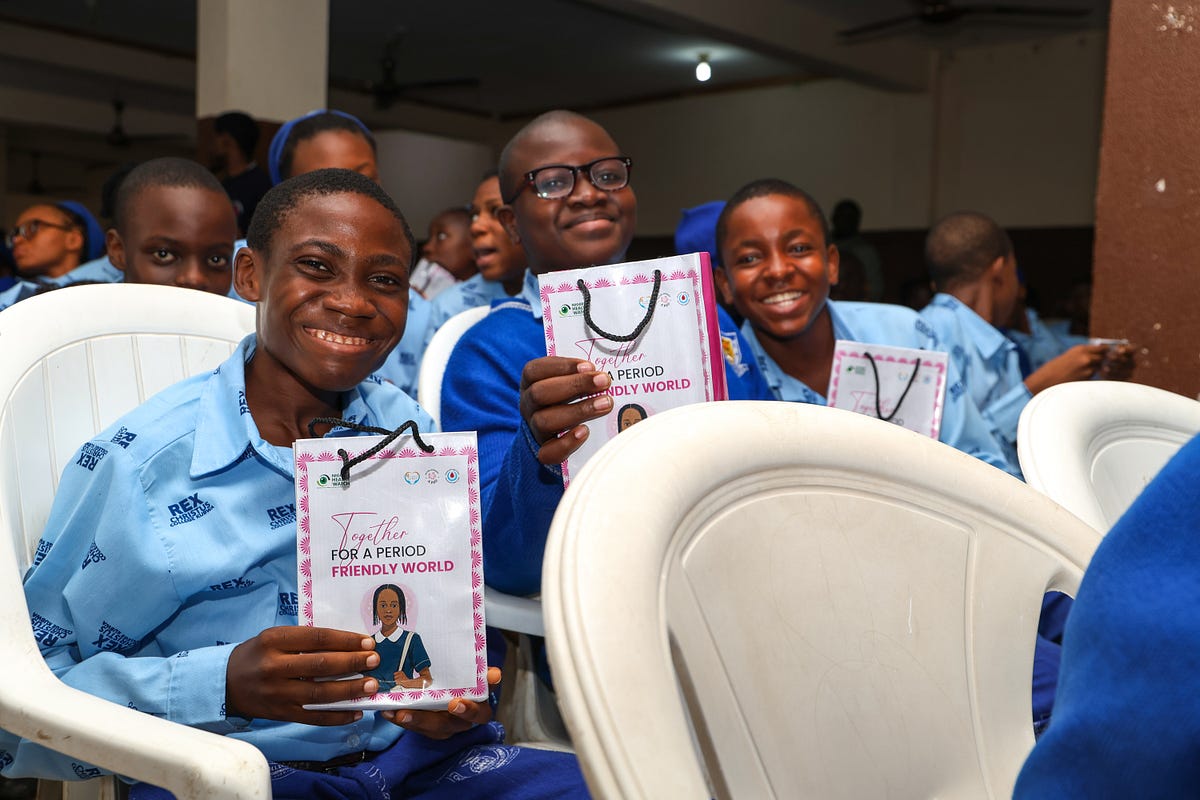
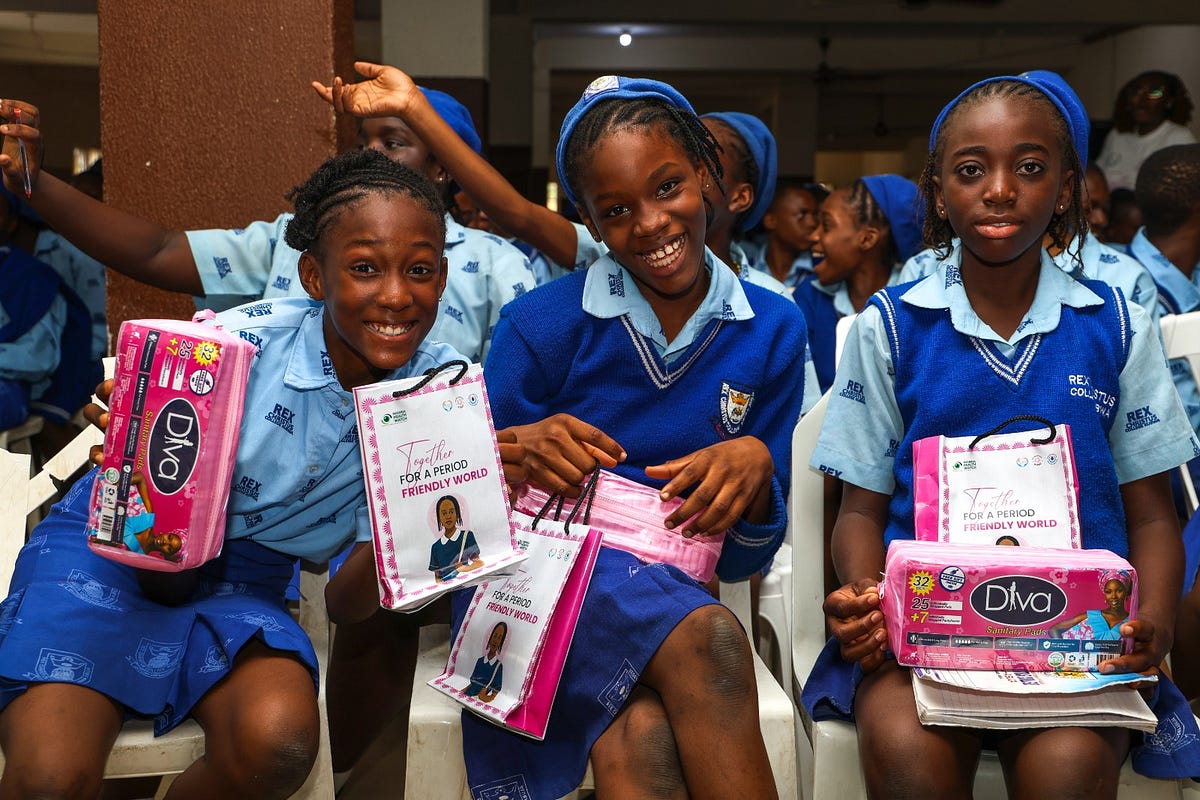
To support students beyond the educational session, period kits were distributed. Providing kits and learning materials to both girls and boys reinforced the message that creating a period-friendly school requires supporting girls with resources while engaging boys as informed and respectful allies.
What a period-friendly Nigeria should look like
A period-friendly Nigeria is one where every girl can attend school during her period without fear, shame, or unnecessary discomfort. It is a Nigeria where menstrual products are affordable and accessible, where schools have clean, private, lockable toilets with water and soap, where girls can change safely, where disposal systems are effective, and where menstruation is regarded as a normal part of health education.
It is also a Nigeria where boys are not left out of the conversation. Boys who understand menstruation can help reduce stigma. Parents who understand menstrual health are more likely to support their daughters. Teachers who are trained can respond with dignity rather than embarrassment. Community and faith leaders who speak responsibly can help dismantle harmful myths that still surround menstruation.
A period-friendly Nigeria also requires government action. Federal and state governments should establish and fund menstrual health budget lines, integrate age-appropriate menstrual health education into school curricula, support local production of safe and affordable menstrual products, enforce existing tax exemptions, and ensure public schools meet minimum WASH standards. Maintenance of school WASH facilities must be treated as a recurring expense, not an afterthought once toilets are built.
“Together for a #PeriodFriendlyWorld” should mean more than just raising awareness. It must include budgets, toilets, products, education, maintenance, regulation, and accountability. Until menstrual health is recognised as vital social infrastructure, not just a yearly campaign, too many Nigerian girls will continue to pay the price for systems that fail them every month.
Leave a Comment
Your email address will not be published. Required fields are marked *