

What the Andes Hantavirus Outbreak Reveals About Global Attention to Lassa Fever
Related Stories





The Andes Hantavirus outbreak linked to the MV Hondius gripped international attention with remarkable speed after the World Health Organization (WHO) received the first official notification of a cluster of severe respiratory illness aboard the expedition cruise ship on 2 May 2026.
Round-the-clock news coverage tracked the vessel’s journey from the coast of West Africa to Tenerife, Spain, after authorities in the Canary Islands initially denied the ship permission to dock. Passengers were anxious, while health officials, including Spanish government officials, the Director General of the WHO, journalists and residents of the island awaited the cruise ship’s arrival.
Headlines fuelled public anxiety and misinformation as the ship, carrying 120 passengers and crew, became the focus of intense international scrutiny. Although just three passengers had died initially, two confirmed to have Andes hantavirus, and the total confirmed cases eventually reached 13, the incident showed how swiftly global concern can grow even as the full extent of the outbreak was still emerging.
The outbreak also illustrated how the risk of cross-border transmission can trigger a rapid international public health response. The WHO coordinated contact tracing across 33 countries, territories, and areas, while national public health authorities identified and monitored travellers who may have been exposed. The coordinated effort reflected the principles of the International Health Regulations (2005), the global framework that guides how countries share information, assess risks and work together when disease outbreaks have the potential to spread across borders.
A familiar threat, a different response
On 2 July, WHO declared the Andes hantavirus outbreak over after all identified contacts had completed follow-up and no related transmission was detected. For many countries in West Africa, however, the episode raises a broader question about how attention is distributed across infectious disease threats. Lassa fever has caused recurring outbreaks across the region for more than 50 years and has repeatedly demonstrated its international public health implications through imported cases. Yet despite this history, it has often struggled to attract sustained political, financial, and media attention commensurate with its burden.
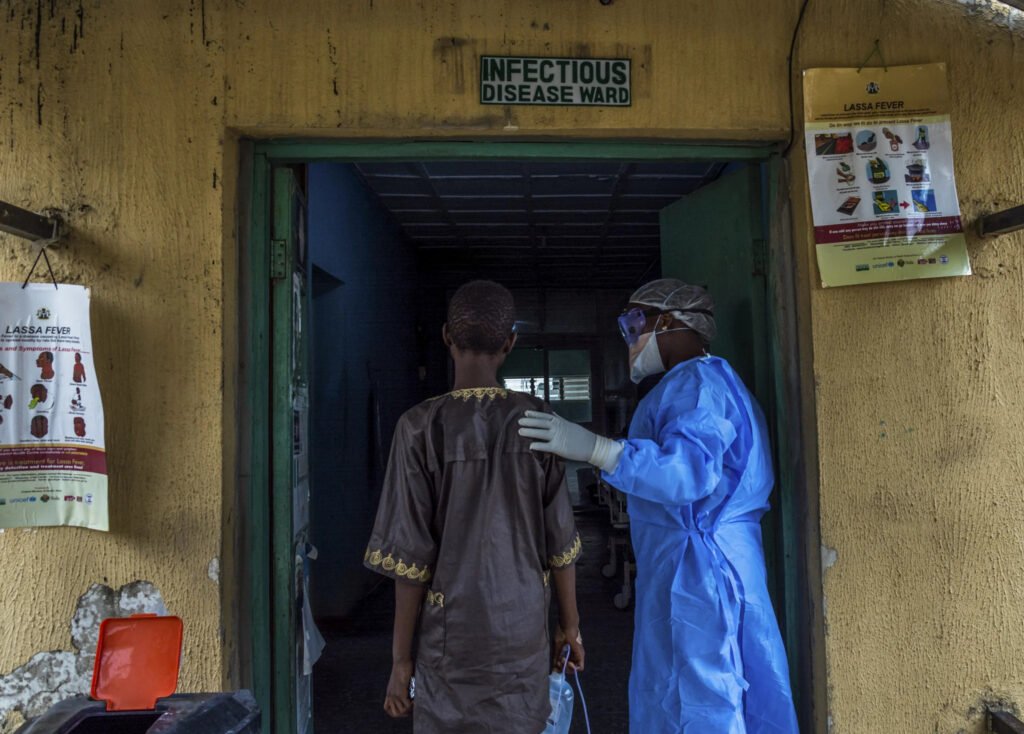
Lassa fever has affected communities across West Africa for decades, placing a significant burden on health systems and communities. According to the World Health Organization, the disease remains endemic in several West African countries and continues to cause recurrent outbreaks.
In Nigeria, the Nigeria Centre for Disease Control and Prevention (NCDC) reported 963 confirmed cases and 229 deaths across 23 states as of epidemiological week 28 of 2026. Yet despite this recurring impact, Lassa fever has continued to struggle to attract sustained political, financial, and media attention commensurate with its burden, rarely generating the same level of international concern or public anxiety as the MV Hondius incident.
Although Lassa fever is endemic in West Africa, its public health implications are not confined to the region. Between 1969 and 2016, 33 imported cases of Lassa fever were documented across Europe, North America, Asia, and Africa. Several prompted public health investigations, contact tracing, laboratory testing, and monitoring of exposed contacts and healthcare workers. These events demonstrate that Lassa fever has posed recognised international public health challenges for decades, despite often being viewed primarily as a regional disease.
The contrast with the hantavirus outbreak is striking. Both diseases are zoonotic viral infections capable of crossing borders and triggering public health action. Yet while the MV Hondius outbreak rapidly became a global news story, Lassa fever’s recurring outbreaks have largely remained a regional concern, despite their far greater cumulative toll on lives and health systems and economic cost to the region.
Unlike the cruise ship outbreak, Lassa fever is a familiar public health challenge in parts of West Africa, where seasonal outbreaks are managed through established surveillance and response systems. The history of imported cases shows that Lassa fever has long had international implications. The question, therefore, is why a disease with decades of recognised global health significance continues to attract comparatively limited attention until it threatens populations beyond the region where it is endemic.
Why attention matters
The issue extends beyond visibility. The attention a disease receives can shape political priorities, research agendas, funding decisions and public health preparedness, influencing how resources are mobilised and how quickly new tools and interventions are developed.
The response to the MV Hondius outbreak demonstrated how rapidly governments and public health institutions can coordinate when an event is perceived to pose an international threat. Yet diseases that primarily affect lower-resource settings often struggle to sustain the same level of political attention, financing, research investment, and preparedness between outbreaks. The result is a disconnect between the burden they impose and the resources committed to addressing them.
For Lassa fever, that gap has tangible consequences. Strengthening diagnostic and laboratory capacity, genomic surveillance, infection prevention and control, clinical care, vaccine research, clinical trials and regulatory readiness all require sustained investment over many years. Without consistent attention, maintaining momentum becomes more difficult, delaying progress towards stronger preparedness, faster outbreak response, and ultimately, fewer lives lost.
A shift is beginning, but it needs to be sustained
Recent investments and partnerships have begun to strengthen regional coordination on Lassa fever preparedness across West Africa. While important gaps remain, these efforts show what sustained investment and collaboration can achieve when preparedness extends beyond emergency response.
One example is the Lassa Fever Vaccine Coalition, coordinated by the West African Health Organisation with support from the Coalition for Epidemic Preparedness Innovations (CEPI). Through the coalition, countries are working together to strengthen vaccine readiness, coordinate research, and improve preparedness planning across the region.
Recent milestones include the development of an end-to-end access roadmap for future vaccine introduction, the launch of a regional research agenda to guide evidence generation, and ministerial commitments to strengthen regional coordination and vaccine readiness.
These initiatives reflect a broader shift in approach. Instead of mobilising only when outbreaks occur, they focus on building the systems, partnerships, and coordination needed before the next crisis. This reflects a core principle of the 100 Days Mission that rapid outbreak response depends on sustained investment before a crisis begins. Sustaining this momentum will be critical to strengthening surveillance, supporting future vaccine introduction, and ensuring that preparedness remains a continuous investment rather than a reactive response.
Beyond a single outbreak
The questions raised by the Andes hantavirus outbreak extend beyond a single virus or a single region. They invite a broader conversation about how global attention is distributed among infectious disease threats and whether diseases that primarily affect lower-resource settings receive the same level of urgency. That attention must also translate into sustained investment to strengthen preparedness for diseases such as Lassa fever before outbreaks escalate, rather than relying on periods of heightened concern to drive action.
For Lassa fever, the priorities are well established. Strengthening surveillance and diagnostic systems, improving infection prevention and control in health facilities to protect health workers, and supporting clinical research to accelerate vaccine-readiness all require long-term investment. These efforts must be supported by stronger domestic financing, regional coordination and sustained international commitment, beyond the outbreaks that make the headlines.
The progress being made across West Africa demonstrates what is possible when countries and partners invest in preparedness before the next emergency occurs. The continuing Bundibugyo virus disease outbreak in the Democratic Republic of the Congo, while Uganda has entered enhanced surveillance following interruption of transmission, is a reminder that new epidemic threats will continue to emerge, reinforcing the need to sustain these investments. The challenge now is to ensure that this commitment is sustained, so that action is driven by evidence and risk of outbreak spread rather than by where an outbreak occurs or who it affects.
Leave a Comment
Your email address will not be published. Required fields are marked *