

Nigeria’s Malaria Burden Is Uneven: Why One-Size-Fits-All Interventions Fall Short
Related Stories



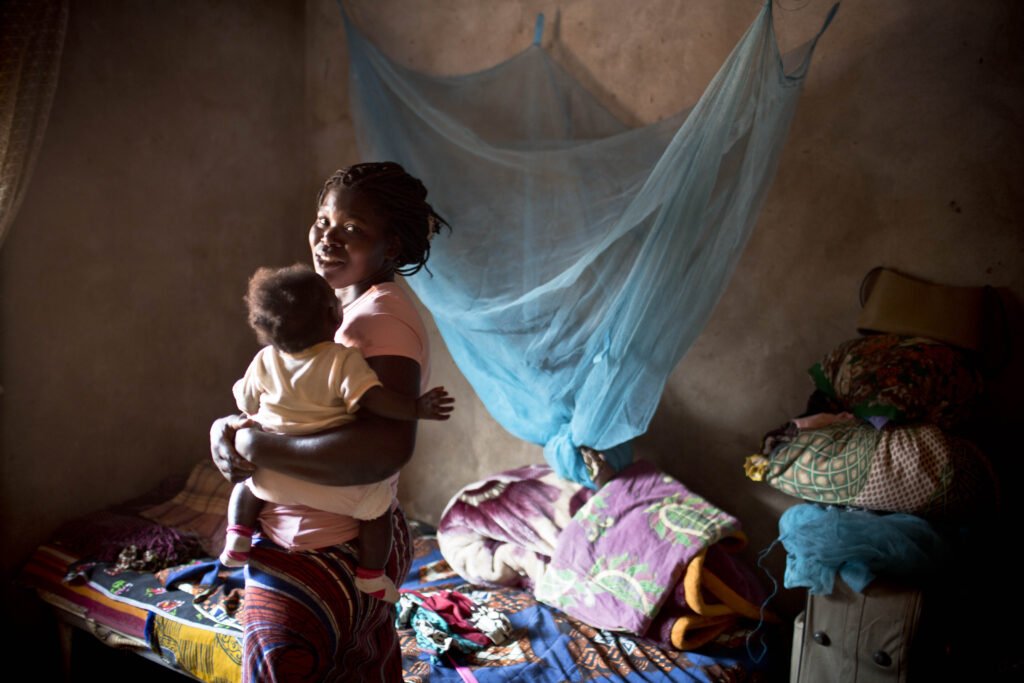
Nigeria’s malaria story is often told through the lens of the scale of the problem, because the country accounts for 24.3% of the global estimated malaria cases and 30.3% of the estimated deaths, as well as an estimated 54.6% of malaria cases in West Africa in 2024.
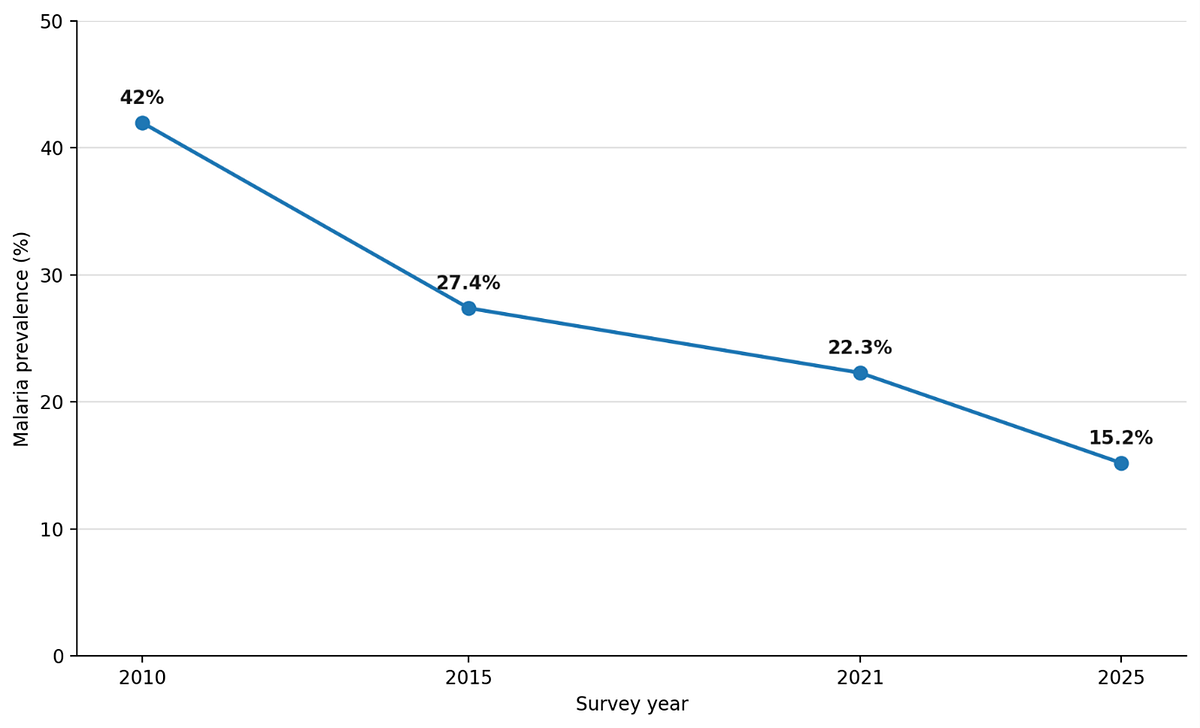
Yet there is another story that is not often told. Malaria prevalence among children aged 6 to 59 months has fallen substantially over the past 15 years; from 42% in 2010 to just 15.2% in 2025, according to Nigeria’s Malaria Indicator Surveys. This indicates that fifteen years ago, more than four in ten Nigerian children under five tested positive for malaria; today it’s closer to one in seven.
However, the national average hides something even more striking. In 2025, malaria prevalence among children ranged from 2.6% in Lagos State to 31.2% in Ebonyi State, by microscopy. On the other hand, using another method to confirm malaria prevalence, the faster Rapid Diagnostic Test (RDT) test, the same two states are at different extremes, as the prevalence is 1.5% in Lagos compared to 67.7% in Ebonyi.
That is not simply a difference between two numbers, as it represents two very distinctive malaria realities within the same country. If malaria prevalence varies so widely across Nigeria, surely the interventions must be equally responsive to those differences.
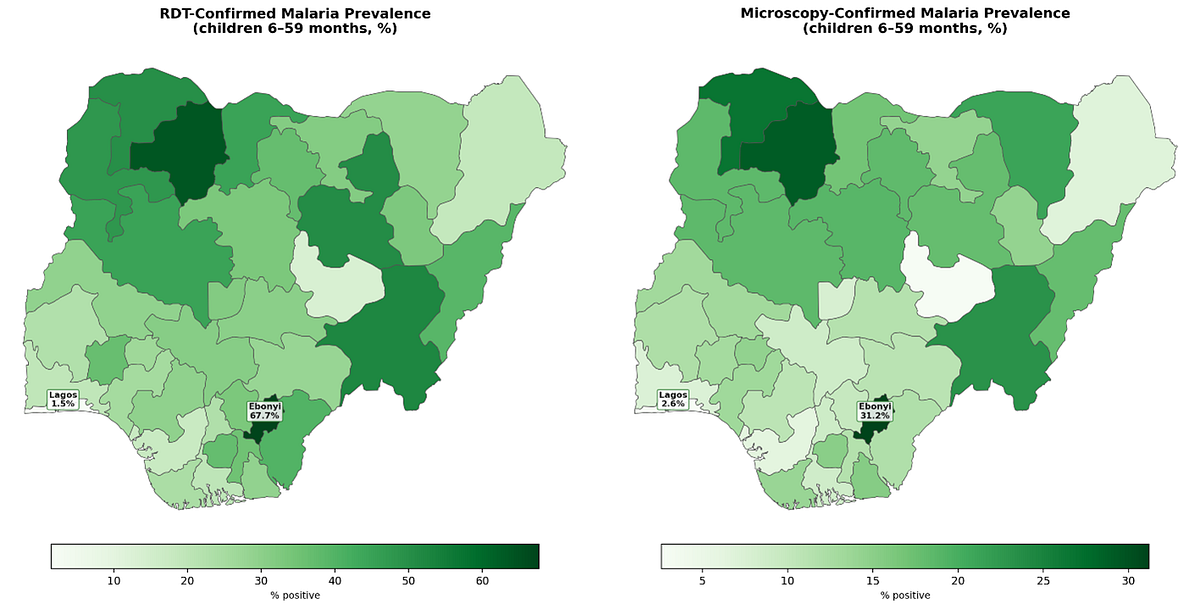
One country, very different malaria realities
Malaria transmission is shaped by climate, rainfall, vector ecology, population vulnerability, access to health services and health-system capacity. That is the problem malaria subnational tailoring (SNT) seeks to address. SNT uses local data and contextual information to determine the most appropriate mix of interventions for a given area; not only what works against malaria, but what works, where, and at what intensity.
Nigeria’s first phase of SNT analysed malaria at the level of all 774 Local Government Areas (LGAs), moving beyond state-level averages to examine where different combinations of interventions were most appropriate; Seasonal Malaria Chemoprevention (SMC); preventive antimalarial drugs given to young children during peak transmission months in some areas, Pyrethroid-Piperonyl Butoxide (PBO) nets, a newer bed net designed to work where mosquitoes have grown resistant to standard insecticides, in others; and targeted Indoor Residual Spraying (IRS), spraying insecticide on the interior walls where mosquitoes rest elsewhere.
The answers were not always the same. SMC expanded from 217 LGAs in nine states to 412 LGAs in 21 states by 2023, PBO nets were targeted to high-burden, high-resistance LGAs, with high insecticide resistance and microstratification, which uses more detailed local data to identify differences in malaria risk within an area, allowing interventions in urban areas to be better targeted.
SNT does not necessarily mean doing more, it means doing something different, or at a different intensity, and sometimes it means deciding an intervention is not the best use of resources in a particular place. That is the fundamental shift from “What should Nigeria do about malaria?”to “What does this location need?”
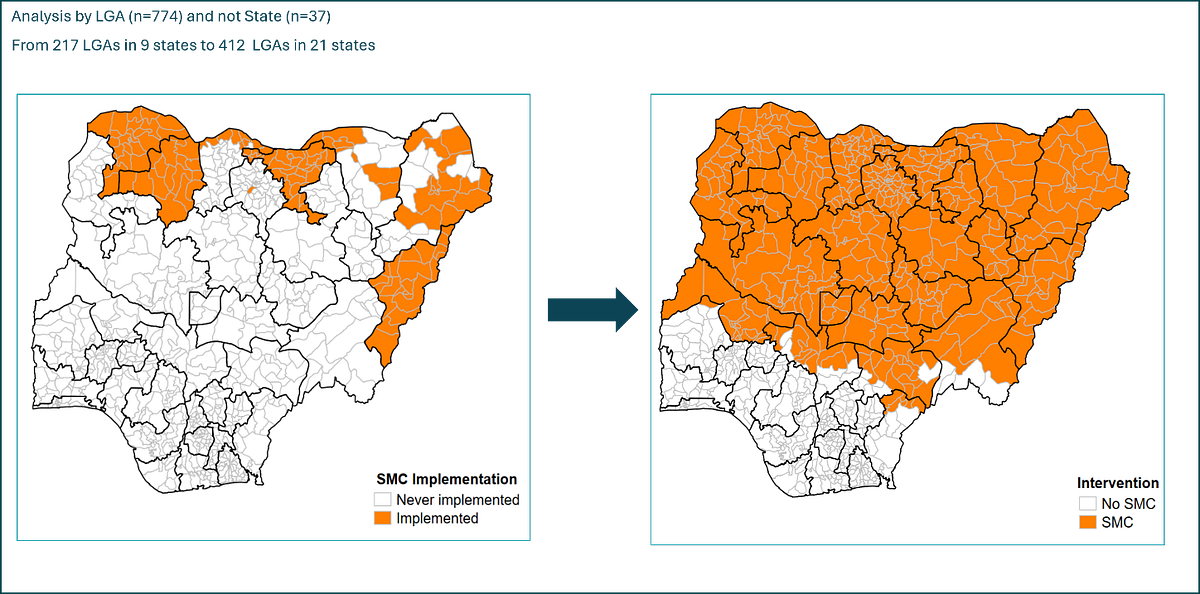
Data is only useful when it informs decision-making
When resources are allocated based on evidence, neighbouring communities may receive very different interventions. While this may be justified epidemiologically, it can be difficult for communities to understand or accept.
Better data does not remove these difficult choices; they make them more visible. Subnational tailoring therefore sits at the intersection of epidemiology, economics, governance and equity, requiring strong institutions that can explain why different communities receive different responses.
Nigeria did not lack malaria data before SNT, the challenge was that it existed across disconnected systems such as routine surveillance, household surveys, campaign monitoring, partner datasets.
The National Malaria Data Repository (NMDR), launched in 2020, brought these together, and by the end of 2022 more than 2,500 federal, state and LGA staff had been trained to use it.
When resources get tighter, targeting matters even more
Nigeria’s malaria programme has had to navigate disruptions to donor support and a broader decline in overseas development assistance, reflected most recently in the reduced funding available following the Global Fund’s Eighth Replenishment. SNT’s stratification analyses, intervention mixes and costed scenarios have informed Global Fund negotiations and investment decisions are fed into discussions around vaccine scale-up and the 2026–2030 National Malaria Strategic Plan (NMSP).
Every health programme operates within constraints. The challenge is not simply to mobilise more resources, but to allocate existing resources more efficiently, knowing where the burden is greatest, what combination of interventions works, and what trade-offs are involved.
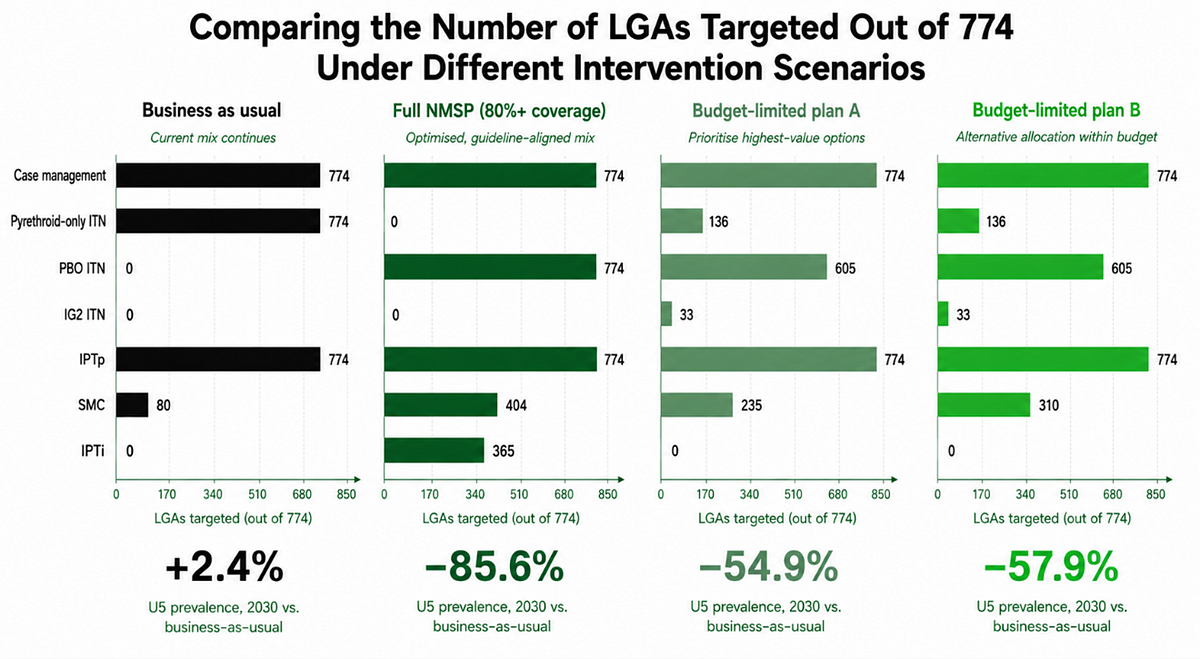
Nigeria’s Malaria problem is not finished
None of this means Nigeria has solved malaria. Routine surveillance and private-sector data remain incomplete, advanced modelling still relies heavily on technical partners, financing is uncertain, and supply chains, workforce and insecurity constrain delivery.
There is also a capacity question. For subnational tailoring to be sustainable, states and LGAs need more than access to national analysis, they need the capacity to interpret evidence and adapt implementation themselves, or SNT risks becoming another sophisticated process concentrated at the national level.
That capacity extends beyond data analysis: sustained advocacy and communication to the media and to policymakers, has been as important as the technical work in keeping SNT funded and understood, and building that same capacity at state and LGA level remains as unfinished as the analytical work itself.
The bigger lesson is not malaria
A national health problem can be enormous in aggregate, while looking very different from one community to another. National averages tell us how big a problem is and not what to do about it in a particular place. That distinction matters even in maternal health, immunisation, tuberculosis, primary healthcare, and health financing.
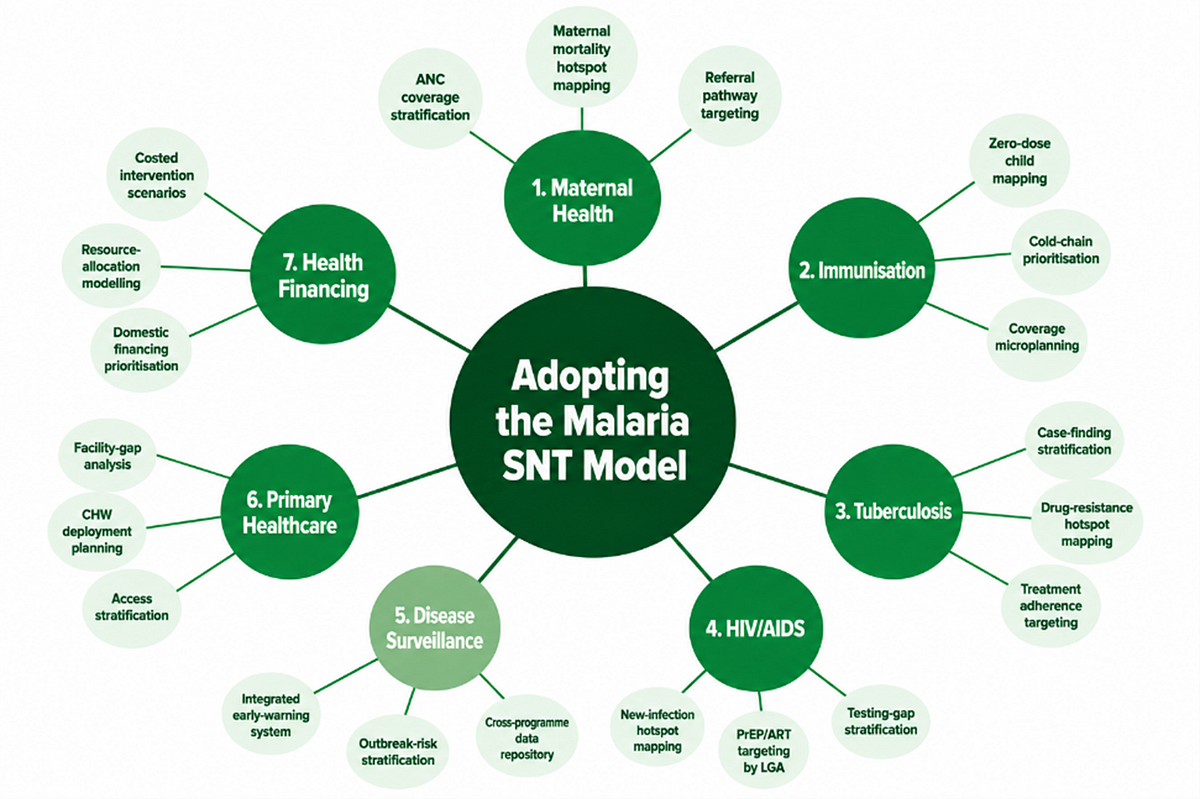
Therefore, Nigeria should move from a model of national uniformity to one of evidence-led differentiation, where national strategies set the direction, but data determines how that strategy is adapted and resourced at the subnational level.
That means investing in the data systems that reveal local differences, building analytical capacity within states and LGAs, and being willing to make difficult resource-allocation decisions based on need and evidence, not a single national package.
Leave a Comment
Your email address will not be published. Required fields are marked *