
Nigeria’s Health Sovereignty Begins with Funding and Accountability in the Global Health Reset
Related Stories



In early 2025, the United States’ pause on foreign assistance raised concerns about funding gaps in health programmes. During the 2025 budget process, Nigeria included a provision of about US$200 million, approximately ₦300 billion at the budget’s exchange rate, to address gaps resulting from the US foreign aid pause. The National Assembly approved the budget in February.
On 19 December 2025, Nigeria and the United States signed a five-year US$5.1 billion health cooperation memorandum of understanding (MoU). The Federal Ministry of Health and Social Welfare says the United States is expected to provide nearly US$2 billion in grants from April 2026 to December 2030. However, limited public reporting on the MoU’s implementation makes it difficult to establish how much, if any, has been disbursed.
Nigeria has committed to allocate at least 6% of executed federal and state budgets to health, a commitment the Ministry estimates could mobilise nearly US$3 billion over the same period. Nigeria’s co-financing commitment is among those that outpace projected growth in health spending.
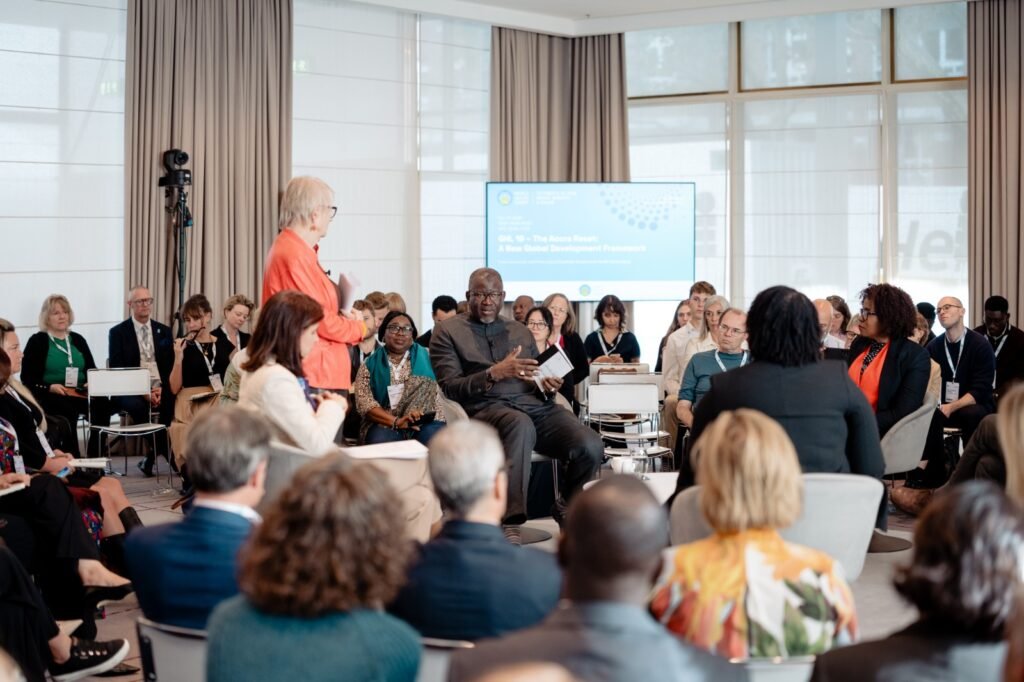
The MoU puts Nigeria’s health financing under closer scrutiny. Yet the question is not only how much the country commits to spend. It is who sets priorities, how partner funds fit national and state plans, and whether the money improves services. Those questions ran through the 2026 World Health Summit in Berlin, held under the theme “From Crisis to Resilience: Innovating for Health”.
The Accra Reset, championed by Ghana’s President John Dramani Mahama, argues for cooperation on terms that give countries greater control over priorities and implementation. At the September 2026 launch of the report A Sovereign Future for Health, Mahama put the accountability test plainly: “No ownership without control” and “no control without absolute accountability.”
Nigeria already has a platform for this work. The Federal Ministry of Health and Social Welfare says its Sector-Wide Approach is intended to align federal, state and local governments, development partners and other stakeholders around a unified national plan, budget and reporting framework. The Health Sector Renewal Compact was signed in 2023 and expanded in 2025. The task now is to make those arrangements transparent enough for citizens to track commitments and results.
Nigeria can judge the Reset against three practical tests:
Test one: Does partner money follow Nigeria’s plan?
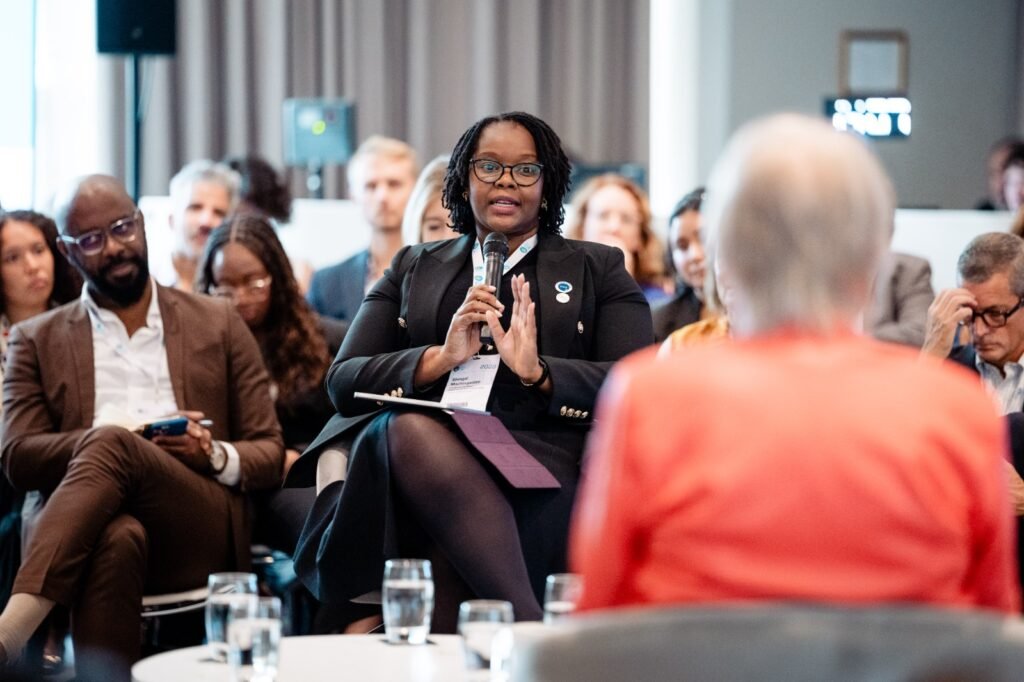
Shingai Machingaidze, adviser to the Accra Reset Secretariat and Head of Africa Strategy and Engagement at CEPI, told the Summit during “The Accra Reset: A New Global Development Framework” session that Global Fund grants and funding requests alone create 10 separate interfaces in Nigeria. A May 2026 mapping by the Multilateral Organisation Performance Assessment Network (MOPAN) describes a wider pattern, such as most financing flowing off-budget and ministries managing parallel processes for each partner.
Dr Kalipso Chalkidou, Director of Performance, Financing and Delivery at the World Health Organization (WHO), asked, “Why aren’t [global health initiatives] funding through the SWAp in Nigeria? … This is not to accuse them of things, but it’s really to diagnose the problem.”
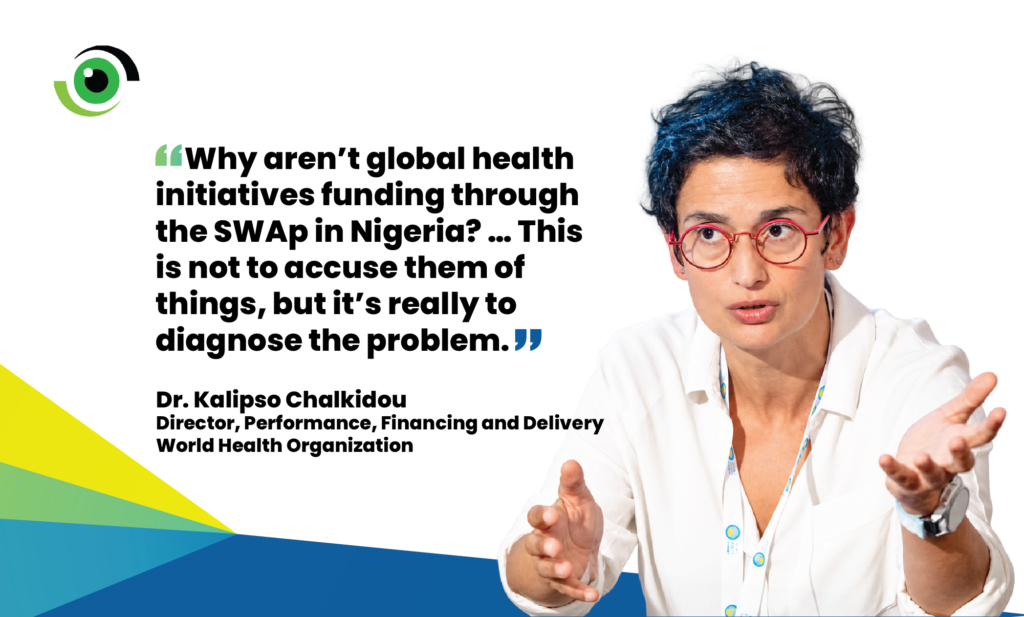
Whether partners fund on budget is, as she put it, “almost binary”, and it can be measured. Nigeria should publish, partner by partner, the share of partner health funding that is on budget and visible to the Treasury.
Test two: Does the money reach the clinic?
The 2026 federal budget allocates approximately ₦2.506 trillion of the ₦68.323 trillion total budget to the Federal Ministry of Health and Social Welfare, representing 3.67% of total expenditure, well below the 15% target set by the Abuja Declaration.
Ghana’s Minister of Health, Kwabena Mintah Akandoh, helped frame the discussion during the Summit’s session on global health governance, noting that “the success story of any … health architecture ends at whether or not the woman in the northern part of Ghana, when [she] needs a particular service, that service is available, that service is accessible, and that service is affordable.”
For Nigeria, the test is whether funds are released and spent, not just the allocation alone. It is whether facilities have the staff, medicines, diagnostics, water, electricity and referral capacity needed to provide care.
Test three: Who holds the government to account?
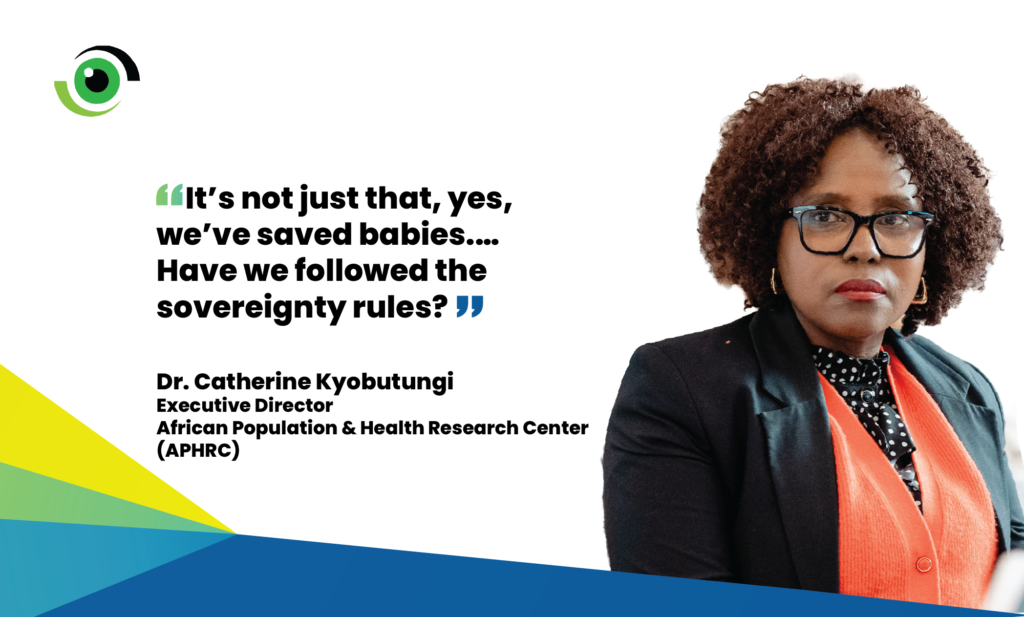
Sovereignty shifts power to governments but does not automatically shift accountability to citizens. According to Professor Catherine Kyobutungi, Executive Director of the African Population and Health Research Center (APHRC), accountability should examine not only results but whether governments and partners uphold sovereignty, subsidiarity and country ownership.
Anna Liakopoulou of the International Federation of Medical Students Associations added that young people’s influence is one warning sign. In preliminary findings she presented, policy formulation accounted for fewer than 3% of responses from 112 young people surveyed.
What should happen next?
- The first priority should be that federal and state governments fund the health sector, publishing regular, comparable data on health allocations, releases, expenditure and agreed service-delivery indicators. Greater transparency in federal disbursements under the Basic Health Care Provision Fund (BHCPF) is encouraging, but the allocation and use of these funds at state level remain less transparent. The Joint Annual Reviews should assess progress against these commitments, identify delays and set time-bound corrective actions, with named institutions responsible for follow-up.
- Government must take primary responsibility for funding health, and development partner support should complement public investment. Partners can strengthen this contribution by aligning support with national and state health priorities, publishing commitments and disbursements, and clearly reporting which funds are on plan, on budget, and channelled through government systems. Through the SWAp Coordination Office, government and partners should, where feasible, agree on common reporting requirements and set out how partners will progressively use national public financial management and audit systems, with safeguards and independent oversight.
- The National Assembly should use these reports to scrutinise budget execution. Civil society and communities should be able to compare published commitments with services available in their local facilities. Information prepared and shared with the United States or any other partner should also be accessible to Nigerians. The reporting should show the share of partner funding aligned with and recorded in government plans and budgets, the share of appropriated funds released and spent, and whether facilities have the staff, medicines and basic infrastructure needed to deliver care.
Nigeria’s health sovereignty will be measured by whether governments take primary responsibility for funding healthcare, with partners complementing that investment, and whether both account for the resources they commit and ensure that the money helps people obtain available, affordable and good-quality care.
Leave a Comment
Your email address will not be published. Required fields are marked *