
Expanding Health Insurance Through Private Providers to Improve Maternal Health in Kaduna
Related Stories




Kaduna State, in the northwest part of Nigeria, is ramping up efforts to improve maternal and newborn survival as it struggles with a maternal mortality ratio of 452.6 deaths per 100,000 live births and a neonatal mortality rate of 63 deaths per 1,000 live births, through reforms aimed at strengthening health financing and expanding access to maternal care.
The state has increased health insurance coverage from about 4.5% to 9.6% and has also surpassed the Abuja Declaration benchmark of allocating at least 15% of the government budget to health, with 16.07% of its ₦127 billion 2025 budget allocated to the sector. Government and development partners investments are also supporting reforms aimed at advancing universal health coverage.
These gains represent progress; however, 9 out of every ten residents remain uninsured, many women still face significant barriers to accessing safe maternal healthcare, and the timely release of funds continues to be a major challenge.
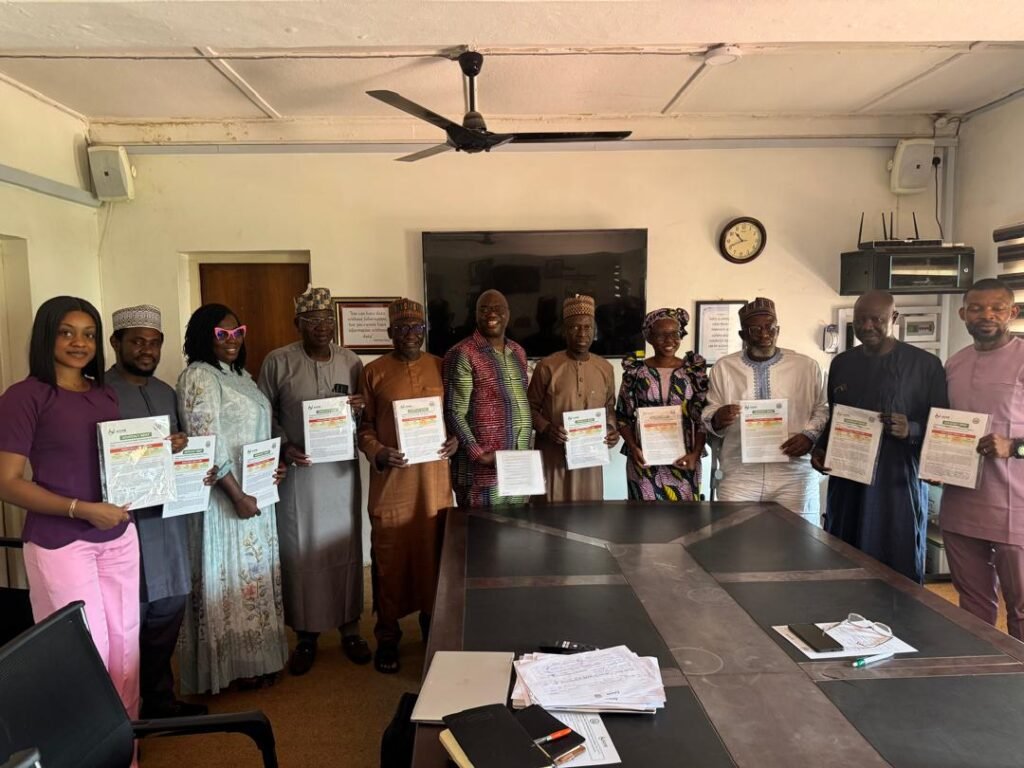
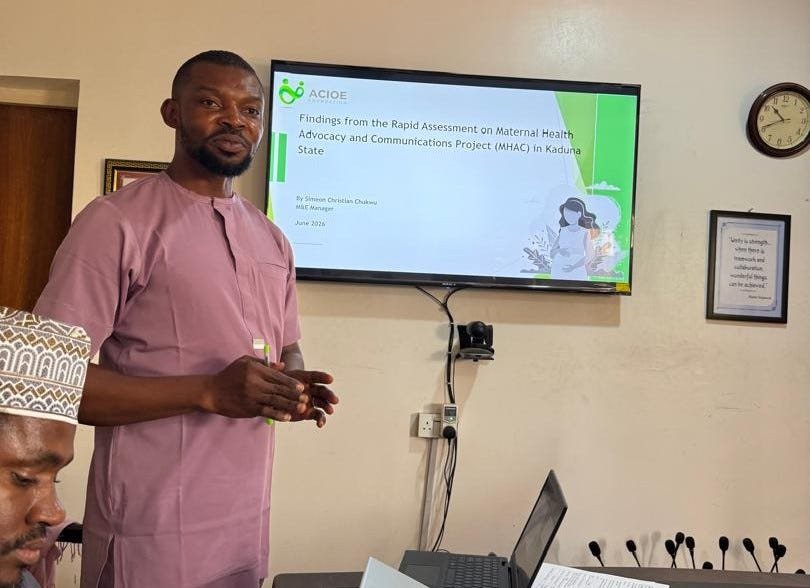
At the stakeholder policy dialogue held in June 2026, organised by ACIOE Foundation with the theme “The Case for Private Sector Financing and Institutionalised Stakeholder Engagement” , stakeholders emphasised the need to expand health insurance coverage while deliberately embedding community structures into how enrolment and maternal health services are delivered.
The policy dialogue convened participants, including the Director General of the Kaduna State Contributory Health Management Authority (KADCHMA), representatives of the Kaduna State Ministry of Health, members of the Kaduna State House of Assembly, SCIDaR, Nigeria Health Watch and other key stakeholders.

Private sector is integral to maternal health care
The private sector plays a significant, but sub-optimal role in Kaduna’s health system. According to Adenike Badiora, Advocacy Lead at ACIOE Foundation, “Kaduna State private sector comprises of 433 registered private health facilities and a network of over 4,000 Patent Proprietary Medicine Vendors (PPMVs), and they are frequently the first point of contact for women seeking care.” This mix of providers plays a substantial role in everyday maternal care delivery, yet financing constraints limit their effectiveness.
The Central Bank of Nigeria’s Monetary Policy Rate of 27% has pushed commercial lending above 24%, making private facilities unable to assess concessionary loans. As Adenike noted, “we see that the private health facilities are locked out of access to affordable credits due to high interest rate.” This limits facility upgrades, staffing, and expansion of services in a system where private providers already deliver the majority of frontline care across the country. According to Simeon Christian, Monitoring and Evaluation Lead at ACIOE, uptake among Kaduna’s private health providers remains low due to awareness gaps and structural barriers such as collateral requirements.
However, opportunities exist to close this financing gap. Finance institutions such as the Development Bank of Nigeria (DBN) and Bank of Industry (BOI) offer concessionary healthcare loans at single-digit interest rates, alongside the Wema Bank–SCIDaR health financing facility offering 12% facility financing, while innovative financing platforms such as HeliumCredit provide healthcare facilities with flexible access to working capital.
Expanding access to these financing mechanisms would enable private health facilities to recruit and retain skilled health care workers, procure lifesaving maternal health commodities and equipment, upgrade infrastructure, and ultimately deliver higher-quality maternal health services to women.
In Kaduna, health insurance coverage covers less than 10% of the estimated 10 million population, leaving the rest without real financial protection. Nationally, Nigeria’s health insurance coverage remains just below 10%, but enrolment has grown by 29% from 16.8million in Q4 2023 to 21.7 million in Q4 2025. An important, yet gradual expansion after two decades of implementation.
Simeon Christian added that many residents remain unaware of available health insurance benefits, while others have misconceptions about what health insurance covers. This creates unrealistic expectations, low enrolment, and distrust when services do not match expectations. Reflecting on this challenge, the Director General of Kaduna State Contributory Health Management Authority (KADCHMA), Mallam Abubakar Hassan noted that “we have a big role in the aspect communication. We need to continue to talk, continue to engage, and continue to educate people about what health insurance is and what it is not.”
Stakeholders’ communication must clearly detail the health insurance coverage, explaining exclusions, referral processes, access points for women and complaint procedures.
Learnings from LASHMA’s coverage model
Lagos State Health Management Agency (LASHMA) provides a strong model of how structured mandatory enrolment, enforcement, and agent-based distribution can rapidly expand insurance coverage.
Lagos’ approach integrates community pharmacies, private facilities, USSD Code, biometric card readers into enrolment systems and how services are delivered, which Kaduna can adopt.
This success has been driven by strong political commitment, mandatory enrolment, robust community mobilisation, targeted subsidies for poor and vulnerable households and affordable premiums. Community pharmacists when properly integrated and equipped can provide information about health insurance and serve as enrolment agents.
Mallam Abubakar Hassan noted that plans are underway to begin formal engagement with community pharmacy practitioners.
Recommendations to improve quality care
- Kaduna State should urgently integrate private providers, especially PPMVs and community pharmacies, traditional rulers, and other community leaders into formal health insurance enrolment and referral systems to expand coverage where most citizens first seek care.
- Health financing reforms should prioritise timely budget release mechanisms, ensuring that the 16.07% allocation translates into actual budget releases.
- The state should scale micro-payment insurance systems and digital enrolment tools to reduce barriers for informal sector households and increase participation beyond the current 9% coverage level.
The opportunity before Kaduna is to harness the reach of private providers, expand health insurance coverage, and build a maternal health system where financial barriers no longer determine who receives care.
Very informative and impactful article! 👏 I appreciate how Maureen Moneke highlights the important challenges surrounding maternal and newborn healthcare in Kaduna, especially health insurance coverage, private-sector financing, and access to quality maternal care. The practical recommendations for stronger community involvement and better health financing make this article especially valuable. Thank you for sharing such meaningful information please keep writing more informative blogs! 🌟
Blood test Hyderabad
MediCompares
August 19, 2026 at 12:28 pm
How can integrating private healthcare providers, community pharmacies, and local community leaders into health insurance enrolment and referral systems help Kaduna expand maternal healthcare access and reduce financial barriers for women? Thank you, Regard PUTI
PUTI
August 23, 2026 at 3:25 am
Leave a Comment
Your email address will not be published. Required fields are marked *