
An Epidemic of Parastatals in Nigeria’s Health Sector
Related Stories





Over the past few months, several bills proposing new parastatals in Nigeria’s health sector have been introduced, creating considerable confusion across the sector. It is unclear what is driving these proposals or where the pressure for additional parastatals is coming from. There appears to be no demand from health professionals for these additional parastatals, as the sector is already crowded with parastatals that often overlap in function.
At the same time, government officials continue to argue that existing agencies lack the resources to fulfil their mandates, yet the Senate is pushing through proposals to establish new ones. The proposal runs counter to global trends, which are moving towards greater institutional integration to improve efficiency and reduce duplication. Given the Senate’s apparent enthusiasm for creating new parastatals, this article explores whether this approach is justified and what it could mean for governance, public finances and institutional effectiveness.
The Proposed New Parastatals
On 3 June 2026, the Nigerian Senate passed a bill to establish the National Agency for Malaria Elimination. Sponsored by Senator Ned Nwoko, the bill seeks to move Nigeria’s malaria strategy beyond reactive, treatment-focused interventions towards a comprehensive national approach to prevention, eradication and research. However, these responsibilities already fall under the National Malaria Elimination Programme (NMEP) in the Federal Ministry of Health, whose stated objectives closely mirror those proposed in the bill. The implication is difficult to avoid. The Senate appears to believe that achieving these objectives requires a new parastatal, complete with its own Director-General, governing board and dedicated funding stream.
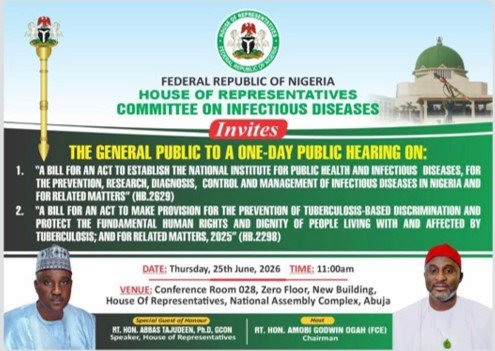
The dust had hardly settled when reports emerged that the House of Representatives had introduced a bill to establish a new National Institute for Public Health and Infectious Diseases in Zaria, Kaduna State. This proposed parastatal is even more puzzling, given the near-complete overlap between its proposed functions, mandate, funding and structure with those of the existing national public health agency, the Nigeria Centre for Disease Control and Prevention (NCDC), as expertly illustrated by Dr Emmanuel Agogo in his analysis of the mandates of the new and old parastatals. The Nigeria Centre for Disease Control has also publicly expressed its opposition to the proposed new parastatal.
The National View on Parastatals
Every new administration eventually confronts the reality that Nigeria has too many parastatals to sustain. In 2012, the Federal Government commissioned an extensive review led by a former Head of the Federal Civil Service, now known as “The Oronsaye Report”. The report identified 541 parastatals, commissions and agencies across the country, a number that has since grown substantially. Its purpose was to reduce the high cost of governance by merging, subsuming or abolishing overlapping and redundant federal bodies.
Among those recommended for abolition was the National Agency for the Control of AIDS (NACA), the only disease-specific parastatal in the health sector. Yet despite repeated commitments by successive administrations, President Goodluck Jonathan, who commissioned the report; President Buhari, who ordered its review; and President Tinubu, who directed its full implementation, none has succeeded in abolishing a single parastatal. The current push by parliamentarians to establish new ones is therefore difficult to justify.
Existing Agencies Are Already Underfunded
Publicly available budget implementation information and discussions with informed stakeholders across the health sector suggest that many federal health agencies have received only limited releases against their 2025 budget allocations, while several are yet to receive funding for capital projects under the 2026 budget. The scale of the challenge became particularly evident when the Minister of Health and Social Welfare, Prof. Muhammad Ali Pate, disclosed during his 2026 budget defence before the House of Representatives Committee on Healthcare Services that the ministry had received just ₦36 million of its ₦218 billion capital allocation for 2025.
The Global View on Integration
Although vertical funding streams have contributed significantly to reducing mortality from diseases such as HIV/AIDS, tuberculosis and malaria by mobilising substantial resources and rapidly scaling up targeted interventions, it has also been criticised for fragmenting health systems. Disease-specific programmes have often created parallel delivery structures, separate reporting systems, duplicated supply chains, and competing demands for scarce health workers. The result has been weaker coordination, reduced efficiency and in many settings, a less coherent primary healthcare system.
Global health thinking has increasingly shifted towards integrating public health services, recognising that stronger and more resilient health systems depend on coordinated, people-centred care rather than isolated disease programmes. The dismantling of the United States Agency for International Development (USAID), which financed many vertical programmes, presents both a challenge and an opportunity. While the loss of external funding may disrupt essential services, including HIV, tuberculosis, malaria, maternal and child health, and immunisation, it also creates an opportunity to move beyond fragmented, donor-driven vertical programmes towards more integrated, people-centred health systems.
Another global process, the UN80 Initiative, launched by the UN Secretary‑General in March 2025, is a system‑wide reform programme designed to make the United Nations simpler, more coherent, efficient and effective. It seeks to clarify and streamline mandates, while improving institutional efficiency and coherence. Among its proposals are the “sunset” of UNAIDS as an independent agency by the end of 2026, and the merger of UN Women with the United Nations Population Fund (UNFPA).
What Problem Are We Trying to Solve?
In the context of a government that has publicly acknowledged that it has far too many parastatals, does not have the resources to fund the ones it already has, and at a time when global trends are moving towards integration and harmonisation, the question is what has led the Senate and House of Representatives to conclude that the Nigerian health sector’s greatest challenge is a deficit of parastatals.
If Nigeria is to build a more effective and resilient health system, the priority should be to strengthen and equip existing institutions with the necessary resources before creating new ones. Otherwise, institutional proliferation risks becoming a problem in its own right, diverting scarce resources and attention from the reforms that matter most at this time.
Leave a Comment
Your email address will not be published. Required fields are marked *