

E-MOTIVE’s Calibrated Drapes Are Helping Kaduna Health Workers Detect Postpartum Haemorrhage Earlier
Related Stories



Raliya Shehu had experienced heavy bleeding after each of her previous eight deliveries, so when she arrived at Hajiya Gambo General Hospital in Zaria, Kaduna, preparing to give birth to her ninth child, she was already feeling anxious. The health workers who were caring for her were aware of her history. Before her baby was born, they prepared for the possibility that she could suffer from postpartum haemorrhage (PPH) again.
They asked her husband to arrange two pints of blood in case she began bleeding heavily again. They also placed a disposable plastic sheet, known as the calibrated drape, beneath her to measure blood loss after delivery. Shehu initially questioned why it was needed, but later understood that it was part of the care she was receiving. “They took care of me very well,” said the 40-year-old mother.
Calibrated drapes are part of the E-MOTIVE bundle of care, a package of interventions designed to help health workers detect and manage PPH early. The calibrated drape collects blood loss immediately after birth and measures it, helping clinicians identify postpartum haemorrhage earlier and more accurately than visual estimation alone.
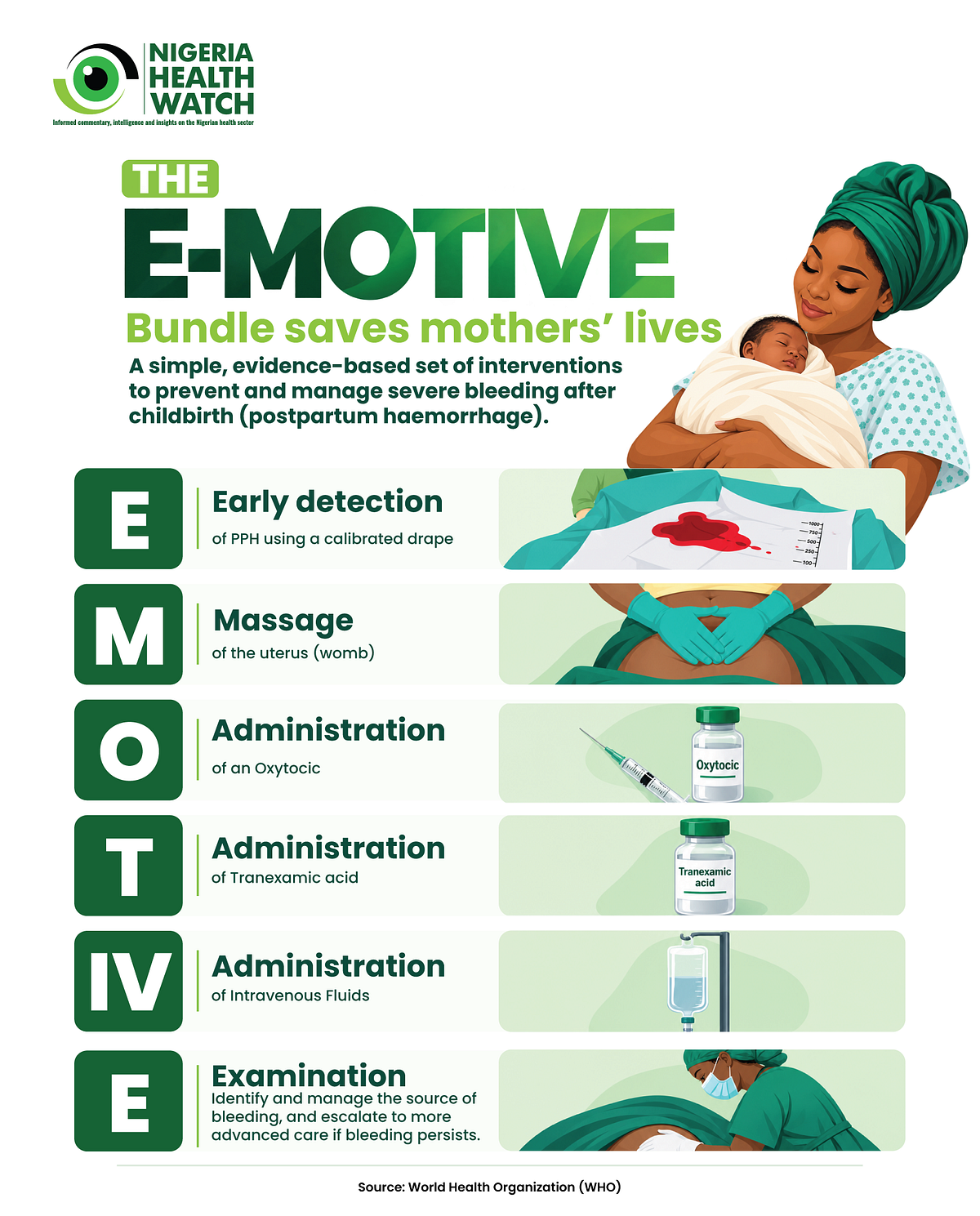
This early measurement can help health workers recognise excessive blood loss sooner and begin timely treatment, including uterine massage, administration of medicines to control bleeding, intravenous fluids and, where necessary, blood transfusion.
Why too many women still die from postpartum haemorrhage
Nigeria accounts for up to 28.5% of global maternal deaths, with PPH responsible for approximately one-third of maternal deaths in the country. In Kaduna, several development partners, including Pathfinder International and Technical Advice Connect (TAConnect), are supporting efforts to improve the detection and treatment of PPH, with support from the Gates Foundation.
Dr Tanimu Salisu Argungu, State Team Leader and Manager for Task Shifting and Task Sharing (TSTS) at Plan International, said that when the programme began in the state, the team found that many Primary Healthcare Centres (PHCs) were primarily staffed by Community Healthcare Extension Workers (CHEWS) and Junior Community Healthcare Extension Workers (JCHEWs).
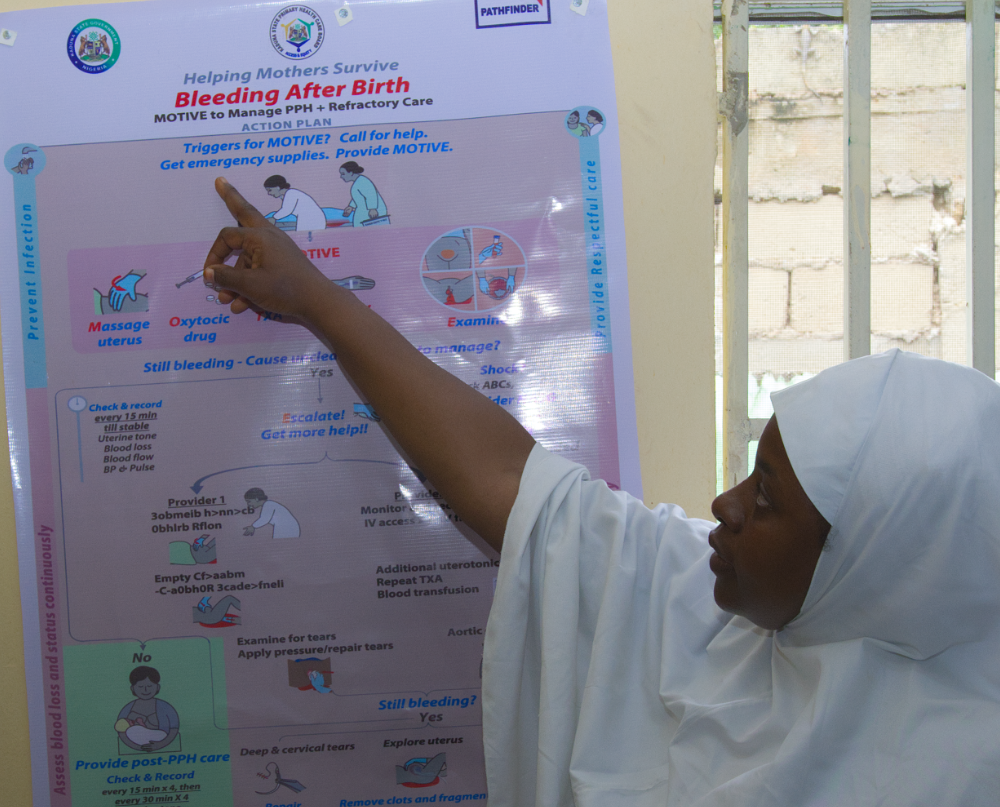
With few trained midwives and skilled birth attendants available at these facilities, he said, maternal emergencies could quickly become fatal.
“When we came with the investment, we isolated the PHCs that were reporting the highest number of mortality cases, and we trained the CHEWs in these facilities. After the training and management of PPH and [the use of] E-MOTIVE Bundle,” he explained. “We send them to their facilities to step down the knowledge to the health workers there, be it CHEW, be it JCHEW, be it a nurse. All of them, including the Officer-in-Charge.
“Since the training, there has been a drastic change. None of our facilities has recorded a PPH-related maternal death since August 2025. That is to tell you how impactful this training has been,” Dr Argungu highlighted.
Catching postpartum haemorrhage earlier
Plan International began implementing the programme in Kaduna in 2024 and has since reached 77 health facilities across nine LGAs, training about 77 health workers.
TA Connect began its programme in October 2025 and is currently supporting 100 PHCs and 24 secondary health facilities across 15 LGAs. The PHCs include facilities across the state’s seven MAMII LGAs, Kagarko, Zaria, Chikun, Kudan, Kubau, Kauru, and Igabi, with the intervention expected to run until 2029.
So far, TAConnect has trained more than 30 master trainers and over 350 healthcare workers. “From the time we started implementing, there have been approximately 67,000 deliveries [in the supported facility]. Of these deliveries, over 32,000 were monitored using the calibrated drape, which is a game changer in the management of PPH,” said TAConnect’s State Lead, Dr Alhassan Momoh.

According to Dr Momoh, more than 2,300 cases of PPH were identified using the drapes, with over 95% of these cases managed at the point of care. The remaining cases were referred to secondary facilities, where they were also managed.
By providing an objective measure of blood loss, the calibrated drapes help health workers detect PPH earlier and begin the E-MOTIVE bundle of care, which is designed to be administered within 15 minutes of detection.
‘Work before E-MOTIVE was a mess’
Yakubu Bilkisu, Maternity Ward In-charge at the Hajiya Gambo Sawaba General Hospital, described how difficult it was to manage PPH in the past. [In the past] we could do all we could and still lose a mother. Since 2025, we have recorded no PPH-related maternal deaths. However, we recorded three deaths [from other complications]. One because of puerperal sepsis and the other two were because of preeclampsia and eclampsia.”
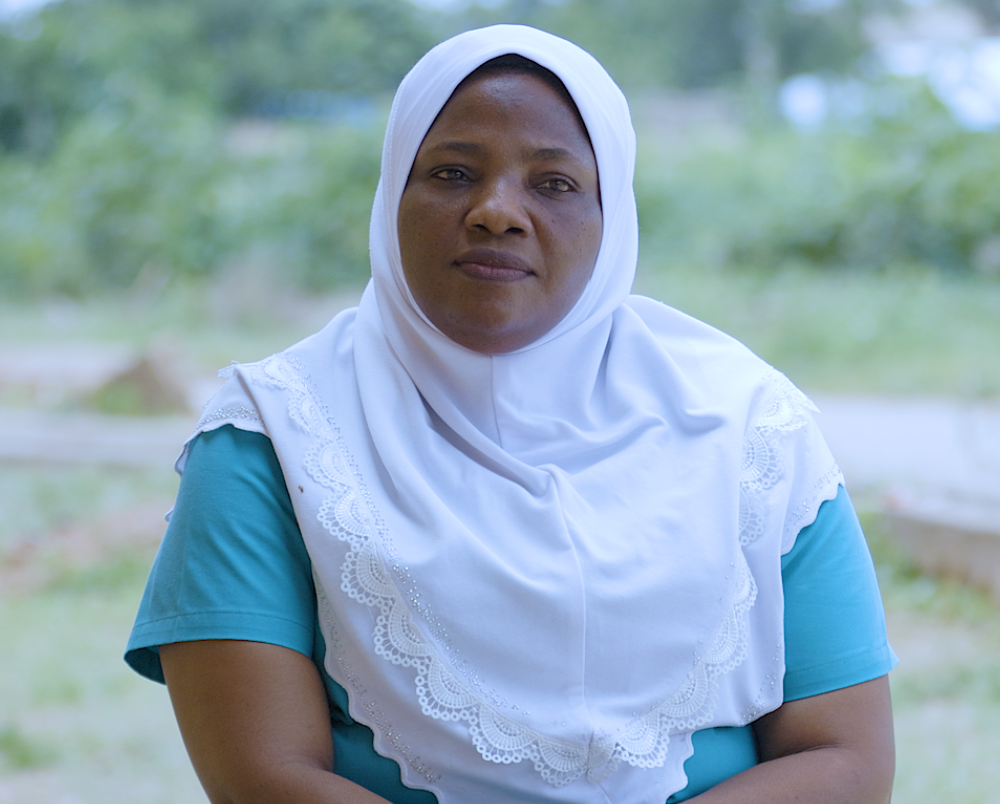
For Olusola Florence Adeosun, a midwife at a secondary healthcare facility, the introduction of E-MOTIVE has changed how she approaches her work “I feel more confident now working with E-MOTIVE. Work before E-MOTIVE was a mess.”
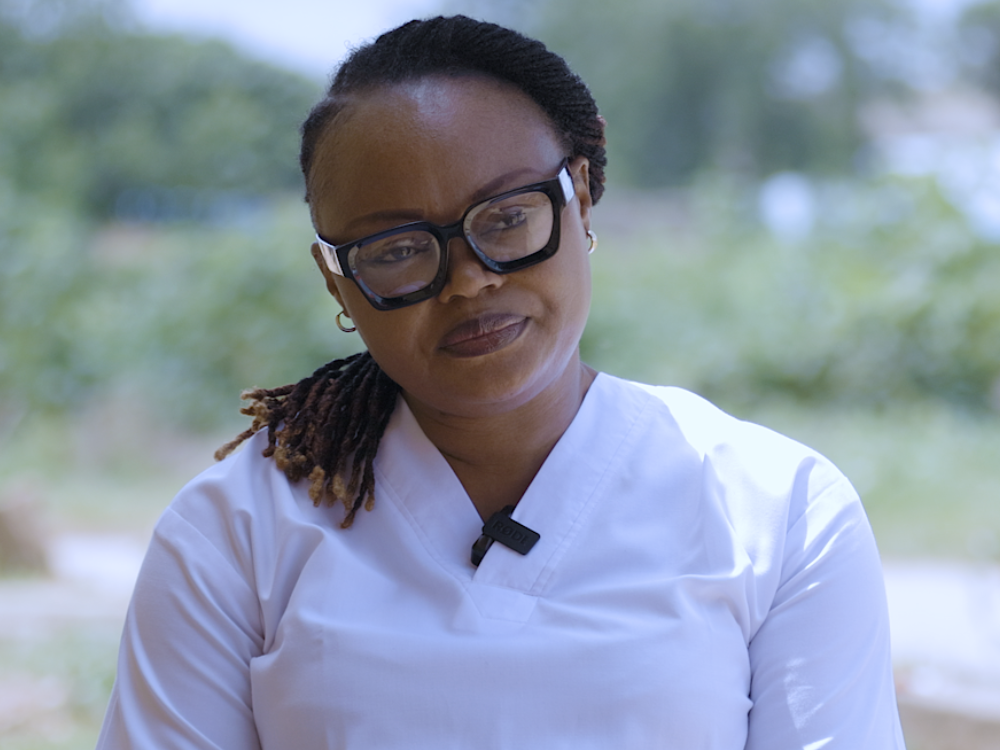
Sunday Benedicta, a registered midwife at Sabon Tasha PHC in Chikun LGA, recalled that even during her training, blood loss was measured largely through estimation. “It was after we were trained by TAConnect that I first heard about the calibrated drape.”
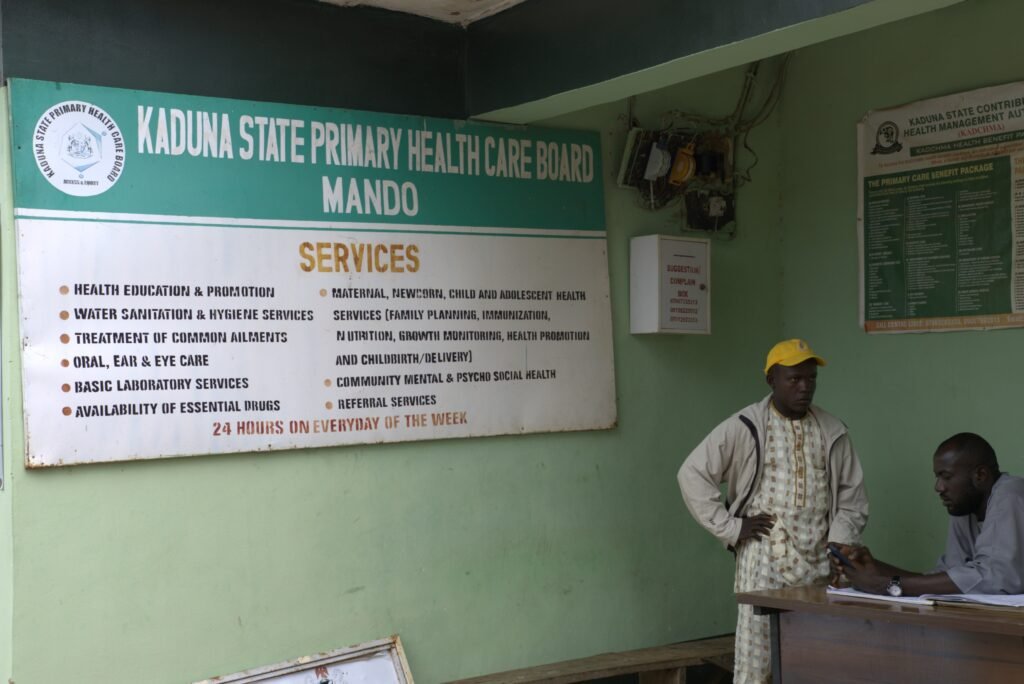
The training has also strengthened health workers’ ability to respond to other maternal and newborn emergencies. Hadiza Abdullahi, a CHEW at Mando PHC in Igabi LGA, said that before she received training from Pathfinder International, she did not know how to use an anti-shock garment.
“During the training, our mentor taught us. After I attended the training, we set an emergency tray for the baby. We also set an emergency tray for the mother. I knew how to resuscitate a newborn, but not much, but in the training, I learnt how to take care of a newborn that does not cry at birth. Before the training, I did not know how to do manual removal of placenta, but after the training, I learned,” she said.
Building confidence in facility-based care
At Mando PHC, the changes have also been seen in the number of women who no longer come to the facility to give birth. Murjanatu Muhammad Rabiu, the facility manager, said deliveries increased after staff received the training. “InAugust alone, we received 90 births. Before the intervention, the facility recorded about 27 births during the same period.”
Community leaders have also seen a shift in confidence in local health facilities. Abdu Sa’idu Zaria, Head of the Ward Development Committee (WDC) in Afaka community, Igabi LGA, and Gabriel Akunganai, Head of the WDC in Sabon Tasha, Chikun LGA, said the training had strengthened health workers’ ability to manage birth-related complications and increased community members’ confidence in their PHCs.
Dr Hosan Amos Bitrus, Health Secretary for Chikun LGA, said the intervention had helped standardise practices and improved the management of maternal and newborn complications. “We thank TAConnect for mentoring and supervising them by following them to see what is happening and checking the documentation. Prior to this, the documentation was poor. Even the referral system is weakened and not being followed.”

A limitation within the broader health system
The programme is funded by the Gates Foundation, raising questions about how the intervention can be sustained, particularly for women who cannot afford the calibrated drapes, which cost between ₦1,600 and ₦2,000 each. In collaboration with the Kaduna State Government, however, medicines used to manage PPH have been included among essential commodities under the Drug Revolving Fund (DRF), making them more readily available at subsidised prices.
Other gaps within the health system also affect how the intervention is used. Dr Argungu said PHCs that do not receive support through the Basic Health Care Provision Fund (BHCPF) often lack delivery beds and rely instead on regular beds. This can make it difficult to position calibrated drapes correctly during childbirth. Advocacy is ongoing, he said, for the state government to provide appropriate delivery beds.
Dr Argungu also pointed to the need for continued investment, urging the state government to mobilise resources to maintain the programme’s gains. “A lot of times, investments are made to train healthcare workers, but no one follows up. What we are doing differently in our own programme is the training of mentees by their mentors, so that when they feel there is a knowledge gap, they can always step in.”
For Raliya Shehu, the calibrated drape was simply another sheet placed beneath her as she gave birth. For the health workers caring for her, it provided something they had previously lacked. Replacing guesswork with an objective measure of how much blood she was losing, at a moment when acting quickly could save her life.
Leave a Comment
Your email address will not be published. Required fields are marked *