

Chigari Foundation Is Working with Traditional Leaders to Expand Inclusive Immunisation in Communities Across Kaduna
Related Stories



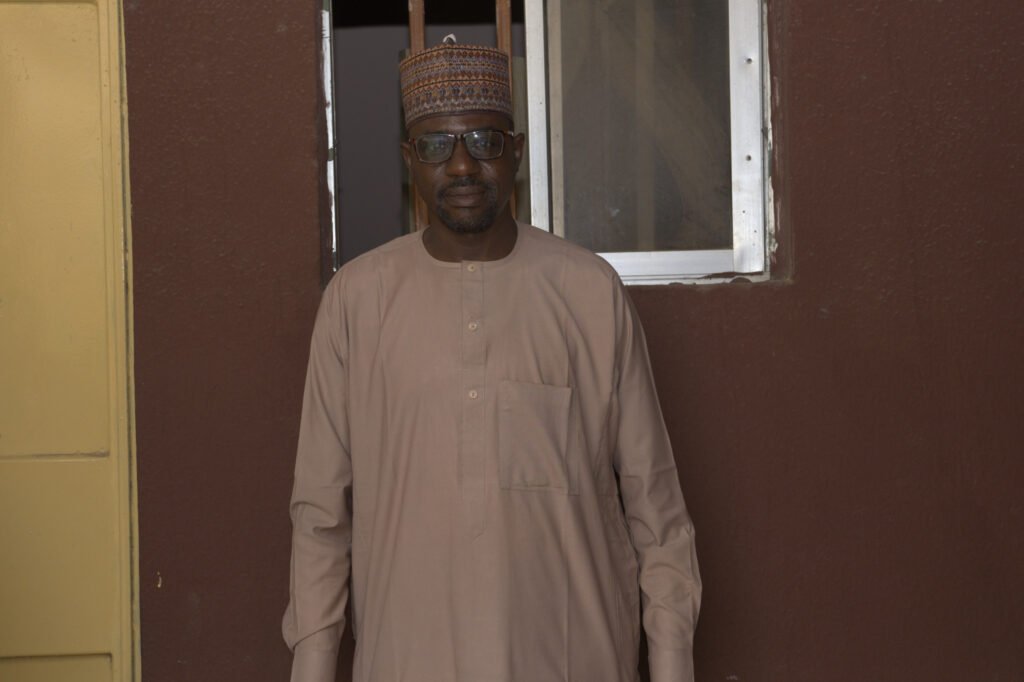
Long before Yunusa Lawal became the Routine Immunisation Officer (RIO) for Zaria Local Government Area (LGA) in Kaduna State, he was already familiar with vaccine hesitancy, a persistent challenge facing immunisation efforts among residents of Zaria and nearby communities.
“Mostly it is because of religious beliefs amplified by clerics,” the RIO noted. “But since Chigari Foundation and other partners came in, that has reduced. We used to [record] a rough estimate of 65% non-compliance; now we record only 5%.”
The 2024 Nigeria Demographic and Health Survey (NDHS) estimates that only 36% of children aged 12 to 23 months in Kaduna State received all basic vaccines, compared with the national average of 39%.
This low immunisation coverage reflects longstanding challenges in the state, including refusal by some parents and caregivers to vaccinate their children, and misconceptions and superstitious beliefs surrounding polio vaccination.
These challenges have contributed to gaps in immunisation coverage, leaving children vulnerable to vaccine-preventable diseases, including circulating vaccine-derived poliovirus type 2 (cVDPV2), which had also been reported in the state.
Engaging traditional rulers
In 2022, Chigari Foundation began engaging traditional rulers across northern Nigeria to address vaccine hesitancy and improve immunisation uptake. According to the foundation, these efforts contributed to the expansion of the Kaduna State Traditional Leaders Committee on Health (KSTLCoH) from 35 to 45 members, ensuring representation across all 35 chiefdoms and emirates in the state.
It also established 255 Ward Emirate Council Communities on Health across all 255 wards of Kaduna State. The KSTLCoH nominated 3,857 community leaders across 23 LGAs for polio eradication initiative outreach.
Dr Muhammad Bello Abdulkadir, who holds the traditional title of Salanken Zazzau, and doubles as the Chairman of Zazzau Emirate Committee on Health, Transparency and Accountability (ZECOHTA), explained that the body helps their members to understand new government health policies and health campaigns by other organisations.

“The responsibility of the committee is to mobilise acceptance of all health programmes and health services provided by the government — whether federal, state or local government — to also accept any programme or activity such as routine immunisation,” Dr Abdulkadir explained.
“That is the responsibility of the district committee, and it reports back to the Emirate committee. The Emirate committee collates all 31 districts, and our statistics officer analyses them and sends them to His Highness. At any given time, the Emir is aware of what is going on in every ward, every village and every district.”
Even before the establishment of the committee in November 2025, Dr Abdulkadir noted that there has been the Northern Nigerian Council of Traditional Rulers Committee on Health, sponsored by the Sultan Foundation and the Village Committee on Health, sponsored by the Chigari Foundation, both of which campaign for polio eradication and routine immunisation.
He recalled that in the past, the response to the cVDPV2 outbreak occurred every two months, but it now occurs every five months. “When you start reducing the frequency, it means you are achieving success,” he added.
Security compromised communities
Dr Abdulkadir pointed out that cases of cVDPV2 are more in Soba and Giwa LGAs, which he attributed to insecurity because vaccinators hardly go to these communities for fear of being kidnapped.
Mohammed Sagir Auwal, Chigari Foundation’s National Technical Consultant for Advocacy, Communication and Social Mobilisation (ACSM) and Kaduna State Team Lead, highlighted the role of traditional leaders in responding to polio outbreaks and improving routine immunisation uptake.
Recalling the most recent outbreak in Soba LGA, he explained that teams from the national, state and local government levels conducted an extensive vaccination campaign, working with community heads and primary school teachers who received special training to vaccinate children.
According to him, routine immunisation uptake has improved significantly since traditional leaders became involved. While many traditional leaders and data clerks have the educational and communication skills to support these efforts, he noted that translation may still be necessary when engaging some members of the Ward-Level Emirate Council Committee on Health to ensure effective communication at the grassroots.
‘In every neighbourhood, we know who is there’
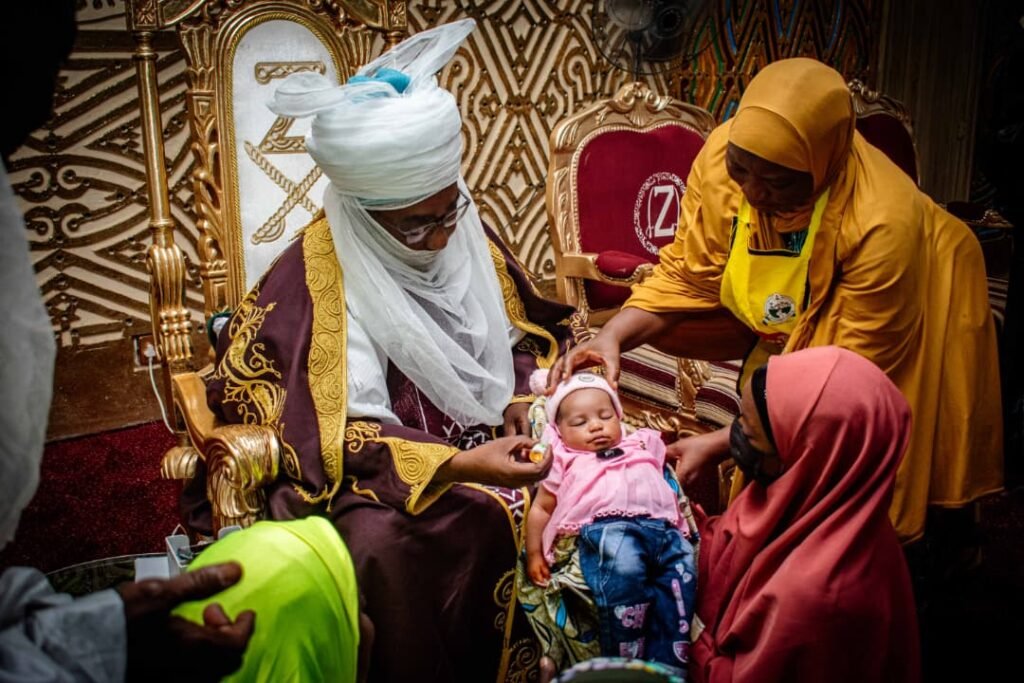
Ambassador Ahmed Nuhu Bamalli, the Emir of Zazzau, attributed their success to collaboration, transparency, and accountability. He, however, noted that a lack of accountability, the misapplication of resources, or diversion are where problems start, adding that these are threats to the progress being made.

According to the ruler, the traditional institution has the best structure and urges development practitioners to involve it in their activities to achieve the desired results. “You spend nothing or little amount on logistics only. We do not undermine any profession; we get information about every community.
“In every neighbourhood, we know who is there. I have the ward head, village head and district head in every district –and that is the channel of communication we cascade any information,” he stated.
The Emir also commended development partners that have been instrumental to the successes in polio and routine immunisation uptake like the Gates Foundation, the Sultan Foundation, Chigari Foundation, among others.
Mohammed Sagir Auwal, Chigari Foundation’s State’s Lead, emphasised that when traditional leaders lead, communities listen. “With the unwavering support of His Highness, Chigari Foundation, the State Primary Health Care Board, and other Partners we have achieved about 90% of our target on routine immunisation and other health-related issues. We are very encouraged by the commitment of our field teams, caregivers and health personnel not just in Zaria, but across the entire 23
Leave a Comment
Your email address will not be published. Required fields are marked *