
How Market Doctors Are Bringing Primary Care Closer to Traders in Lagos
Related Stories
At the entrance to Tejuosho Market in Yaba, Lagos, a woman known as Sisi Alagbo sells locally prepared herbal mixtures, or agbo, to traders seeking relief from fever, stomach pain, body aches and fatigue. For people trying to avoid losing a day’s income, the mixtures are familiar and immediately available.
Agbo is not a single standard product. Its ingredients, preparation and dosage vary. Traditional medicines should be supported by evidence of safety and effectiveness, and NAFDAC has warned against unverified therapeutic claims for herbal products. The World Health Organization (WHO) also recommends diagnostic testing before treatment for suspected malaria.
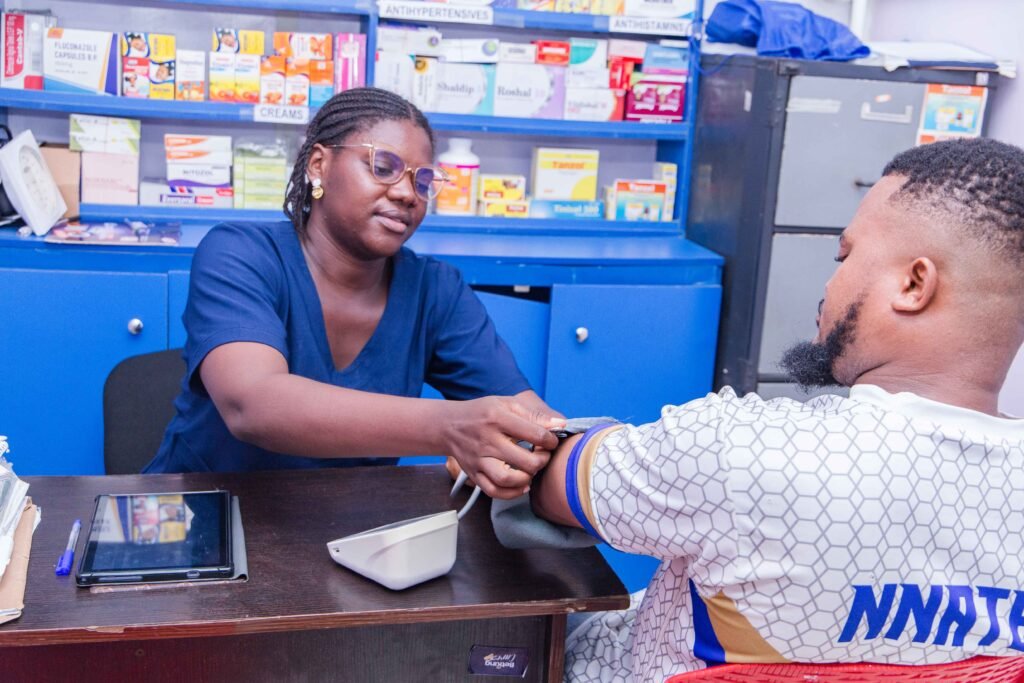
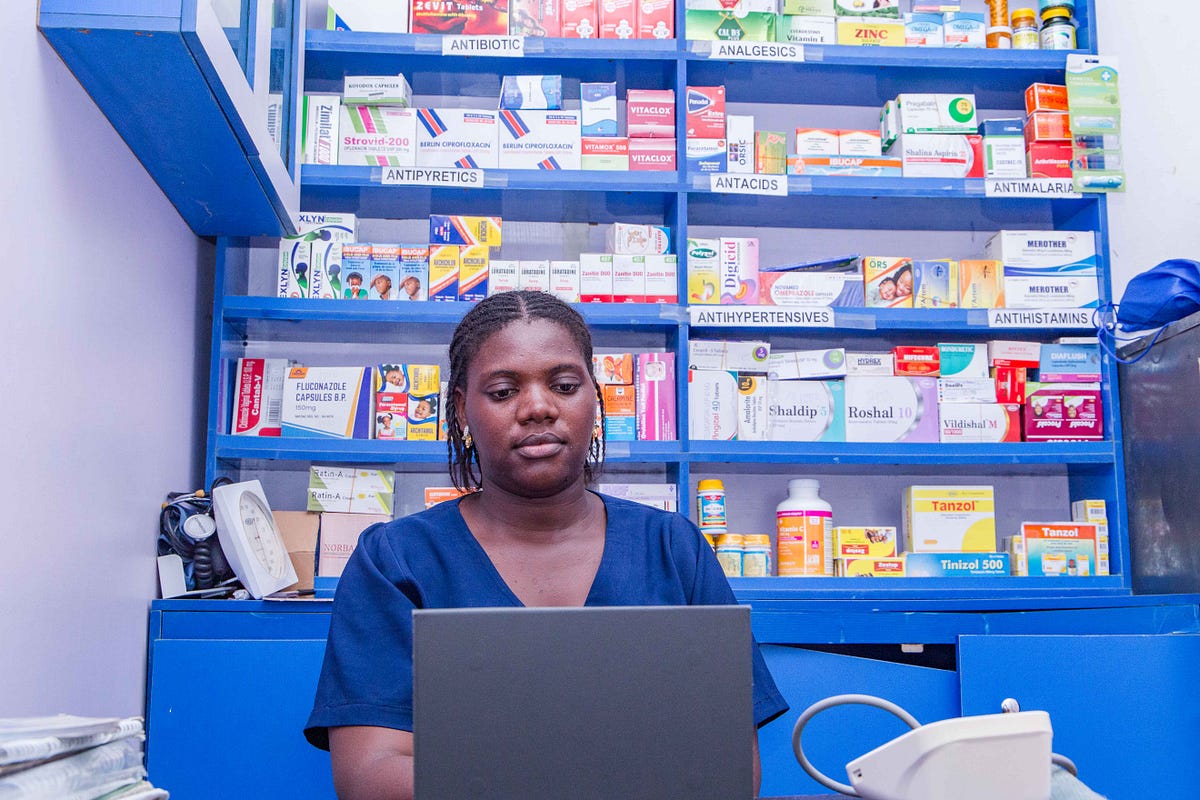
A few floors above the market, Market Doctors runs a fixed-site clinic where traders can receive basic care without leaving work for long, offering the same convenience that draws traders to Sisi Alagbo’s stand, but paired with clinical diagnosis rather than a fixed herbal mixture.
The social enterprise also operates mobile outreach and uses community health agents to connect traders with clinicians, applying the same “don’t lose a day’s income” logic that makes agbo attractive, but routed through diagnosis rather than guesswork.
Informal employment accounts for 93% of total employment. Many informal workers depend on daily earnings and do not receive employer-funded health coverage. Households also pay 71.9% of Nigeria’s current health expenditure out of pocket.
Reducing the cost of time
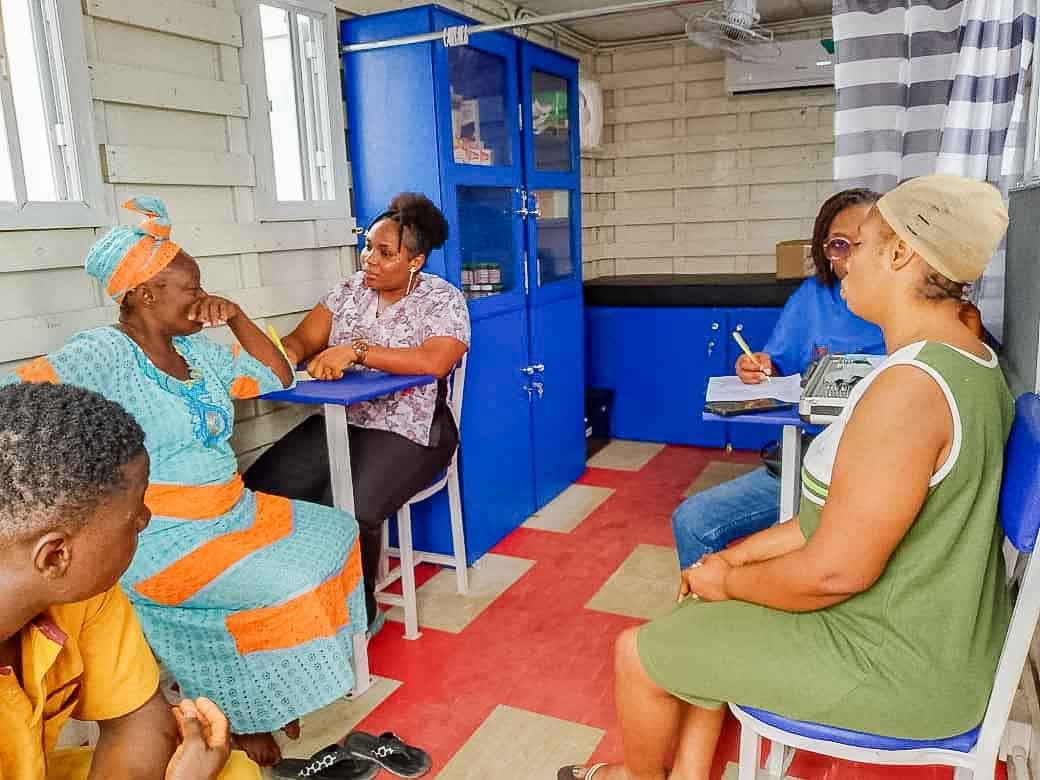
For years, Jessica Omotayo hawked goods around Tejuosho without a permanent stall. In 2025, she collapsed while working after losing sensation in her legs. “I left home that morning with a slight headache, but I thought it was nothing serious, so I continued with my sales,” Mrs Omotayo said.
“Later, when I tried to stand up and continue selling, I could not feel my legs anymore.” Traders took her to the market clinic. “I’m grateful market doctors were there because all I could think about was my two children. Who would take care of them if I weren’t here?” she said. Her experience shows why proximity was important to her.
According to Jane Nwabuchimnemerem, the head nurse at the Tejuosho Market clinic, sudden slumping like this can sometimes signal a stroke, and that’s what the team suspected when Mrs Omotayo was rushed in. Her blood pressure was as high as 200, well above the normal range. So, the first step was to assess her vitals: checking blood pressure, pulse, breathing and blood sugar.
From there, she was rehydrated to help bring her blood pressure down, and she was given antihypertensive medication to manage the severity of her BP. Jane was clear about the limits of what the clinic could do: “This is more like a first aid, and that’s the level at which we can go because ours is a clinic.” Once Mrs Omotayo regained consciousness, she was referred to a hospital for admission and further management.
Dr Yetunde Ayo-Oyalowo, founder of Market Doctors, said the model is intended to reduce costs beyond consultation and treatment fees. “Many traders delay seeking care not because they do not value their health, but because accessing healthcare often means they lose income, they lose transport money, and they lose time. Sometimes they spend the whole day there and still don’t get everything they need. Those are the hidden costs of healthcare that many people don’t talk about,” she explained.
Taking services beyond Tejuosho
Market Doctors also runs mobile outreaches in markets and underserved communities, sometimes with corporate sponsorship. “We go into the real Nigerian market,” Dr Ayo-Oyalowo noted. “We’re talking about Mushin, Alaba, Ketu, mechanic villages and rural communities and set up a mobile mini clinic there, provide consultations, tests, medications and referrals all in the same place.”
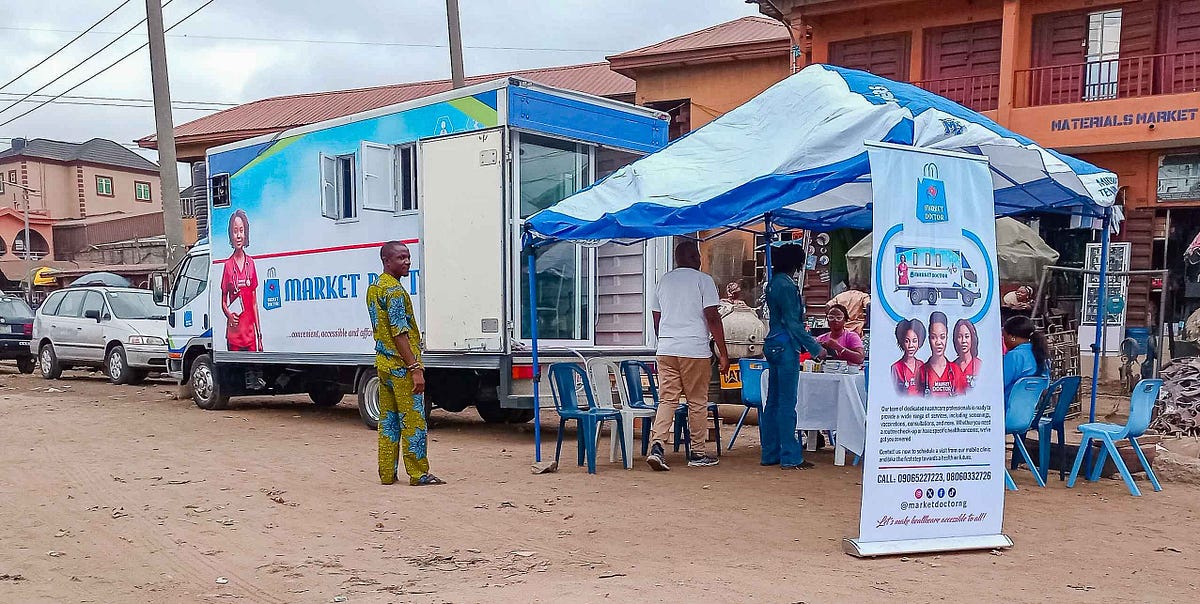
Market Doctors says a sponsored outreach may reach 150 to 300 people in a single day. Services include blood pressure and blood glucose checks, eye examinations, consultations, medicines and referrals. But the numbers only tell part of the story. Cases requiring further care are referred to the nearest hospital, and follow-up is limited to a phone call about two weeks later.
Of those outreaches, only about 30% are followed through to the point where the patient is confirmed stabilised. “Follow-up after outreaches isn’t easy,” Ogunmola admitted, “so the team focuses its limited capacity on patients with the most complicated cases, the ones who genuinely need a referral rather than spreading thin across everyone seen.”
Community health agents conduct basic checks and connect traders with clinicians through video calls. At Tejuosho, they are known as “Elo Soke”, from the Yoruba phrase ẹ lọ sókè, meaning “go upstairs.” They direct traders to the clinic when an in-person assessment is necessary.
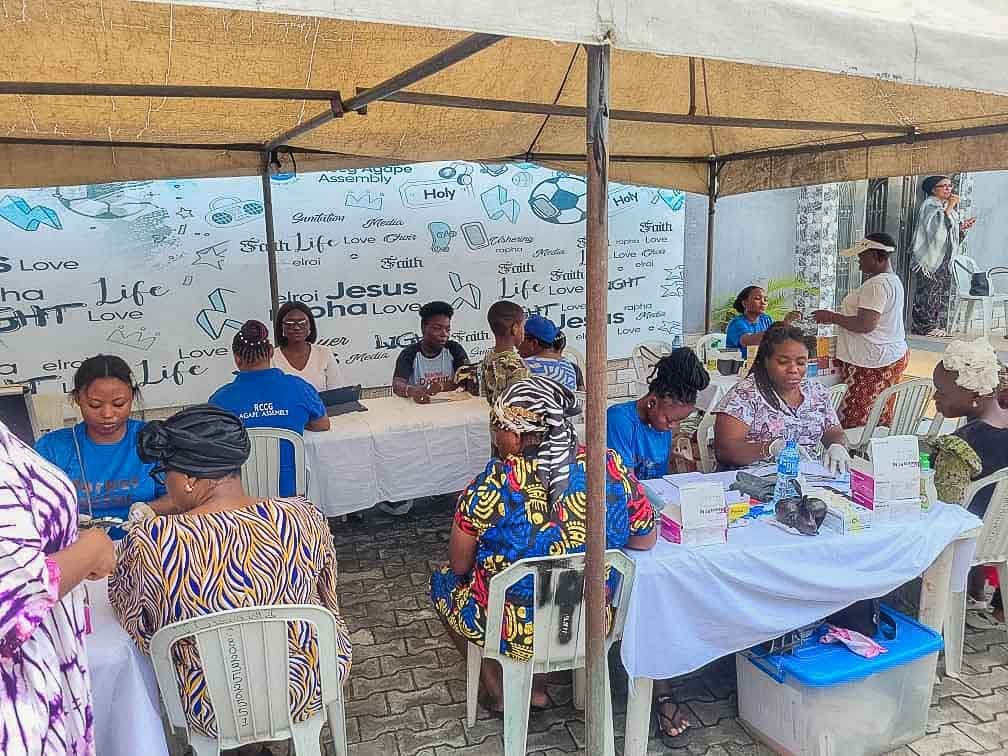
Proximity has not removed every barrier. Some traders continue to rely on herbal mixtures or medicines prescribed for other people, while others seek care only after their condition worsens. “We see between 70 and 80 patients monthly. Others will tell you Agbo works faster and is cheaper,” Nurse Joan, head nurse at the clinic, noted. “But when complications come, they return to us.”
The clinic sits inside the Tejuosho shopping complex, which houses thousands of shops. The market itself runs from 8am to 7pm daily. Visits to the shop have picked up recently, particularly after a free medical outreach the clinic ran in June, which gave their numbers a noticeable boost. On cost, the clinic charges a ₦1,000 registration fee per patient and a ₦2,000 consultation fee, with diagnostic tests ranging from ₦2,000 to ₦5,000 depending on what is required.
To track usage, the clinic keeps a running log, an Excel sheet that records each patient’s details, complaints and what they came in for. Patients’ phone numbers are also collected at registration so the clinic can follow up after treatment: phone follow-ups are handled from the head office, while physical follow-ups happen on the ground, with clinic staff visiting patients at their shops in the market to check on their recovery.
“We’ve seen both sides,” Patience Utoala, the clinic manager, explained. “Coming here early can save lives. Waiting too long can change the outcome completely.” Market Doctors says subsidised and donated medicines help to reduce patients’ costs. Dr Ayo-Oyalowo also said traders in Computer Village, Ikeja, Lagos, have asked the organisation to establish a clinic there.
“We usually hold medical outreaches in selected markets first, for some months.” Folashade Ogunmola, head of operations, explained. “This helps us determine their health needs. We also consider how crowded and busy the market is. Then we can decide if we need to set up a permanent clinic there or not.”
Limitations of the model
Placing primary care near informal workers may reduce travel and time away from work. In addition, and more importantly, it should ensure that health checks are sought earlier before health conditions become more severe, yet the wider effect remains unclear.
Free outreaches depend on sponsor funding, and the Tejuosho clinic sees only 35 to 40 patients a month. Screening can identify health risks, but its benefits are reduced when patients cannot follow through on referrals or continue treatment.
Nigeria has 3.86 doctors per 10,000 people. The challenge is not only the number of doctors nationwide, but also where health workers are located and whether people can obtain timely, affordable and continuous care.
Connecting access to insurance
The National Health Insurance Authority (NHIA) Act 2022 made health insurance mandatory for all Nigerians, but coverage has not yet become universal. A 2025 presidential directive began enforcing that mandate for federal government employees, but informal-sector workers remain outside its reach.
The NHIA’s Group, Individual and Family Social Health Insurance Programme includes self-employed people, families and businesses with fewer than ten employees. Participants must enrol and pay an annual premium.
For traders whose earnings change from day to day, annual payments may remain difficult. A nearby clinic may reduce transport costs and lost working time, but patients may still pay out of pocket if its services are not covered by insurance.
Licensed market clinics could contribute more by joining state health insurance provider networks, helping traders enrol individually or through market associations, and establishing documented referral links with public primary health centres and hospitals.
Bringing care into markets addresses barriers of distance and time. The next test is whether the service can be financed reliably and connected to continued treatment after screening or referral.
Leave a Comment
Your email address will not be published. Required fields are marked *