
Health Is Economic Infrastructure: Why Nigeria Must Invest in Health
Related Stories



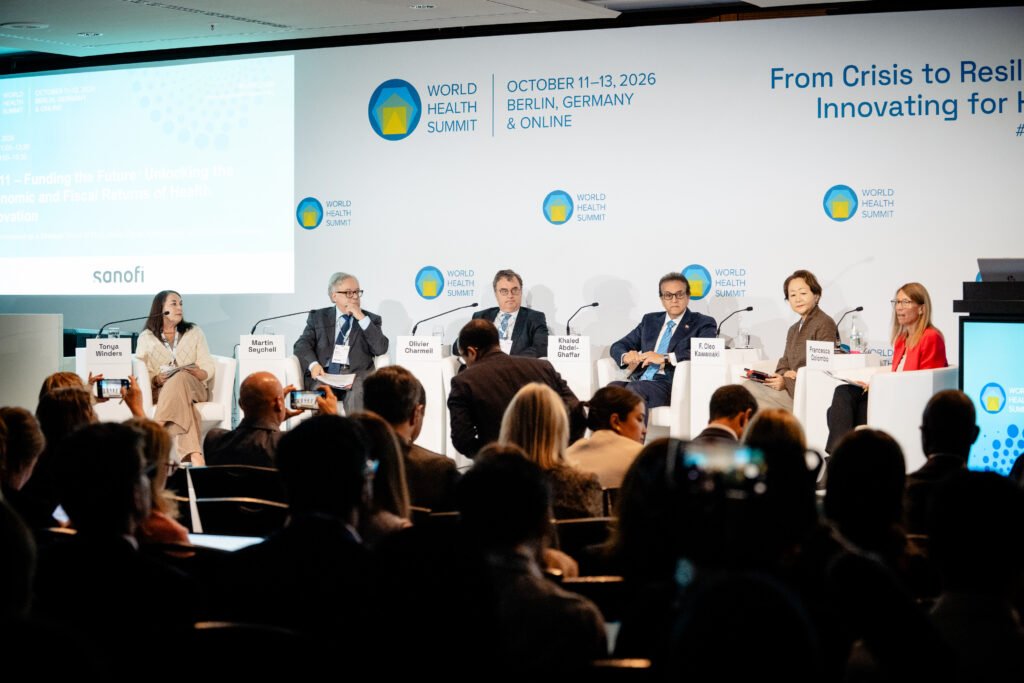
The recently concluded World Health Summit in Berlin, themed “From Crisis to Resilience: Innovating for Health”, reinforced a key message: health spending is an investment, not just an expense. Yet Nigeria’s 2026 Appropriation Bill proposed ₦2.48 trillion for health out of ₦58.47 trillion, about 4.2% of the budget. That is less than a third of the 15% target African governments agreed to in the 2001 Abuja Declaration.
Closing this gap requires recognising health as an investment in economic growth, much like roads and power. Nigeria’s growth ambitions depend on people being healthy enough to participate in the economy. Health should therefore be treated as economic infrastructure in the country’s development priorities and budget decisions.
What the evidence actually supports
Egypt’s experience illustrates the potential economic returns of health investment. At the summit session Funding the Future: Unlocking the Economic and Fiscal Returns of Health Innovation, Khaled Abdel Ghaffar, Egypt’s Minister of Health and Population, described a $240 million early-detection programme reaching 60 million people, followed by affordable generic treatment. It was projected to save $7 billion by 2030, a 688% return.
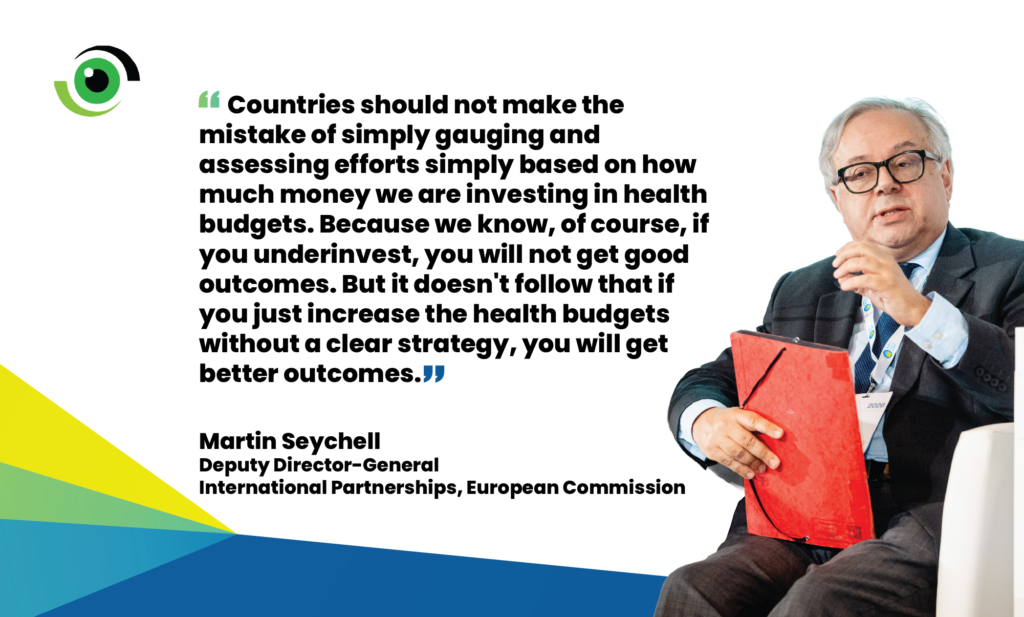
However, these are projections, not a confirmed result. For Nigeria, achieving comparable gains would require screening capacity and reliable medicine supplies that are not yet available at the same scale. Martin Seychell, Deputy Director-General at DG INTPA at the European Commission, cautioned that better outcomes depend on how the money is spent.
“We should not make the mistake of simply gauging and assessing efforts simply on the basis of how much money we are investing in health budgets. Because we know, of course, if you underinvest, you will not get good outcomes. But it doesn’t follow that if you just increase the health budgets without a clear strategy, you will get better outcomes.”
Nigeria’s clearest return is household income
One of the clearest benefits for Nigeria is the funds families could keep if healthcare were more affordable. At the Health as an Investment: Preparing Systems & Societies for the 21st Century session, Dr Githinji Gitahi, Group CEO, Amref Health Africa singled out Nigeria when discussing the high out-of-pocket health expenditure, noting that what people pay out of pocket is “ridiculously higher than the government spends.”
People pay about 71.9% of current health expenditure out of pocket. An analysis of the 2023/24 General Household Survey found that 45.5% of households faced catastrophic health spending, meaning health costs accounted for at least 10% of their household budget. These bills can force families to borrow, sell belongings or cut spending on food and education.
During the Strategic Health Economy session, Dr Ezekwesili recalled that evidence showing that malaria cost Africa about 2% of its GDP “changed the conversation” with ministers and described the disease as a “productivity tax on the economies.” The Federal Ministry of Health and Social Welfare estimates that malaria reduces Nigeria’s GDP by more than $1.1 billion each year, while Nigeria accounts for 27% of global cases.
At the same session, Dr Satoshi Ezoe, Japan’s Assistant Minister for Global Health, explained that Japan reached universal health coverage in 1961 while still recovering from the Second World War, and argued that “we laid the foundation by making UHC, which led to socioeconomic development.”
Nigeria is one of the first eight countries in the UHC Knowledge Hub, a Japanese initiative with the World Health Organization and the World Bank that brings health and finance ministries together to plan for universal coverage. Successful coverage should mean fewer families are pushed into hardship by medical bills and fewer workdays lost, not enrolment figures alone.
Who captures the value?
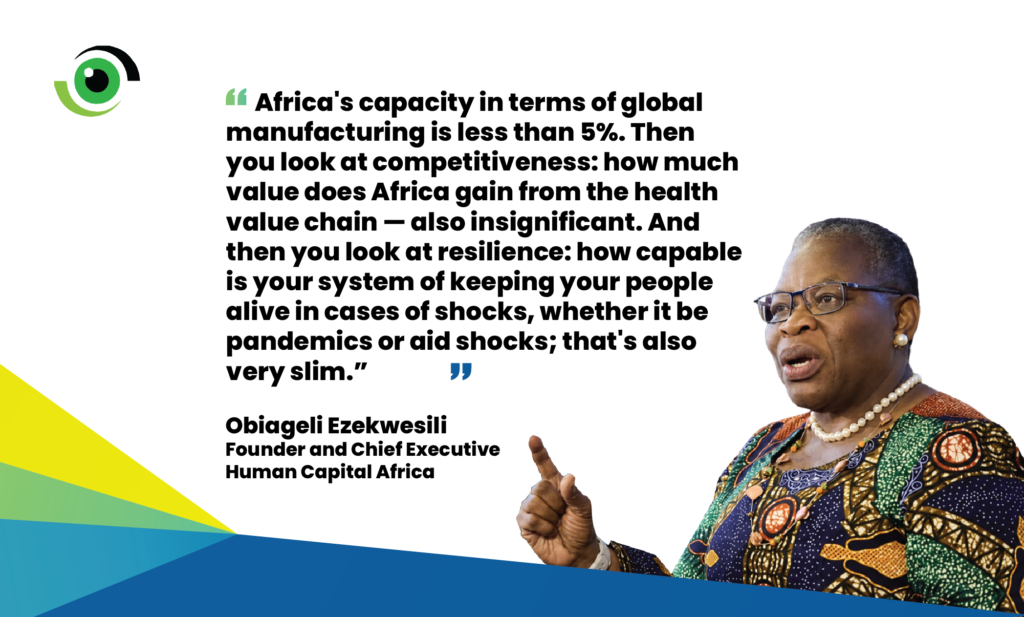
The economic case for health investment extends to building local industries and creating employment opportunities. Yet Africa captures little of the value from the health products it uses, as Dr Obiageli Ezekwesili, founder and chief executive officer of Human Capital Africa, told the summit during the session The Strategic Health Economy:
“[Africa’s] capacity in terms of… global manufacturing… it’s less than 5%. Then you look at… competitiveness… how much value does Africa gain from the health value chain — also insignificant…
Nigeria aims to increase local production of essential health products to 70% by 2030. The Presidential Initiative for Unlocking the Healthcare Value Chain is supported by tax and duty waivers on pharmaceutical inputs and about $2 billion in financing commitments.
However, packaging imported products locally is not the same as making them locally. Manufacturers still rely on imported active pharmaceutical ingredients to produce medicines, leaving them exposed to foreign-exchange fluctuations and price volatility.
Local production also needs skilled workers, as does the wider health system. Nigeria has 95,456 registered doctors but only 60,551 with active practising licenses, while its 2024 National Policy on Health Workforce Migration requires wider implementation.
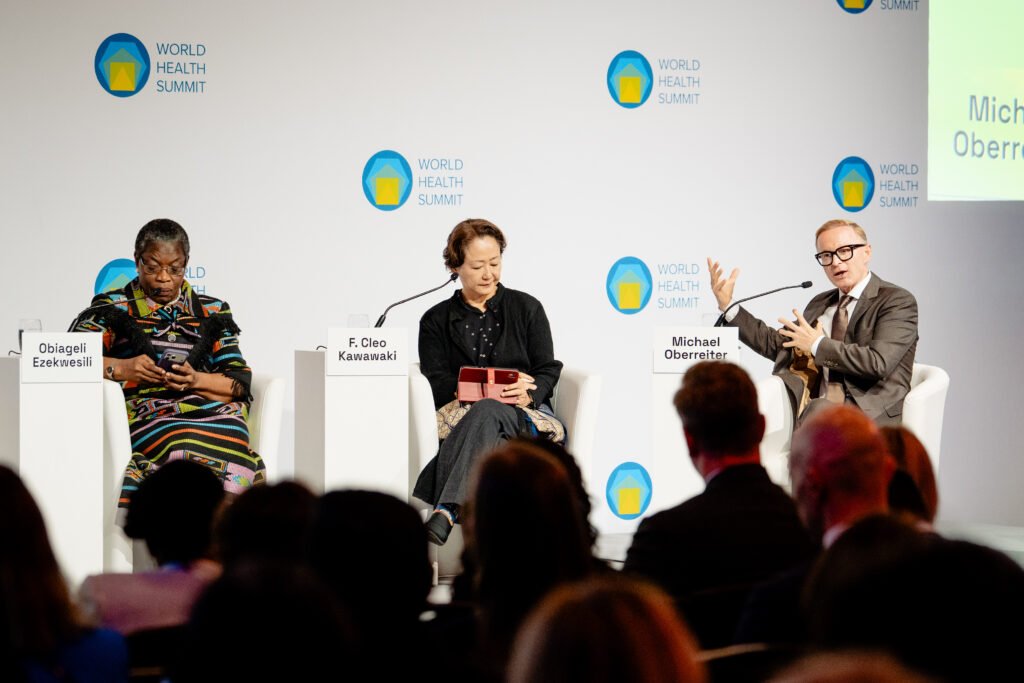
The role of policy in enabling health workers to deliver care also features in the summit session Health as an Investment: Preparing Systems & Societies for the 21st Century, where Dr Githinji Gitahi, Group CEO of Amref Health Africa, stressed its importance for community health workers.
Making investment accountable
Funding also must reach the services it is meant for. At the Health as an Investment: Preparing Systems & Societies for the 21st Century session, Dr Gitahi warned that prevention and vaccination budgets “are the first to be cut” when fiscal space tightens, because their results are less visible.
Nigeria shows the risk: in 2025, only ₦36 million of the ₦218 billion appropriated for federal health capital projects was released. For Nigeria, the value of health investment lies in the industries it builds and the workers it equips. Realising that value requires funding, procurement and regulation to support these goals.
The following steps could help put this into practice;
- The Office of the Accountant-General and Budget Office should include health infrastructure in quarterly cash plans and publish how much funding is released.
- The National Health Insurance Authority (NHIA) and state schemes should automatically enrol eligible conditional cash transfer beneficiaries and publish whether enrolment reduces their out-of-pocket spending. In addition, the NHIA, the National Primary Health Care Development Agency (NPHCDA), and state governments could consider offering qualified Nigerian manufacturers multi-year purchasing agreements with clear standards for price, quality, and delivery. Reliable demand would make it easier for manufacturers to invest.
- Incentives under the Presidential Initiative for Unlocking the Healthcare Value Chain (PVAC) and NAFDAC approval pathways should reward verified local production, including making ingredients and meeting quality standards. Annual reporting should show which products are replacing imports.
Health belongs in Nigeria’s growth strategy for the same reason ports and power do: the economy depends on it. That case must be reflected in funding released on time, stronger local production and affordable, quality care. Nigeria needs to spend more on health, use the funds strategically and measure whether people and the economy are better off.
Leave a Comment
Your email address will not be published. Required fields are marked *