
Beyond the Counter: How CareHub Is Linking Pharmacy Customers to Primary Health Care in Lagos
Related Stories


School was on a long break when Temilola visited her uncle, Bayo, in Lagos State. A few days in, she began to complain of severe stomach pain. At first, Bayo did not think much of it. “She just kept saying her stomach was hurting,” he said, “So, I thought maybe it was something she ate and decided to go to PureLife Pharmacy to get an antacid.”
It was a quick reflex that usually entailed purchasing the over-the-counter medicine, but at the CareHub Minute Clinic, that assumption was challenged. Instead of dispensing medication, the pharmacist asked further questions and recommended a consultation with the clinic’s Doctor, who immediately referred them to a partner Hospital.
What initially appeared to be a simple stomach-ache was diagnosed as a ruptured appendix, a life-threatening emergency that required urgent surgery. According to the family, the hospital team said that “further delay could have increased the risk of serious complications.”
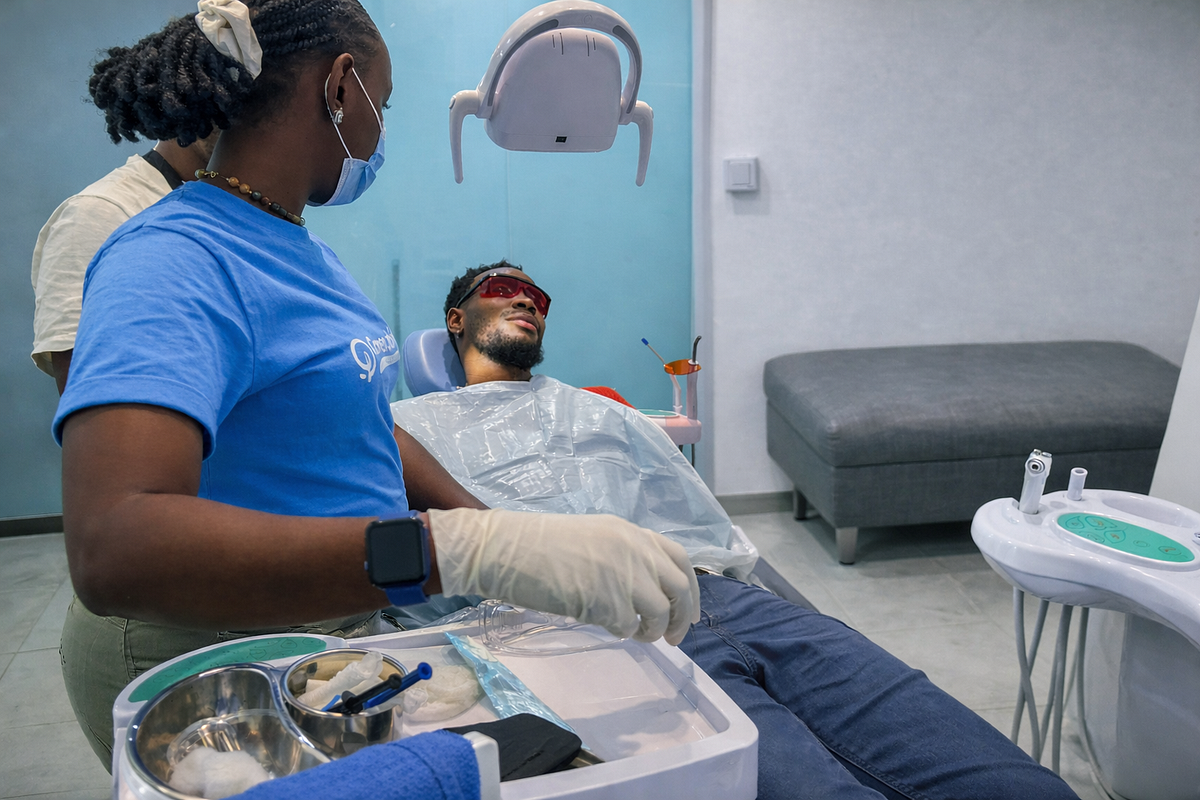
Oluyomi had been to CareHub before. So, when a street brawl at midnight left his friend bleeding, and a hospital turned them away with paperwork, he knew exactly where to go instead. “I wasn’t really thinking because everything happened so fast,” Oluyomi said. “I just saw the blood gushing out, and he kept breathing heavily. I just wanted the bleeding to stop, and I remembered PureLife.”
Taiwo remembers the moment differently. “All I could remember was the sound of the bottle breaking and then a sharp pain on my left side, then everything went dark,” he said. By the time they arrived at CareHub, a nurse on overnight duty cleaned, dressed, and stitched the wound. The young man survived. “In our branch today, we have a lot of them; the street guys,” Pharm. Chinedum Victor, Chief of Staff at PureLife Health, said. “They have become our biggest marketers, because of that singular incident of saving that young man’s life.”
Studies show that between a quarter and half of Nigerians seek care at a pharmacy before consulting a doctor; a figure the Association of Community Pharmacists of Nigeria (ACPN) puts at 60%, making community pharmacies the de facto first point of contact in Nigeria’s healthcare system. This often results in self-medication, antibiotic misuse, and delayed diagnosis, problems that disproportionately affect low-income and rural populations.
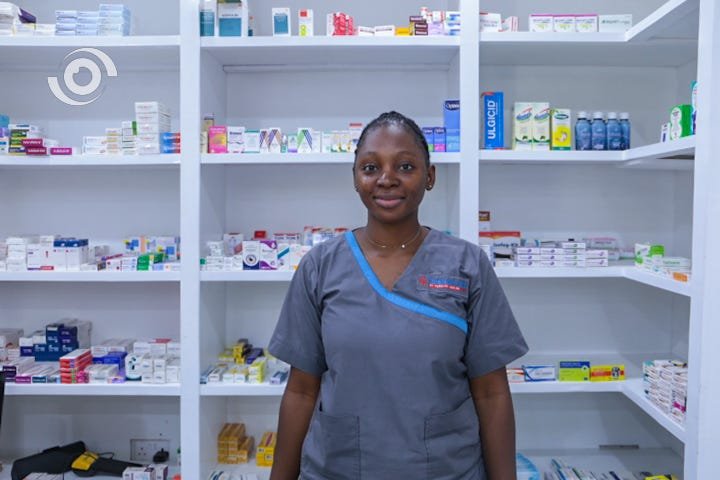
According to Pharm. Victor, this is the starting point for understanding how care is accessed. “Across communities, three issues kept recurring. Speed, integration, and continuity. People talked about waiting too long in hospitals,” he said. “They also spoke about having to go to different facilities for tests and results and not getting any follow-up after.”
Bringing clinical care into the pharmacy
PureLife Health, a community pharmacy, began operations in Lagos in 2021. In 2025, it expanded to include an in-house clinic, bringing diagnostic and medical consultation services directly into the pharmacy. Today, PureLife Health operates five branches across Lagos, two of which house walk-in CareHub Minute Clinics where patients can see a doctor on the same visit, access consultations, diagnostics, medications, and follow-up care all in one location.
Olaoluwa Olorunfemi, Business Manager at CareHub Minute Clinics, explained that the design was based on patients’ behaviour. “If you are working a 9-to-5 job, you cannot spend three to four hours in a hospital,” he said. “Informal workers also cannot afford to close their shops, which is their daily source of livelihood. So, the idea was to deliver care within 15 to 20 minutes for most primary health conditions,” he said.
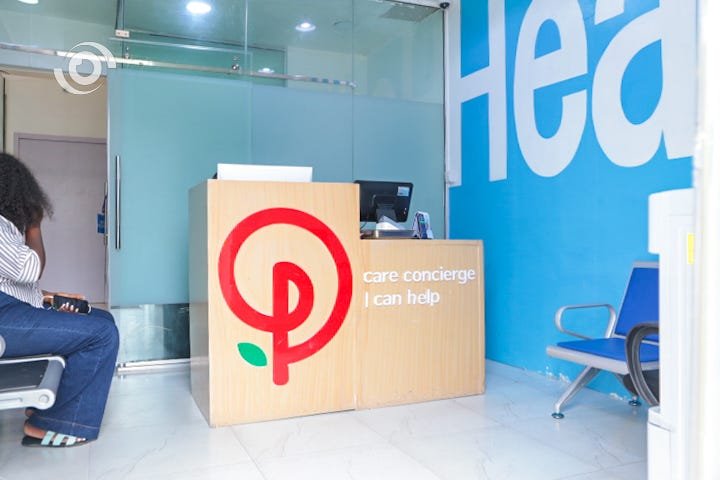
What it costs and who it reaches
A consultation at CareHub costs 8,000 Naira, with a follow-up visit priced at 3,000 Naira. The clinic is not currently serviced by the National Health Insurance Authority (NHIA) or any other Health Management Organisation (HMO), meaning patients pay out of pocket. According to Olorunfemi, the clinic fee is partially subsidised by pharmacy sales, allowing CareHub to keep consultation costs lower than they might otherwise be.
On-site diagnostics include PCV, malaria testing, urinalysis, HIV, Hepatitis B, Hepatitis A, syphilis, and gonorrhoea screening. A standard malaria smear test costs 10,000 Naira, but for patients who cannot afford that, including children living on the streets of Lagos who regularly walk in, the clinic offers a rapid diagnostic test at 2,000 Naira instead. “It’s just looking at the client, the level of the illness, and what routes can we get to get affordable care for them,” Olorunfemi said.
Quality control is built into the prescription process as much as the diagnosis. The clinic defaults to name-brand medication, a deliberate choice given its proximity to Idumota, Lagos’ wholesale drug market and a known source of substandard medicines in Nigeria. “Pharmaceutical counterfeit medication is a very big problem,” Olorunfemi said. “When patients cannot afford branded options, the clinic shifts to generics instead.”
On average, the clinic handles about 10 walk-in visits per day per branch. But that figure tells only part of the story. “When people hear that we’ve had about 4,000 to 4,500 CareHub interactions, they often assume it’s just people coming in with minor ailments,” Pharm. Victor said. “But what we’ve actually found is that the clinic plays a much bigger role than that.”
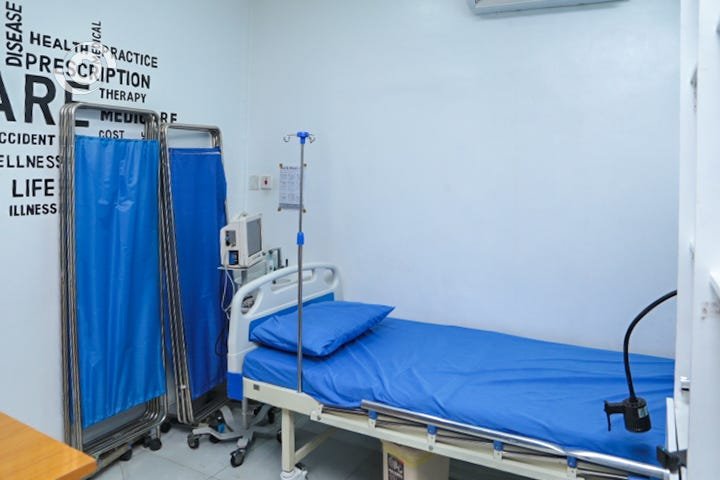
The 4,000 to 4,500 figure refers only to in-person walk-ins since the clinic’s 2025 launch. Counting telemedicine consultations, the number of patient interactions exceeds 100,000. Of those, our data shows that roughly 1 in every 10 patients ultimately needs escalation to a hospital or specialist. “The majority can be managed at the primary care level, but that referral pathway is important because sometimes what looks simple isn’t actually simple,” he said.
The clinic’s most common categories are malaria, hypertension, diabetes, respiratory infections, and sexually transmitted infections, which together account for a significant portion of patient visits. “What has stood out most is how many patients walk in with conditions that are not yet emergencies but are heading there. The classic examples are hypertension and diabetes,” he said. “Someone comes in because they’re feeling slightly unwell, and you discover blood pressure levels that could have resulted in a stroke if left unchecked.”
Beyond attending to patients as quickly as possible, Dr Chiamaka Bianca Oforbuike, a medical doctor at the clinic, believes that patient behaviour remains one of the biggest challenges. “Nigerians don’t like to wait,” she said. “Many people come in already convinced they know what is wrong and what should be done for them. Sometimes a patient insists on a drug immediately. But we have to explain why examination or testing is needed.”
The bigger challenge, she notes, is behavioural; moving people away from self-medication in communities where grabbing something off a pharmacy shelf has always felt faster, cheaper, and good enough.
Using pharmacy relationships to support safer referrals
A key part of the model is how trust is built at the pharmacy level and transferred to clinical care. “Pharmacists already have trust with patients,” Dr Oforbuike said. “So, when they refer patients to the doctor within the same facility, it becomes easier for patients to accept care.”
CareHub also attempts to address one of the most persistent gaps in Nigerian healthcare: follow-up. “If a patient is supposed to return and doesn’t, we reach out,” Dr Oforbuike said. “Many people don’t come back for follow-up care on their own.” But beyond missed appointments, the absence of follow-up carries clinical risk.
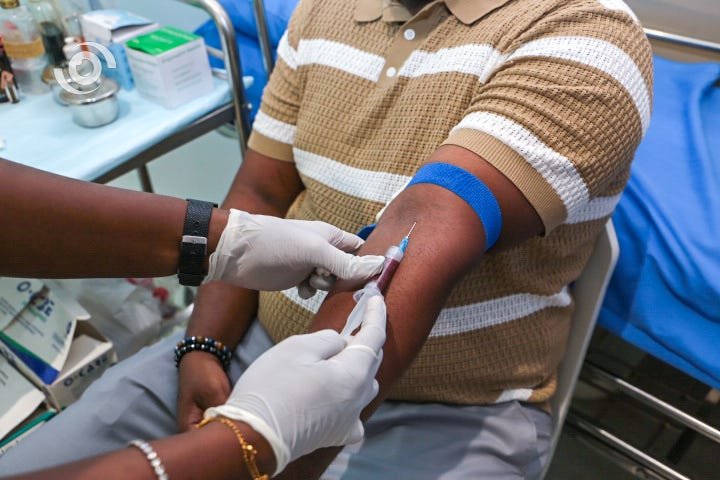
Without it, drug-drug interactions and food-drug interactions go undetected, small oversights that compound quietly into larger health problems. Electronic medical records and telehealth support help maintain continuity beyond the physical visit. “We can review results virtually, check progress, and send prescriptions directly for delivery if needed,” she added.
“The clinic also runs 24 hours”, Pharm. Victor said, a deliberate response to when emergencies actually happen. “Many emergency situations usually occur between 11 pm and 5 am, when the majority of pharmacies are closed.”
A different way to fund the model.
Sustainability is often the first question raised about pharmacy-based clinics, since the assumption is they only survive by pushing drug sales. According to Pharm. Victor, “Pharmacies are often the first-place people go when they have a health concern,” he said. “So instead of making them leave and navigate multiple systems, we bring consultation, screening, guidance, medication, and follow-up closer together.”
Medicine sales are just one part of the income mix. Consultations, diagnostics, subscriptions, preventive care, and homecare services also contribute. “The goal was never to build a clinic that survives because it sells drugs,” he said. “The goal was to build a healthcare ecosystem where every service strengthens the next.”
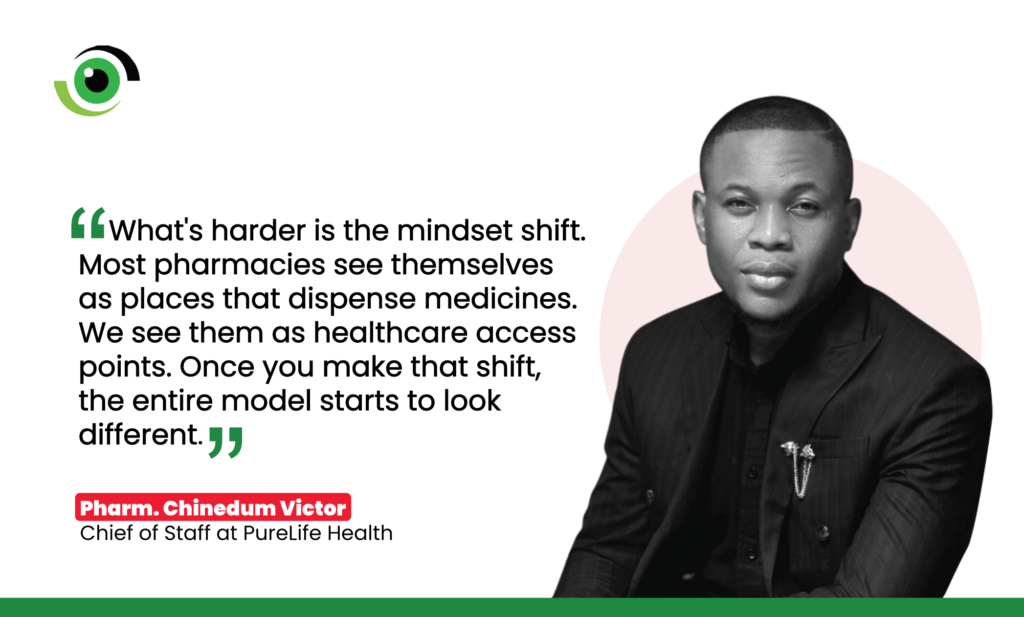
He further explains that “the model can scale beyond Lagos, and that the real barrier isn’t money. The equipment is the easy part,” he said. “What’s harder is the mindset shift. Most pharmacies see themselves as places that dispense medicines. We see them as healthcare access points. Once you make that shift, the entire model starts to look different.”
Models like CareHub Minute Clinic are not designed to replace public primary healthcare centres, but they may serve a critical complementary role: extending convenient access, identifying danger signs early, and strengthening referral pathways for patients who might otherwise never enter the formal health system.
Leave a Comment
Your email address will not be published. Required fields are marked *