

A Digital Tool Is Helping Rural Taraba Residents Hold Primary Healthcare Accountable
Related Stories


Bankole Taiwo James (Lead writer)
Ahmed Bature, a 27-year-old documentary photographer serving as a government accountability fellow in Taraba, had a simple question for Musa Joel, chairman of the Ward Development Committee (WDC) at the Primary Healthcare Centre (PHC) in Monkin, Zing Local Government Area (LGA) of Taraba State.
“How did the committee plan to spend its next quarterly Basic Health Care Provision Fund (BHCPF) payment?” It was a routine question during Bature’s visit to the facility one afternoon. However, Joel, who was expected to help oversee how the centre spent its funds, had no answer. He had not even known that the facility had received a BHCPF payment.
As WDC chairman, Joel’s signature was legally required before funds could be released from the facility’s account. Yet, according to him, the officer-in-charge had operated the account for years without informing him when payments arrived or involving him in decisions about how the money was spent.
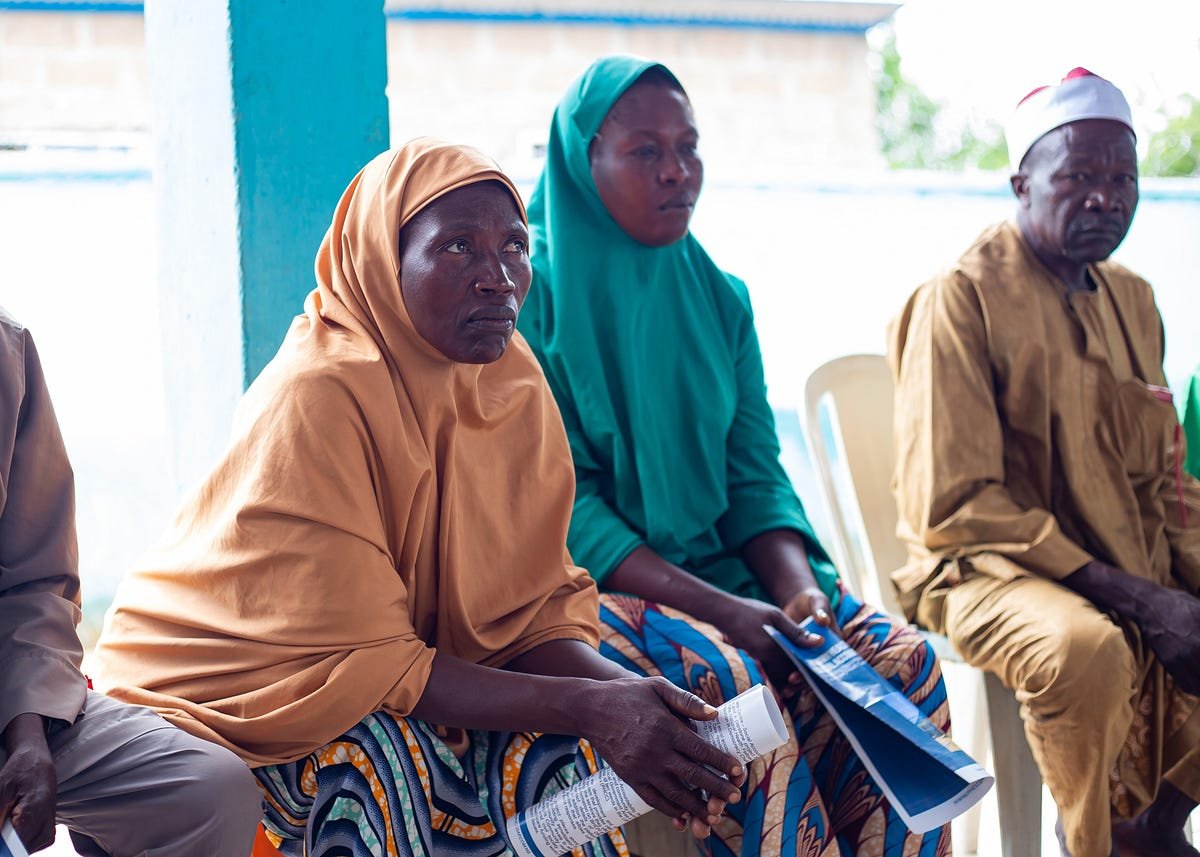
The committee, whose role was to give community members a say in managing their health facility, had effectively been shut out of the process.
For Bature, the experience exposed a troubling gap between the rules governing public health financing and what happened in practice. Money could be allocated to a PHC facility, but the people appointed to represent the community had little knowledge of its arrival, much less control over how it was used.
It was the kind of accountability gap that would eventually lead to the emergence of Primary Health Care Centre Social Accountability Platform (PHCCSAP), a civic-tech platform designed to make health facility funding more visible and strengthen community oversight.
However, to understand how Bature, a photographer, found himself investigating the flow of public health funds and helping build a technology-driven accountability initiative, it is worth tracing the journey that brought him to Monkin.
A fellowship, and a path
In February 2025, Bature was among several hundred young Nigerians selected for the National Health Fellows Programme, an initiative approved by Nigeria’s President, Bola Tinubu in 2024, and implemented by the Sector-Wide Approach (SWAP) Coordination Office at the Federal Ministry of Health and Social Welfare.
Fellows are trained as what the programme calls “fiduciary agents,” deployed to track whether BHCPF money is reaching the PHCs it is meant to fund across all 774 LGAs in the country.
“When I heard that, I just told myself, ‘you need to do something about this. What can you do to bridge the gap? so that people will know about this, and that the funds reach the people?’”Bature recalled from the two-week training held in Abuja.
Typically, BHCPF funds reach facilities through three main channels: the National Primary Health Care Development Agency (NPHCDA) gateway, the National Health Insurance Authority (NHIA) gateway, and a National Emergency gateway, which Bature’s deliverables track the first two.
Until recently, facilities received roughly ₦300,000 a quarter through the NPHCDA gateway, a figure said to have been raised to ₦600,000 under the newly passed BHCPF 2.0 framework, matching an increase the Federal Ministry of Health has publicly confirmed nationwide.
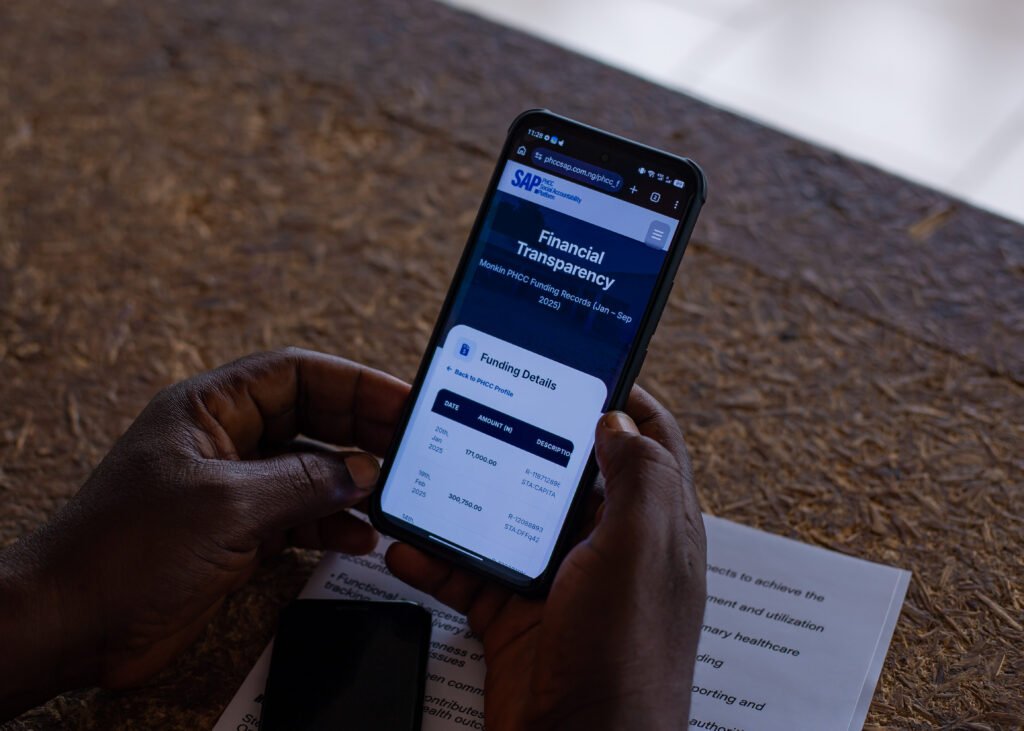
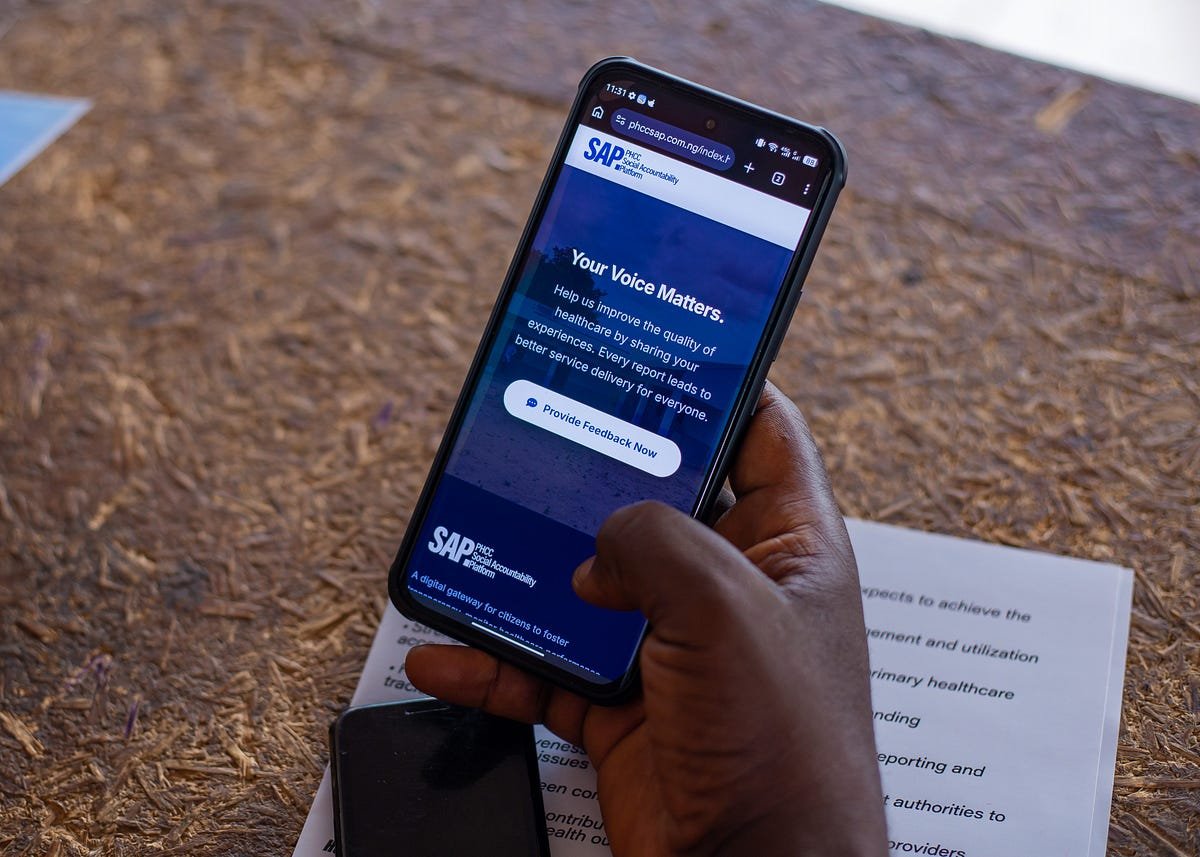
With a ₦500,000 hackathon grant, Bature developed PHCCSAP, a platform that tracks funds received by Taraba’s health facilities through the NPHCDA and NHIA gateway. Using official state agency data, it enables rural residents to compare reported allocations with services and resources available at their facilities and report gaps.
A recognised pattern
Taraba State is one of eighteen states that civic tech organization, BudgIT, and the African Health Budget Network have listed as lacking a fully functional PHC per ward, despite a federal target to close the gap by 2027. The money, on paper, exists but no one know where it goes.
In Taraba, the consequences are visible everywhere. In Ibi LGA, a PHC serving more than 2,000 residents has been running without a functioning borehole, a pharmacy, or usable restrooms, forcing residents to buy water from vendors. In Bali LGA, the Kankani PHC, the only facility for roughly ten communities, operates without a doctor or a bed.
In August 2026, the Taraba State Primary Health Care Development Agency charged with fixing the deterioration through its executive secretary, Dr. Tukura Nuhu, said that the agency is underpowered for the job. He told journalists in Jalingo, Taraba’s capital, that inadequate counterpart funding, a lack of office accommodation and poor budget releases remained the agency’s biggest obstacles.
Bature’s team visit facilities before listing them on the platform, briefing health workers and WDC members. Rather than simply collecting financial complaints, PHCCSAP uses a structured escalation process, referring unresolved issues from the local government primary care department to the state agency when necessary.
“The report is not [just] financial report per se. Let’s say you went to a particular facility and found it locked because these centres are supposed to work 24 hours. You can report it. We have the contact of the officers in charge,” he said.
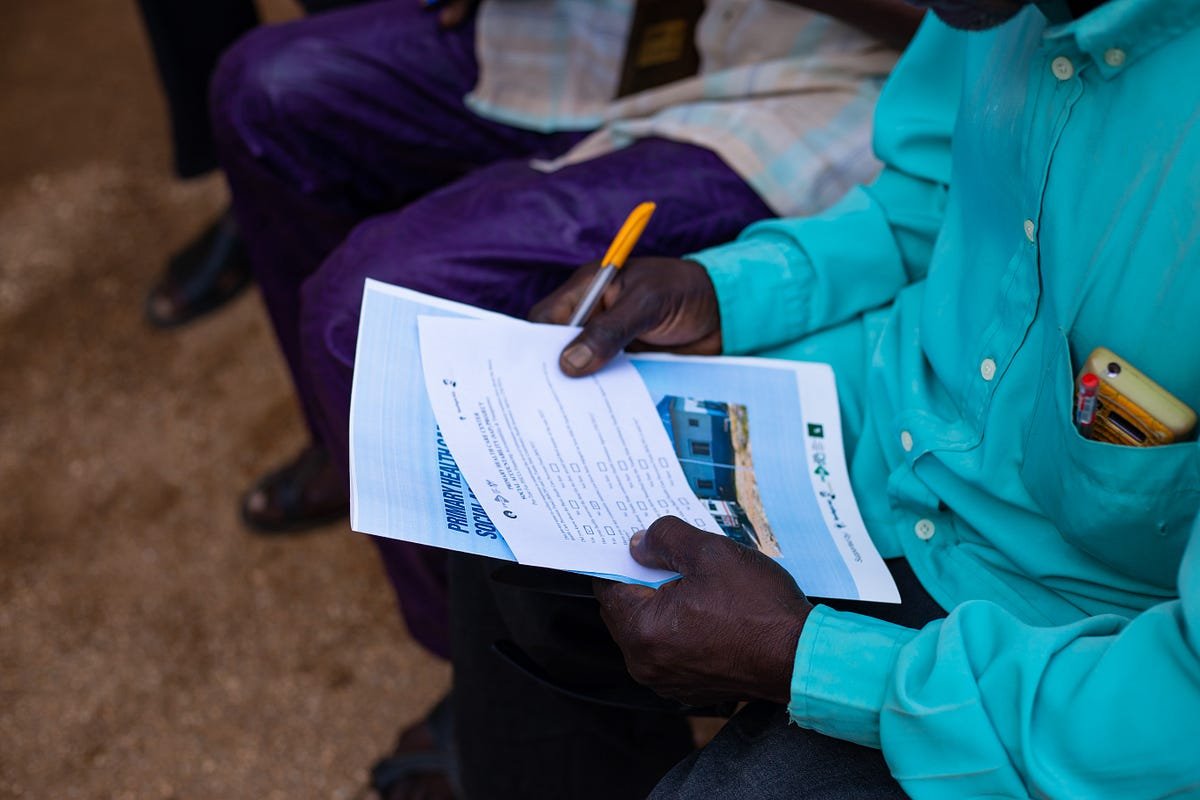
Although Musa Joel had been trained as a BHCPF account co-signatory, he and other WDC members were never informed when funds arrived.
“If I knew the date that the [money arrived], I would have asked [about the disbursement plans]. I was part of those that were taught and was given authorisation,” Joel said.
Discovering this, prompted the WDCs to petition the director of primary healthcare, copying the local government chairman and DSS. A subsequent meeting required the facility’s officer-in-charge to present the cheques, while a deputy director questioned why the WDC had not been kept informed.
The limitations and what has not been fixed
To reach communities with limited internet access, Bature’s team is developing printed toolkits to help WDC members and residents monitor their health facilities without smartphones.
The team hopes to expand to Adamawa, Gombe and Borno, but its future depends on securing new funding. With confirmed access still limited to one LGA, its impact on Taraba’s accountability gaps remains to be seen.
Nevertheless, Muazu Musa, a resident of Zing LGA, first heard about PHCCSAP during an online conversation about funding for his community’s PHC. Curious, he asked around until someone directed him to the platform.
“Honestly, I have never known that the government are giving money for our health in the community,” he said. “They gave me information. I use this platform to check on how much they allocate for the PHC in our community, and what they use it for, and how they are using it.” Musa says.
Leave a Comment
Your email address will not be published. Required fields are marked *