

Can WHO-Backed Spatial Emanators Deliver an Effective Malaria Response Across All African Regions?
Related Stories





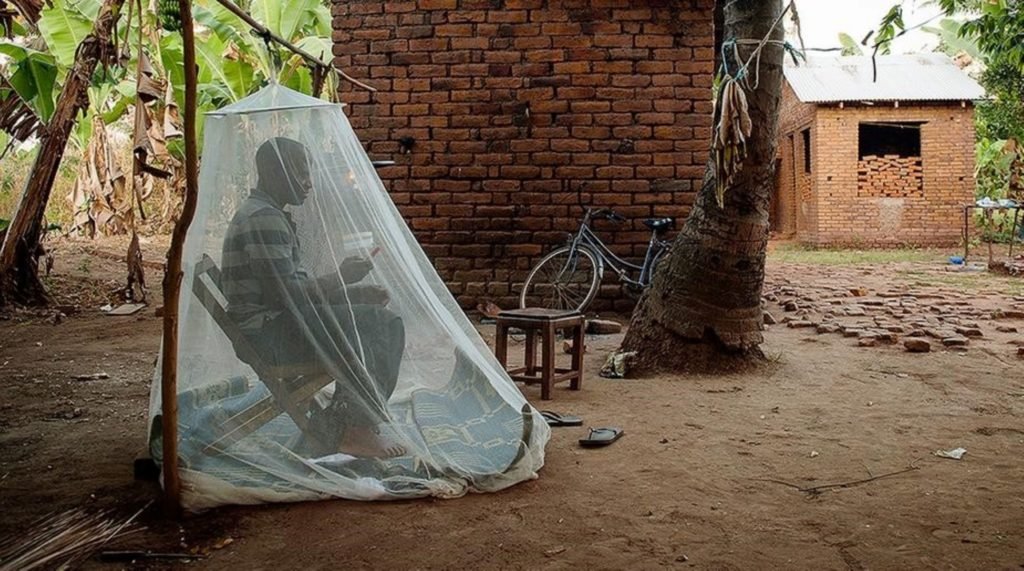
In August 2025, the World Health Organization (WHO) expanded its malaria prevention toolkit with a new intervention, spatial emanators. These devices release insecticides into the air to repel, disorient or kill malaria-transmitting mosquitoes, offering an additional layer of protection alongside insecticide-treated nets (ITNs) and indoor residual spraying.
However, as African countries consider adopting the intervention, questions remain about whether the evidence supporting its effectiveness reflects the continent’s diverse malaria transmission patterns and conditions.
How the Spatial Emanators work and where they fall short
WHO prequalified the first two products, Mosquito Shield and Guardian, both manufactured by SC Johnson & Son. The products release transfluthrin, a fast-acting insecticide commonly used in household mosquito repellents. However, because the chemical breaks down quickly, its effectiveness depends on a continuous or regular release of the active ingredient.
Malaria kills more than 600,000 people every year, with most of the recorded deaths in Africa. Nigeria alone accounts for nearly a third of them, about 185,000 deaths, and roughly a quarter of the world’s cases. Yet tools available to fight it have barely changed since the early 2000s. The endorsement of spatial emanators marks a moment of innovation in a field long searching for new weapons. It was met, appropriately, with considerable optimism.

Spatial emanators address a gap that existing tools have never fully closed. ITNs protect people when they are asleep; indoor residual spraying treats the walls and surfaces of a home, but more than 20% of infective malaria-mosquito bites in sub-Saharan Africa occur when people are awake and active inside their homes, not in bed and not under a net. Spatial emanators are designed for exactly that window.
A spatial emanator hung indoors releases a chemical that makes humans less detectable to mosquitoes, reducing the likelihood of being bitten during the hours that nets cannot cover. The two WHO-prequalified products have been shown to remain effective for 1 to 12 months, respectively, offering flexibility in distribution and replacement strategies.
However, the WHO recommendation comes with an important qualifier that has not received enough attention. The evidence base supporting it was largely built in East Africa, in settings with insecticide-treated net coverage above 90%, and spatial emanators were found to produce an additive reduction in malaria transmission under those conditions.
What has not yet been fully established is how they perform as a standalone tool, or how they behave in the mosquito populations of West and Central Africa, where pyrethroid resistance is higher, transmission patterns differ, and housing structures vary significantly from the settings where the evidence was generated.

Even within Nigeria, a single approach has proven unworkable. The 2025 Nigeria Malaria Indicator Survey found that malaria prevalence among children under-five ranged from 2.6% in Lagos State to 31.2% in Ebonyi State by microscopy.
Nigeria’s subnational tailoring (SNT) exercise, which analysed all 774 local government areas (LGAs), found that each needed a different mix of interventions. Because of this, the country has abandoned a one-size-fits-all response in favour of subnational tailoring, which matches interventions to local conditions.
The evidence gaps nobody is talking about
When WHO issues a global recommendation, it is built on the best available evidence at the time. That evidence is almost always generated in controlled research settings, by institutions with the funding and infrastructure to run trials, in locations where access and logistics allow.
Historically, that has meant East Africa — Kenya, Tanzania, and Uganda where long-standing research partnerships and infrastructure make trial execution feasible. West Africa, where malaria burden is among the highest in the world and where mosquito populations carry some of the most entrenched pyrethroid resistance profiles, is frequently underrepresented in the evidence base that shapes global policy.
Countries end up as evidence-takers rather than evidence-generators, adopting interventions whose fit with their reality has not been independently verified and spatial emanators are the latest intervention to follow this pattern.
Because transfluthrin, the active ingredient in both products, is a pyrethroid, in countries where pyrethroid-resistant mosquito populations are the norm rather than the exception, the question of whether a pyrethroid-based spatial emanator performs as expected is not academic.
What African countries should do now
The WHO recommendation for spatial emanators is built on real evidence, from real trials, that demonstrated real reductions in malaria transmission, and countries should take it seriously. But taking a recommendation seriously does not mean adopting it wholly without local validation.
(1) countries should not make large-scale procurement decisions on spatial emanators based solely on East African evidence. Before committing significant budget to a new intervention, programme managers should ask whether that intervention has been tested against the specific mosquito populations operating in their context, in housing structures that match their reality, and at the coverage levels they can achieve.
(2) global health funders need to stop treating local evidence generation as optional. Every time a new tool is endorsed without West African data, the burden falls on African researchers and African ministries to generate the evidence that should have existed before the recommendation was issued. That is not a sustainable or equitable arrangement. Funding for institutions like the African Institute for Research in Infectious Diseases (AIRID), which exist specifically to generate evidence in the African context on vector control, should be structural rather than competitive or project-based.
(3) African research institutions need to be earlier in the evidence pipeline. The time to involve West African researchers in spatial emanator trials is not after WHO endorsement; it is during the pre-approval process, so that the resulting recommendation reflects the range of contexts in which it will be applied.
Leave a Comment
Your email address will not be published. Required fields are marked *