
Can Nigeria Take Ownership of Its HIV Funding and Response as Donor Funding Continues to Contract?
Related Stories
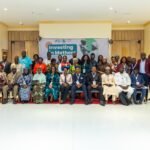


HIV funding in Nigeria was already under strain when HIV advocate Ivan Molina Aranibar opened a Global Fund satellite session at the International AIDS Conference 2026 in Rio de Janeiro, Brazil. He spoke for people often missing from rooms where decisions are made about the HIV response.
“My story doesn’t matter at all,” he said, “because behind me there are many other young people who cannot be here; whatever comfort I have comes from them. I stand here for all the people who cannot be heard.”
Nigeria has one of the world’s largest HIV burdens and has long relied on international partners for testing, treatment, prevention, commodities and community services. As global health financing tightens, the Rio session raised a harder question. Who pays when traditional donors pull back?
The reality of HIV funding in Nigeria
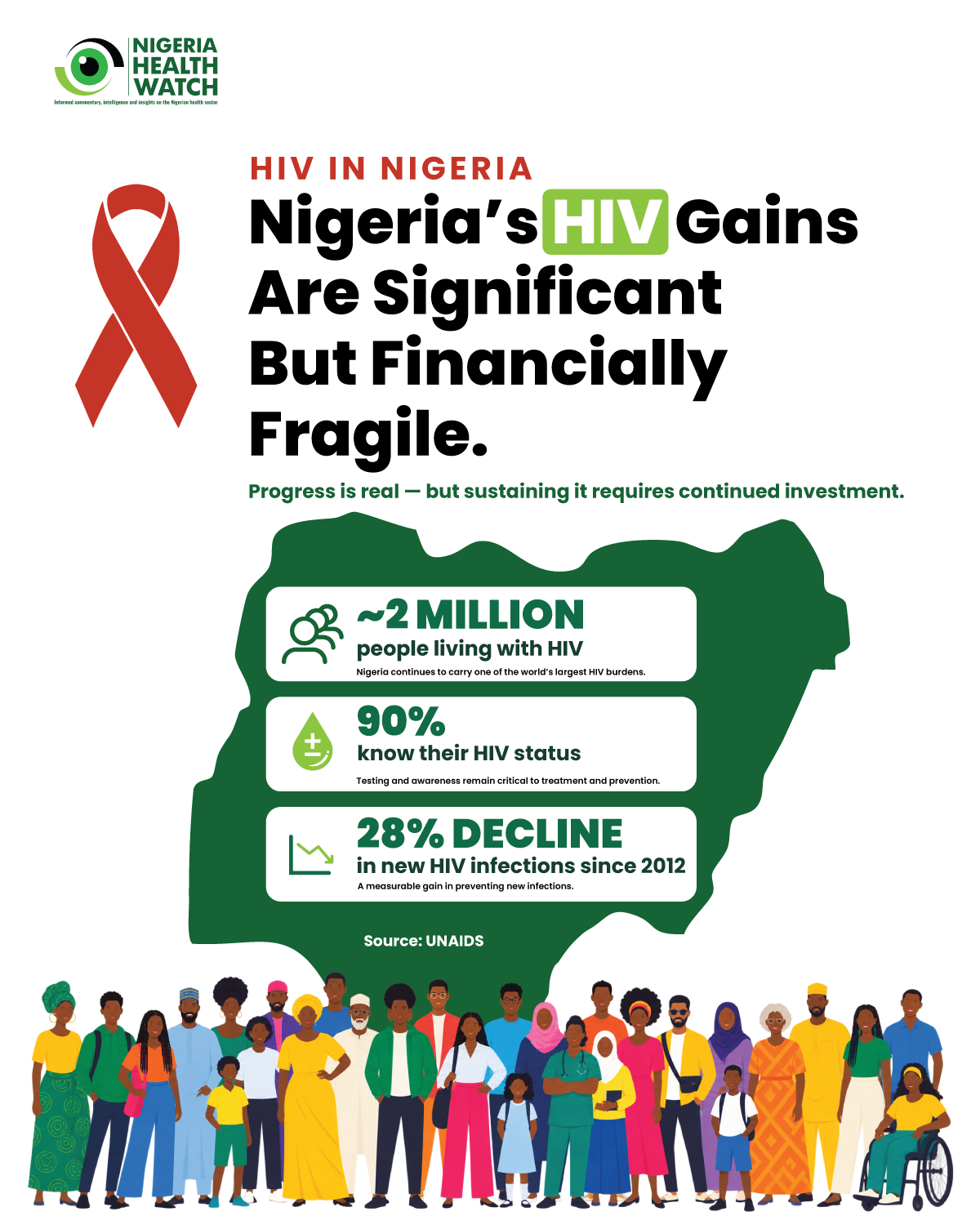
New HIV infections in Nigeria have fallen by 28% since 2012, and 90% of the almost 2 million Nigerians living with HIV know their status, according to Global Fund results for 2021 to 2023. These gains were funded overwhelmingly by international donors.
In 2025, that arrangement was put under pressure. A US aid freeze disrupted testing at more than 80 One-Stop Shops, put stop-work orders on over 95% of community health workers, and forced the government to find N4.8 billion for treatment packs, plus roughly $200 million in emergency budget support.
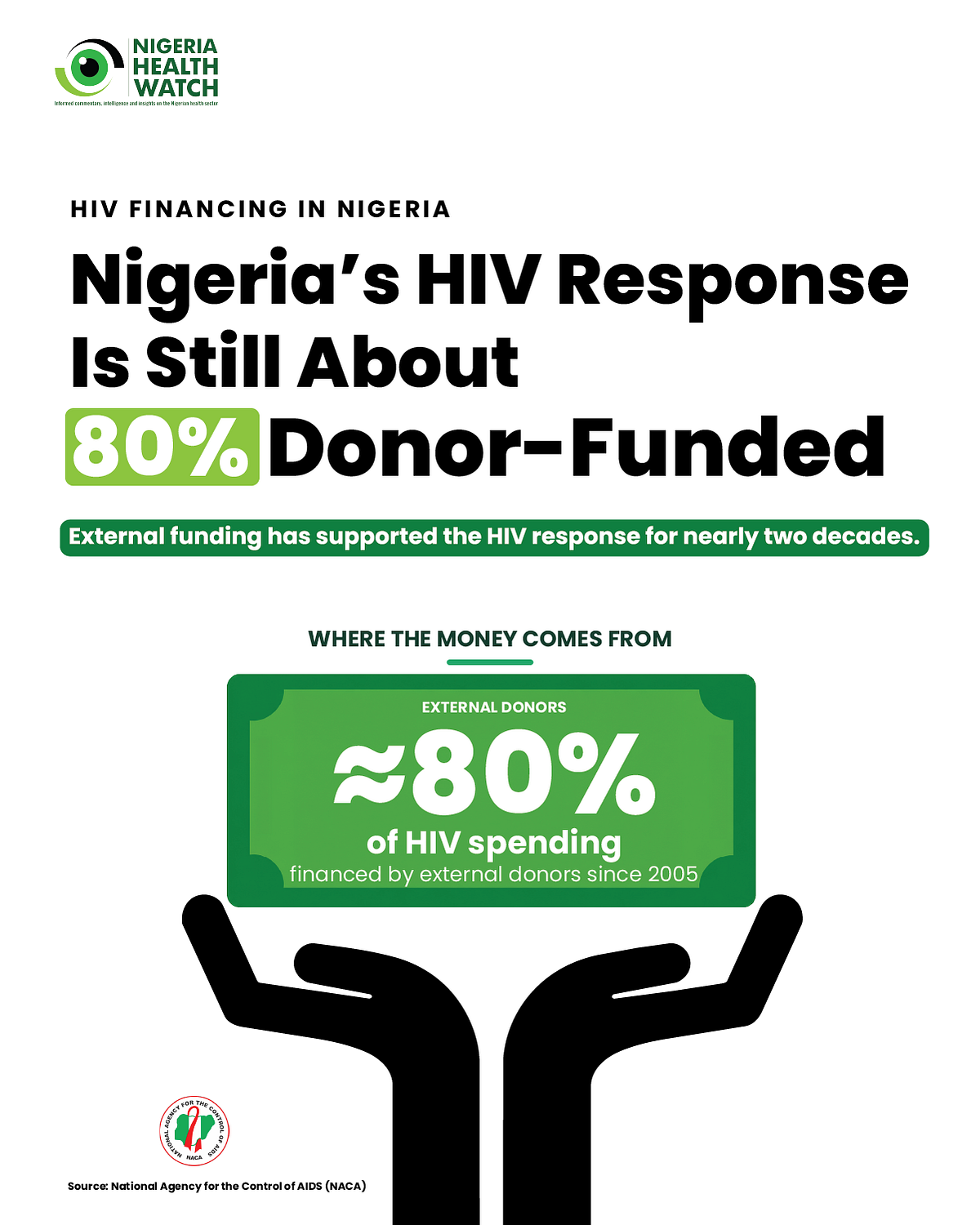
With the Global Fund’s Eighth Replenishment closing at US$12.64 billion against its US$18 billion target, Nigeria faces an urgent financing problem. The National Agency for the Control of AIDS (NACA) has estimated that external donors financed about 80% of HIV spending since 2005 and still describes the response as donor-dominant.
‘No room for donor fatigue’
Javier Hourcade Bellocq, the outgoing community delegate due to become the Global Fund Board’s Vice Chair in October, was clear. “There is no room for donor fatigue.” Yet he acknowledged the political reality. “We can’t tell twenty million people that the donor agenda has simply moved on,” he said. “Protests outside replenishment conferences no longer move anyone; the harder work now is keeping HIV on capitals’ agendas where allies at the table cannot always convince their own governments.”
That gap between commitment and domestic will is visible in Abuja. Nigeria’s National HIV and AIDS Strategic Plan for 2026 to 2030 commits to domestic financing and integrating HIV services into primary healthcare. Yet the N62 billion HIV Trust Fund created in 2022 is still not fully capitalised after four years, showing Bellocq’s point that policy intent and funds disbursed are not the same thing.
Ownership must also reach states and frontline services. NACA identifies federal and state political and financial commitments as essential. A credible compact should state which costs each level of government will progressively absorb and publish annual co-financing performance.
NACA and the National Health Insurance Authority (NHIA) are exploring HIV and tuberculosis coverage within health insurance, while the national strategy promotes PHC integration. This should improve continuity and financial protection, not shift donor-funded responsibilities to overstretched facilities without staff, commodities and funding.
Dr Rebecca Bunnell of the US Department of Health and Human Services described negotiations behind the HIV prevention drug lenacapavir as involving “hard conversations about pricing” between the US government, the Global Fund, the Gates Foundation and Gilead.
Globally, 10 million people living with HIV are not virally suppressed, and five million remain undiagnosed. Laura Lontsi Tsakou of the Global Fund Youth Council added that “Young people are not just beneficiaries. We are co-designers and core decision-makers.” Without community input, she warned, services are “not youth-friendly, too exposing, or too stigmatising.”
Elo Otobo, Senior Manager, HIV at the Children’s Investment Fund Foundation (CIFF) described donor funding as “catalytic, it can only go so far.” Domestic ownership, however, cannot mean government-only delivery.
The 2025 funding disruption hit community testing, peer outreach, PrEP, One-Stop Shops and services for key populations. Social contracting, through which government funds qualified community-led and civil-society organisations to deliver defined services, offers a safeguard.
At the launch of the 2026 to 2030 National Strategic Plan, NACA Director General Dr Temitope Ilori called for greater domestic ownership, health-system integration and sustained investment.
During the 2025 shock, NEPWHAN helped map the impact on Nigeria’s community health workforce, while implementing partners sought stronger state engagement and accountable governance. These priorities show what Nigeria must finance to protect continuity, equity and trust.
Nigeria’s own reckoning on HIV funding
Nigeria has close to US$993m in Global Fund grants signed for 2024 to 2026, but its own contributions tell a different story. Since 2002, it had pledged US$109.28m cumulatively and contributed US$38.79m; but its US$15m Eighth Replenishment pledge had recorded US$0 contribution. Advocates want two-thirds of HIV funding in Nigeria to come from domestic sources by 2030.
That requires a capitalised HIV Trust Fund, fulfilled co-financing commitments and budgets for community-led services. Buying antiretroviral medicines while prevention, rights work and trusted community delivery collapse would still leave a weaker HIV response.
The question we are still asking
Françoise Vanni closed the Rio session with a warning: if young people learn in ten years that the world had the tools to end HIV and did not use them, “they will never forgive us.” Nigeria’s test is practical: capitalise the trust fund, meet federal and state commitments, integrate HIV into PHC and insurance without weakening delivery, and finance civil-society and community-led services. “Nothing about us, without us” will mean little if ownership is measured by policy launches rather than money disbursed and services sustained.
Leave a Comment
Your email address will not be published. Required fields are marked *