

In Kenya, a Community Programme Supports Adolescent Mothers in Korogocho
Related Stories



Sharon Atieno Onyango (Guest writer)
At 17, Lynet hoped to continue her education and train as a nurse. After she became pregnant, she says, those plans felt out of reach. The pregnancy brought financial and social pressures. Lynet says her mother, who was raising the family alone, was already struggling to support her children. She also felt shut out by people in the neighbourhood.
“Women in our neighbourhood would not let me interact or even play with their children. They would warn their children not to mingle with me because I had just given birth,” Lynet recalled. “Even my friends did not want to interact with me anymore because their parents cautioned them. Others would say a child has given birth to a child. This would really stick in my mind. Hence, I would lock myself up in the house and not go outside,” she added.
However, this changed when her friend, who was also a teenage mother, introduced her to Miss Koch Kenya and invited her to one of Miss Koch Kenya’s sessions. “When I went there, I found other girls like me, who were young and had given birth. Sharing our experiences and just having people who relate to my situation really encouraged me. Slowly, the sessions built back my confidence, which had really become so low,” Lynet explained, noting that she also gained the courage to go back to school while the programme empowered her with hairdressing skills.
How the safe-space model works
A study by the African Population and Health Research Center (APHFC), Miss Koch Kenya and Nairobi County surveyed 594 pregnant and parenting adolescents in Korogocho. It found that 25.3% reported moderate or severe depressive symptoms. Interview participants described stigma, isolation, distress and financial hardship. The study also found that childcare worries and difficulty obtaining birth certificates were common.
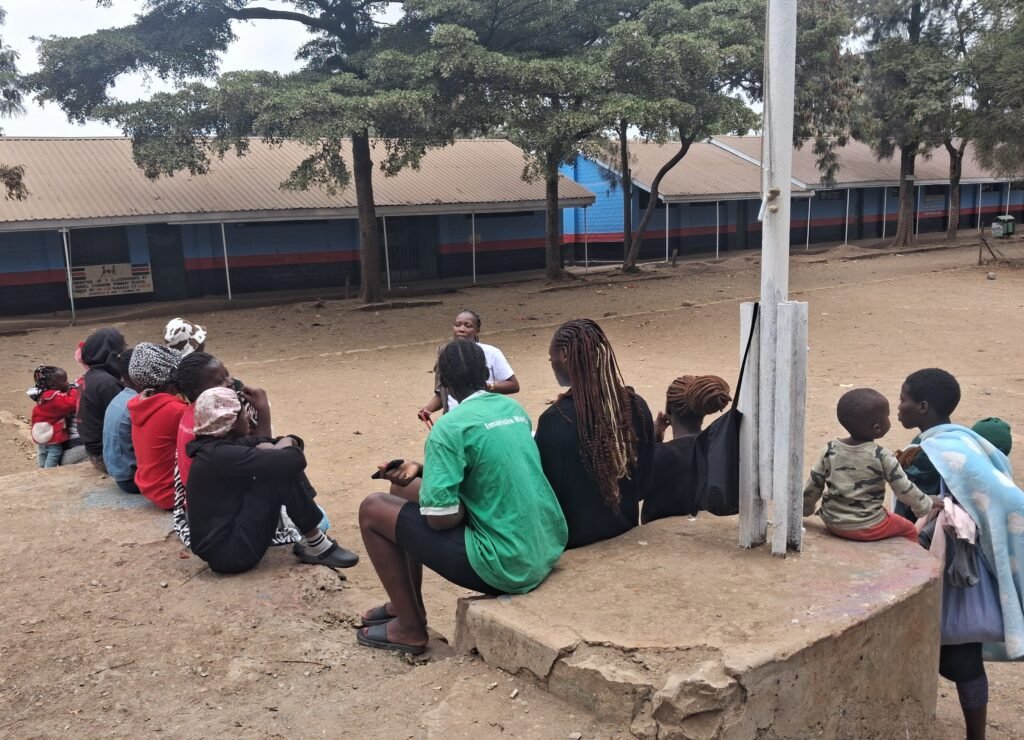
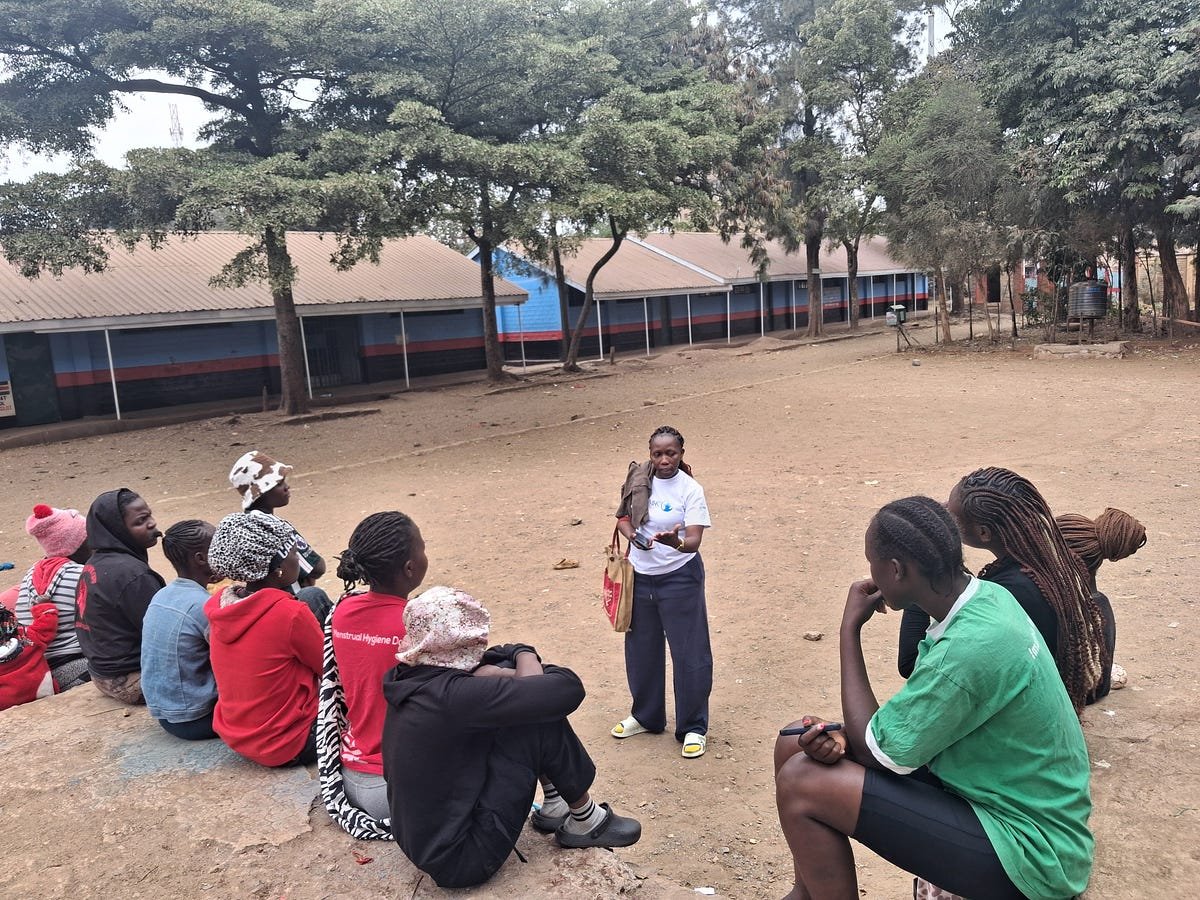
Miss Koch Kenya is one of the community-based organisations (CBOs) providing support to girls in need in Nairobi. The organisation provides safe spaces where teenage mothers are taken through a series of classes to overcome stress and post-partum depression, including counselling. Thereafter, they are assigned to peer mentors who serve as accountability partners, following up with them and providing continuous guidance.
The organisation has four safe spaces located within public facilities, such as the Daniel Comboni Primary School, Kariobangi Health Centre, the Chief’s office in Highridge, and the Ngomong’o area. The girls meet up every Saturday with sessions lasting about two hours, depending on the activity.
“The safe spaces are places where the girls are given freedom to become themselves. We don’t always teach them, sometimes they just come, and we have a session whereby they talk about different issues that they are going through and at times they just come to enjoy themselves through music and dance,” Mary Oliech, the Programme’s Officer, explained.
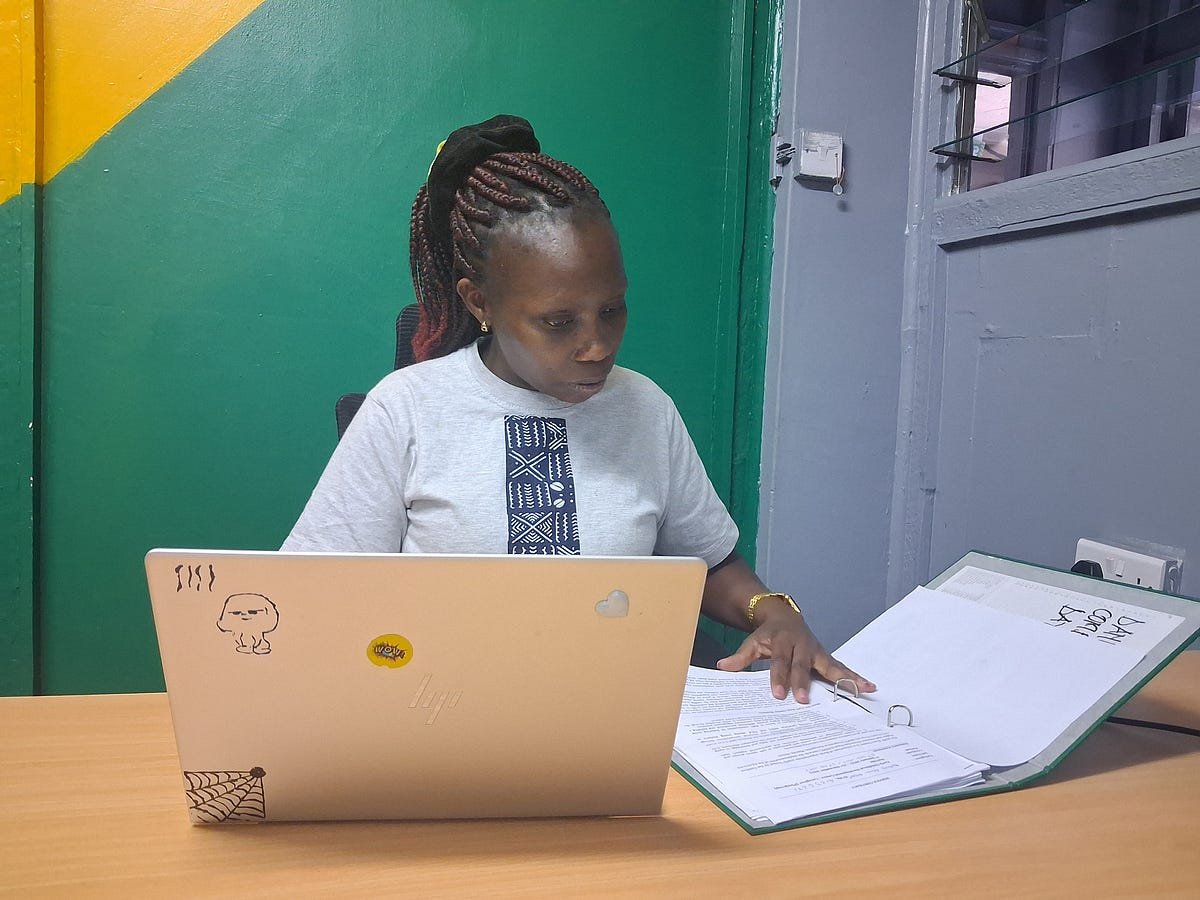
Oliech said the programme works with pregnant adolescents and young mothers whose children are up to 3 years old. Community health promoters (CHPs) help identify and refer participants, while some girls join through friends. Miss Koch Kenya says about 200 adolescents have participated so far.
Life skills, health information and savings
Emmie Erondanga, Miss Koch Kenya’s chief executive, said the safe-space model began after research found that there were very high numbers of teenage pregnancies in the area. “We co-created with the mothers a model for them to be able to participate freely and engage amongst themselves in the safe spaces,” Emmie explained, noting that they engage them in different activities while taking up the opportunity to also teach them.
Sessions cover personal hygiene, sexual and reproductive health and rights, gender-based violence, nutrition, positive parenting, financial literacy and leadership. The organisation says it adds topics in response to participants’ concerns.
On financial literacy, the teenage mothers are taught how to save. The groups have a rotational contribution system in which they contribute KSh 20 (US$ 0.15) every Saturday and then divide the funds after some time to cover essential needs, including sanitary pads, diapers, and other personal care items. “When the girls come here, some of them do not even know how to take care of the babies or themselves. Hygiene is our starting point, and we emphasise cleanliness for both mother and baby,” Mary, the programme officer, explained, noting that through the rotational saving system, the girls can buy the necessary hygiene products.
Emmie stresses that leadership skills are an important component of the programme. “We are training them to be leaders, and they are taking an effective role in leadership in their spaces. Girls are now freer; they can speak out. They can challenge the status. They can challenge the people who are stigmatising them,”she said, adding that the peer mentorship is a perfect demonstration of this.
From participant to peer mentor
Belonce, 17, is a mother of a two-year-old and a peer mentor at Daniel Comboni Primary School. She says isolation and stress after childbirth affected how she felt about caring for her baby. At one point, she stopped breastfeeding, which she linked to feeling that she had disappointed others. “Miss Koch encouraged us that getting pregnant is not the end of the road for us, and self-isolation is not the best way to go. This programme has really given us strength and courage. Most of the girls here did not even know how to relate to their children,” Belonce said.
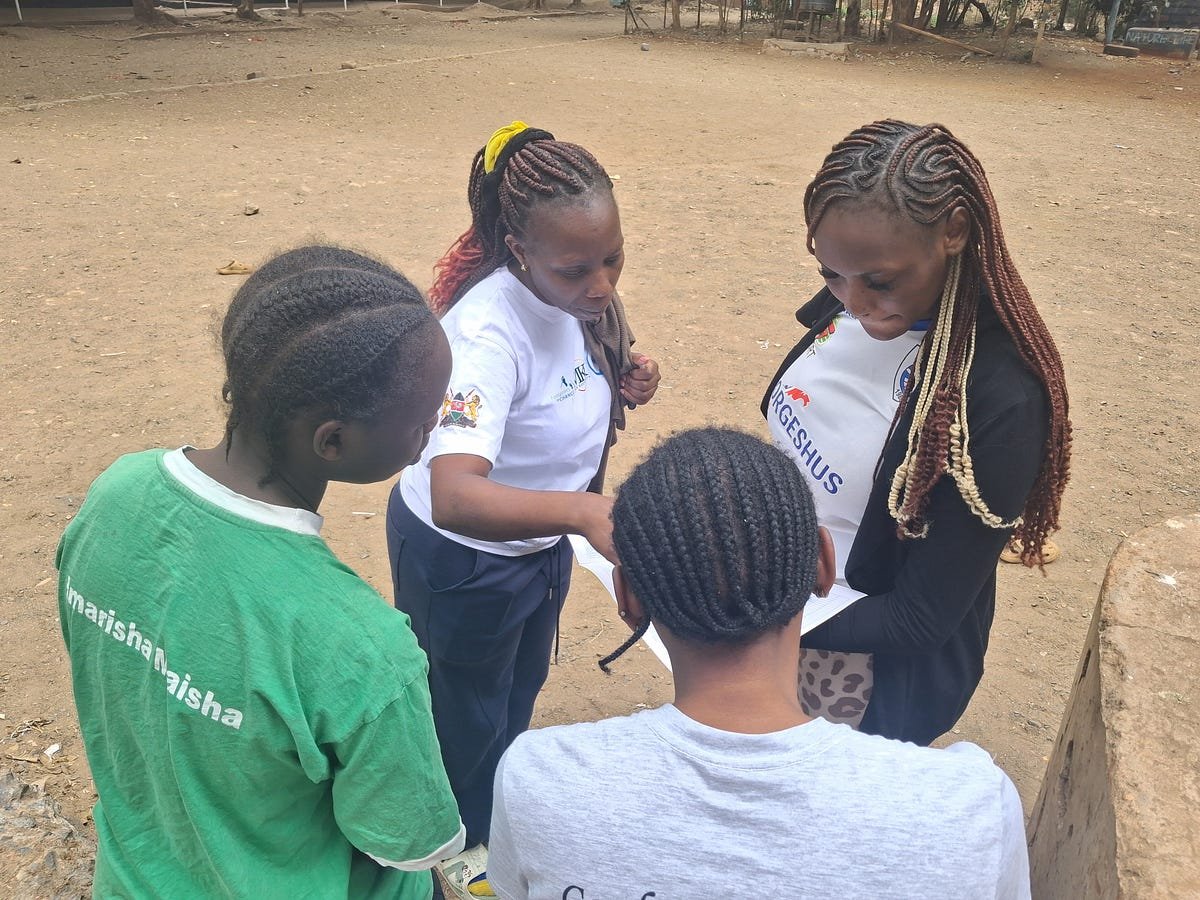
The counselling and mentorship sessions helped her build a relationship with her baby and her confidence. “I used to fear talking to people, but through the empowerment, I am now able to speak. Before people, including those in my neighbourhood, where I had previously faced a lot of stigma and discrimination. The girls have also seen my growth, and that’s why they have elected me to be among their mentors,” Belonce recalled.
Mary, the programme officer, noted that the mentors are selected by the girls in the groups. Once selected, they undergo specialised training to handle a range of issues. Often, they take charge of group discussions and even the training of group members, with overall supervision provided by Miss Koch, the Kenya staff member.
Responding to violence and persistent school stigma
The programme also runs two daycare centres, one located within Daniel Comboni Primary School and the other in a private school, where teenage mothers can leave their children while they work. The centres currently care for 67 children, including those of teenage mothers and other community members. Parents pay KSh 5 (US$0.04) per day at the public school centre and KSh 20 (US$0.15) per day at the private school, compared with the usual daycare fee of about KSh 100 (US$0.77) per day.
Mary, however, noted that “shame continues to be a big challenge for the teen mothers, which hinders most of them from going back to school. Teachers are constantly using them as examples, so most opt to drop out, while some change schools.”
Gender-based violence (GBV) is also a challenge, “because of the high poverty rates in Korogocho, some teen mothers choose to stay with their children’s fathers so that the baby can be provided for. Some of these men feel that the girls have become empowered and end up taking out their frustrations on them,” Mary noted.
Miss Koch Kenya says it is developing a programme for young fathers, based on the view that some partners are adolescents themselves. “When we think of perpetrators, we imagine that they are older men taking advantage of the girls. However, most of them are peers,” Erondanga explained, adding there is a need for multi-stakeholder collaboration.
For this response to reach more girls, Nairobi County and school leaders need to fund childcare, implement school re-entry protections, and connect adolescent mothers to confidential health, mental health and GBV support services.
Leave a Comment
Your email address will not be published. Required fields are marked *