Nigeria Health Watch
Follow us:
breadcrumb banner

Nigeria’s Flood Season is Here. How Are We Protecting Children Before Disaster Strikes?

Blog Image
By Zubaida Baba-Ibrahim and Samuel Gada | August 31, 2026

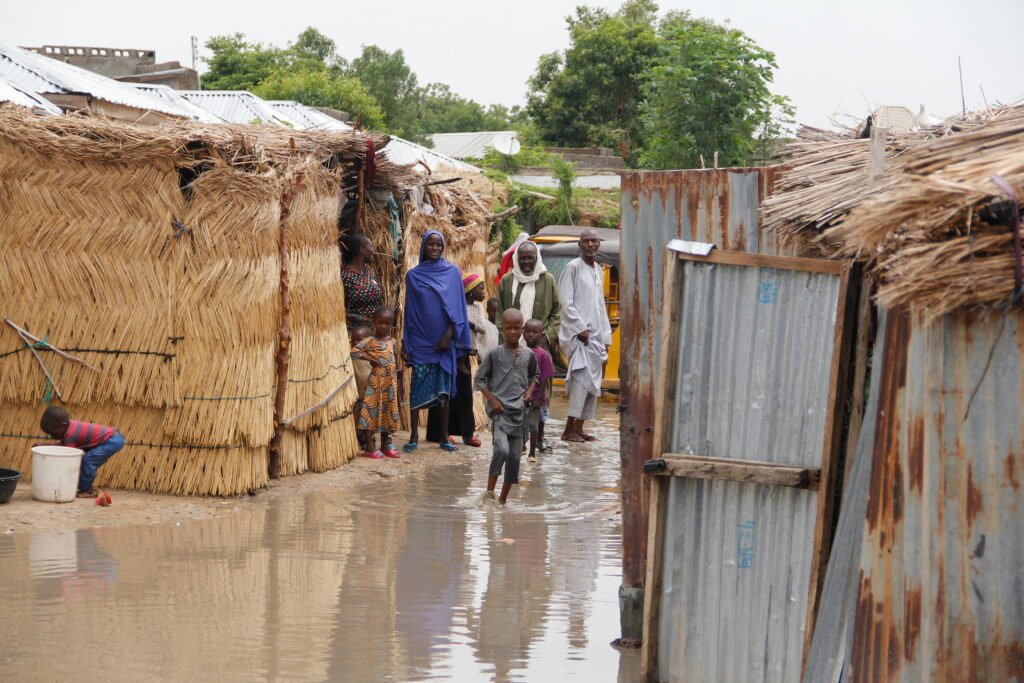
Nigeria has entered the peak of its flood season, when the risk of severe flooding is at its highest. The Nigeria Hydrological Services Agency (NIHSA)’s 2026 Annual Flood Outlook warns that flooding could be comparable to 2025 or slightly more severe, with the greatest risks expected between July and September and another serious period possible between October and November.

For children, the danger extends far beyond flooded homes and roads. Floodwater can contaminate drinking-water sources, damage toilets and health facilities, interrupt nutrition and immunisation services, close schools and force families from their homes. It can also increase children’s exposure to drowning, injury, cholera, diarrhoea, malaria, malnutrition and family separation.
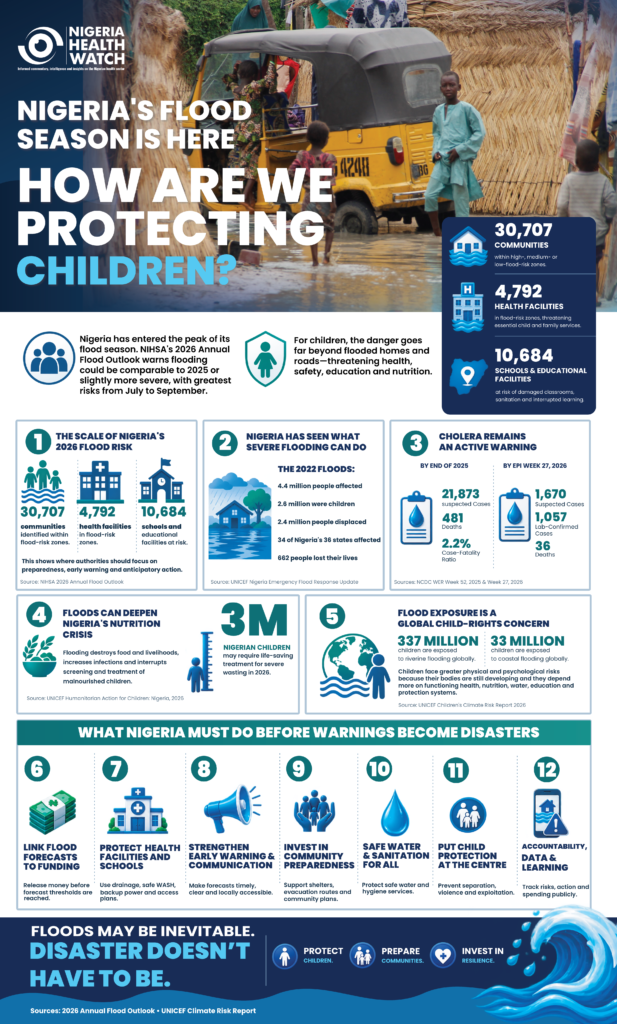
Infographic on Nigeria’s 2026 flood risk and its impact on children, health and education. NIHSA identifies 30,707 communities, 4,792 health facilities and 10,684 schools in flood-risk zones. The infographic highlights lessons from the 2022 floods, which affected 4.4 million people, including 2.6 million children, displaced 2.4 million people and caused 662 deaths across 34 states. It also examines cholera, malnutrition, disease outbreaks, displacement and disruption of healthcare, nutrition, WASH and education. Recommendations include anticipatory flood-risk financing, protecting health facilities and schools, pre-positioning essential supplies, strengthening early warning systems and disease surveillance, protecting children during displacement, and publicly tracking preparedness actions.
Image credit: Nigeria Health Watch

Leave a Comment

Your email address will not be published. Required fields are marked *


The reCAPTCHA verification period has expired. Please reload the page.