
One Health, One Threat: What Does Data Reveal About Nigeria’s Readiness to Tackle Antimicrobial Resistance?
Related Stories





Zubaida Baba Ibrahim and Timothy Kovonah (Lead writers)
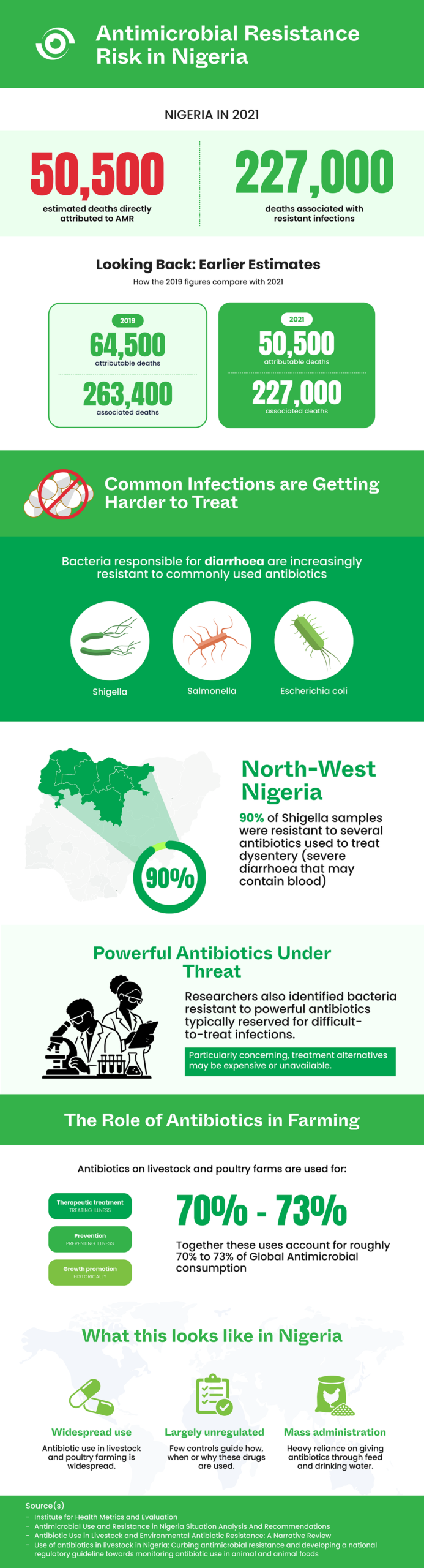
Nigeria faces a significant public health threat from antimicrobial resistance (AMR), ranking 20th globally for age- standardised deaths due to AMR. In 2021, over 50,000 deaths were directly attributable to bacterial drug resistance, underscoring the scale of a crisis that continues to challenge Nigeria’s health system.
AMR occurs when bacteria, viruses, fungi and parasites no longer respond to medicines designed to treat them, making infections harder to manage and increasing the risk of severe illness and death.
AMR occurs naturally as microorganisms undergo genetic changes, but the misuse and overuse of antimicrobial medicines in humans, animals and agriculture accelerate its development and spread. Poor infection prevention and control (IPC), inadequate water, sanitation and hygiene (WASH) services, and limited access to timely diagnosis further compound the challenge.
Observed annually from 18 to 24 November, World AMR Awareness Week (WAAW) is a global campaign aimed at raising awareness of AMR and encouraging action to prevent the spread of drug-resistant infections. The 2026 theme, “One Health, One Action: Prevent AMR Now,” emphasises the need for coordinated action across human, animal and environmental health to address the growing threat.
Leave a Comment
Your email address will not be published. Required fields are marked *