
Private Insurance for Public Good: Can Lagos Redefine How Healthcare Is Financed?
Related Stories



For millions of Nigerians, accessing healthcare remains as much a financial decision as it is a medical one. A hospital visit, an unexpected diagnosis or the need for prolonged treatment can place considerable pressure on household finances, particularly when people are expected to pay for services at the point of care.
In 2026, out-of-pocket payments accounted for 76.1% of Nigeria’s current health expenditure. This financing structure creates severe economic and social strain in commercial and urban hubs like Lagos State, where the cost of accessing healthcare can be particularly challenging for households without adequate financial protection.
Reducing this burden requires a financing system that pools resources in advance, distributes healthcare costs across a wider population and protects people who cannot afford to pay for treatment themselves.
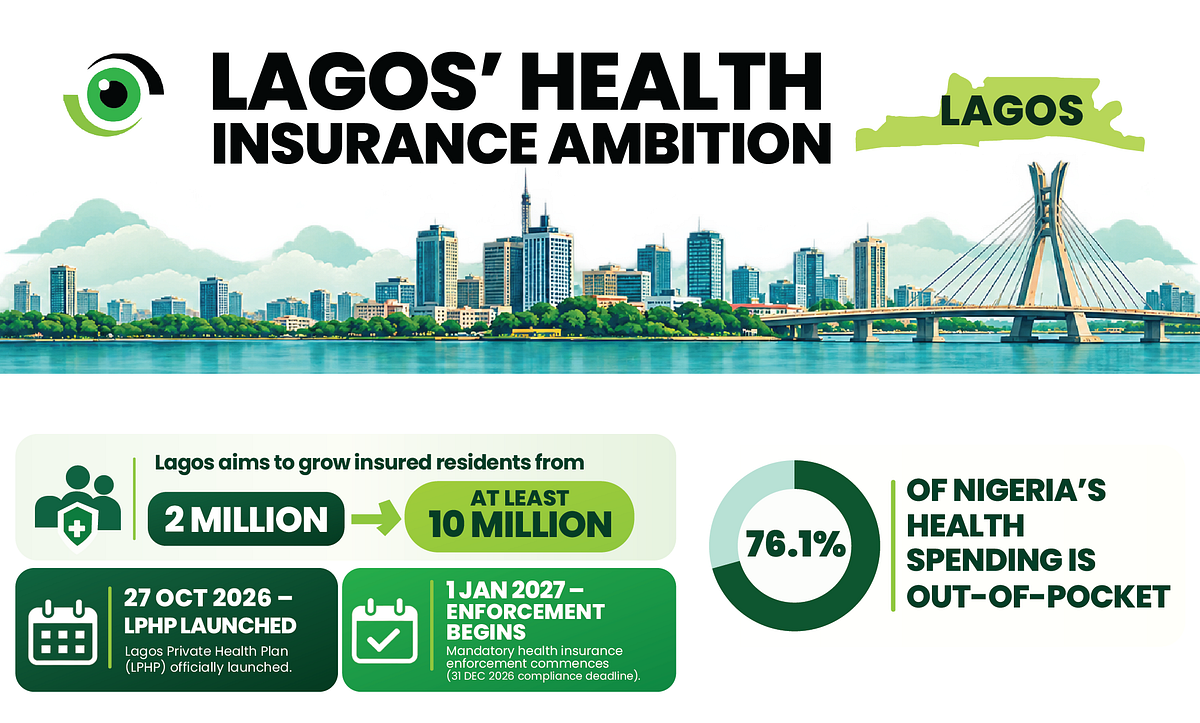
In response to this challenge, Lagos State launched the Lagos Private Health Plan Partnership (LPHP) in October 2026, alongside the commencement of enforcement of mandatory health insurance under Executive Order EO/BOS/01/2024.
The partnership is a joint initiative of the Lagos State Ministry of Health and the Lagos State Health Management Agency (LASHMA), designed to bring formal sector employers and employees, as well as private health maintenance organisations (HMOs), into the state’s health insurance framework.
What the new policy means for Lagos residents
The introduction of the LPHP and the enforcement of mandatory health insurance are closely linked, but they serve different purposes.
While the enforcement makes health insurance compulsory for Lagos residents, the LPHP provides a specific coverage option, primarily for the formal sector. It is therefore important to understand that the LPHP is not the only pathway through which residents can access health insurance in Lagos.
The LPHP offers five plan categories; Basic Minimum Package, Silver, Gold, Diamond and Platinum. Employers can select from these options for their workers, while participating HMOs administer the plans under the conditions and premiums established by the state through a designated digital enrolment pathway.
The existing Ilera Eko scheme, on the other hand, remains an important part of the state’s social health insurance arrangements. It is intended to serve populations, including informal-sector workers and vulnerable residents, as well as other groups covered by the state scheme. Together, Ilera Eko and the LPHP are intended to provide complementary pathways to health insurance, catering to different segments of the population.
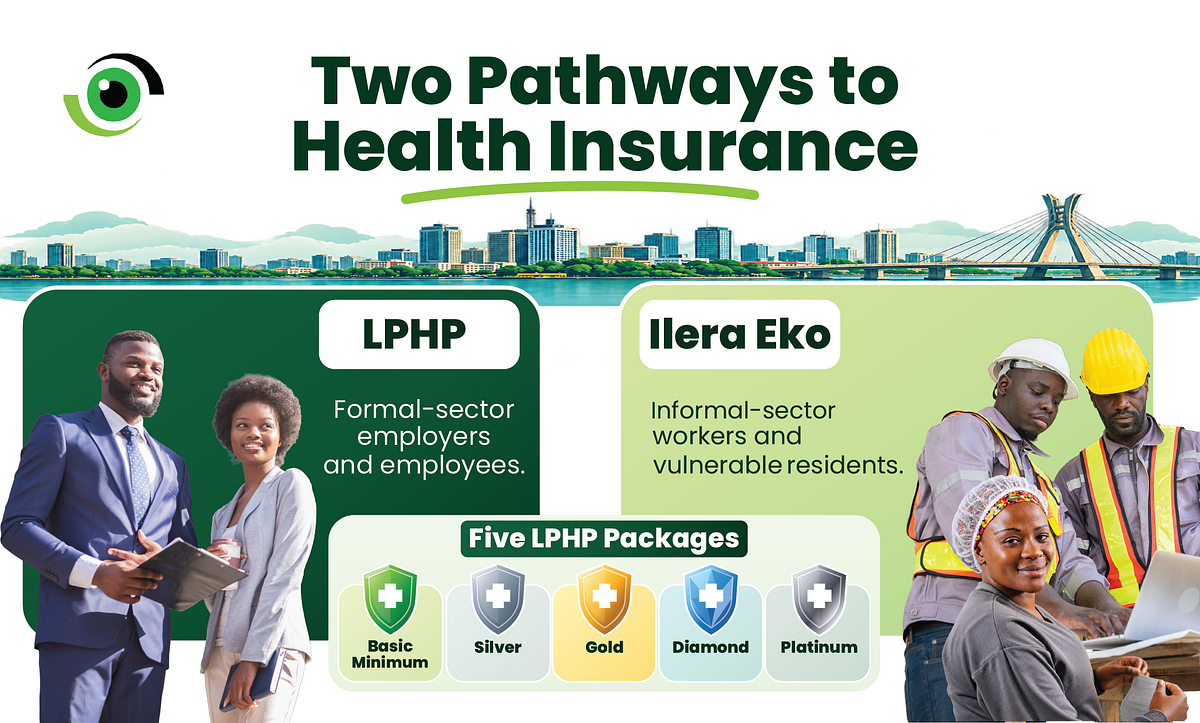
By providing coverage options for both formal and informal sector populations, the state is positioning itself to extend health insurance coverage across its population. This broader coverage framework is central to the government’s justification for enforcing mandatory health insurance. The expectation is that residents will have an accessible route to coverage before the requirement is fully implemented.
At the launch, Governor Babajide Sanwo-Olu announced a transition period running until 31 December 2026, after which the state will begin enforcing the mandatory health insurance requirement for employers and employees across Lagos. He also announced the establishment of a steering committee and an enforcement task force to coordinate the rollout, oversee implementation and support compliance with the policy. The state is targeting an increase in the number of insured residents from approximately 2 million to at least 10 million.
Can private contributions protect people who cannot pay?
One of the most significant claims made for the LPHP is that its benefits will extend beyond formal-sector employees and employers who purchase private health plans.
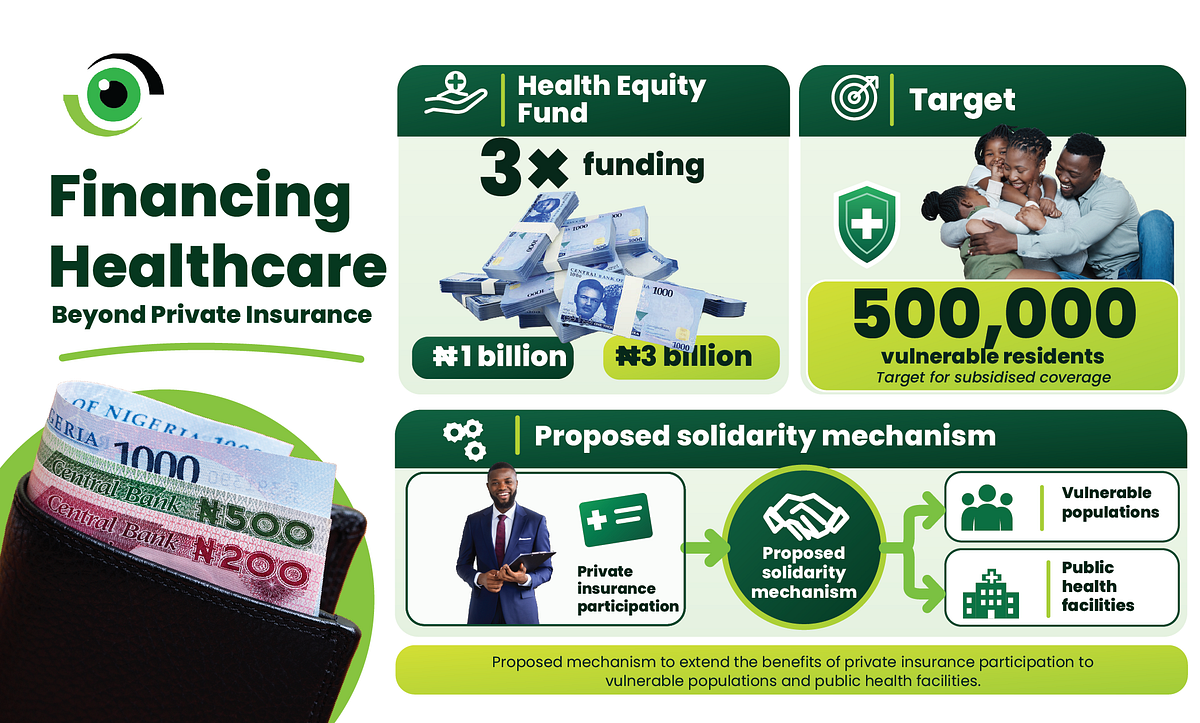
At the launch, the Commissioner for Health, Prof. Akin Abayomi, outlined a risk-equalisation and solidarity mechanism intended to channel some of the resources generated through private insurance towards broader public health priorities. As the Governor explained during his speech, “the protection purchased by those who can afford it also extends cover to vulnerable residents, strengthens public health facilities and sustains the public awareness on which enrolment depends.”
In health financing, this is the principle of cross-subsidisation; the healthy contribute towards the care of the sick, while those with greater financial means help protect those with fewer resources.
The state’s decision to increase its Health Equity Fund from ₦1 billion to ₦3 billion, with a target of supporting 500,000 vulnerable residents, provides a more tangible indication of this commitment. The fund is intended to help people who cannot afford health insurance premiums on their own access subsidised healthcare.
Increasing the fund’s allocation is an important step, but the state must demonstrate how the money will be mobilised, managed and distributed. It needs to clarify the proportion of resources expected from private-sector participation, the role of government budgetary allocations, the criteria for identifying eligible beneficiaries and the mechanisms for monitoring expenditure. Regular public reporting on contributions, enrolment, claims and beneficiaries would help establish confidence in the arrangement.
Without this transparency, the solidarity mechanism risks remaining an attractive policy ambition without sufficient evidence of its impact on the people it is intended to protect.
Affordability, regulation and the challenge of implementation
The sustainability of the LPHP will depend partly on whether employers and employees can afford to participate. This has become a concern following questions raised by the Health and Managed Care Association of Nigeria (HMCAN) and the Association of Health Insurance Practitioners of Nigeria (AHIPN) about a proposed aggregate 13% levy on private-sector health insurance arrangements.
The associations questioned the legal basis and the calculation of the proposed levy, warning that additional charges could increase employers’ insurance costs and reduce resources available for patient care. They also called for clarification of the regulatory arrangements, arguing that HMO accreditation should not be confused with approval of a specific health plan.
These concerns highlight the need for the state to clarify the proposed charges, their legal basis and how the LPHP aligns with existing regulatory requirements. Without this clarity, employers may face uncertainty about the actual cost of compliance, which could affect participation and affordability.
What other states can learn from Lagos
The LPHP initiative offers an opportunity for other Nigerian states to consider how public and private financing can work together. The principles behind the approach, such as broader insurance participation, pooled resources, regulated private-sector involvement, more predictable provider financing and protection for vulnerable populations, are relevant beyond Lagos.
However, the model cannot simply be replicated elsewhere. States differ in their revenue bases, formal employment levels, private healthcare markets and institutional capacity. A financing arrangement that relies substantially on employer participation may be more difficult to implement in states where most residents work in the informal economy. The strength of state insurance agencies, the availability of accredited providers and the capacity to subsidise vulnerable populations will also shape what is feasible.
Leave a Comment
Your email address will not be published. Required fields are marked *