
What It Takes to Turn Vaccine Research into Epidemic Readiness
Related Stories




By the time a vaccine is authorised, health authorities should already know who is most at risk and have a plan to reach them. Studies of where a disease occurs and who is most affected can help researchers design clinical trials. While those trials are underway, health authorities and their partners can draw on the same evidence to decide which communities to prioritise and which barriers to address.
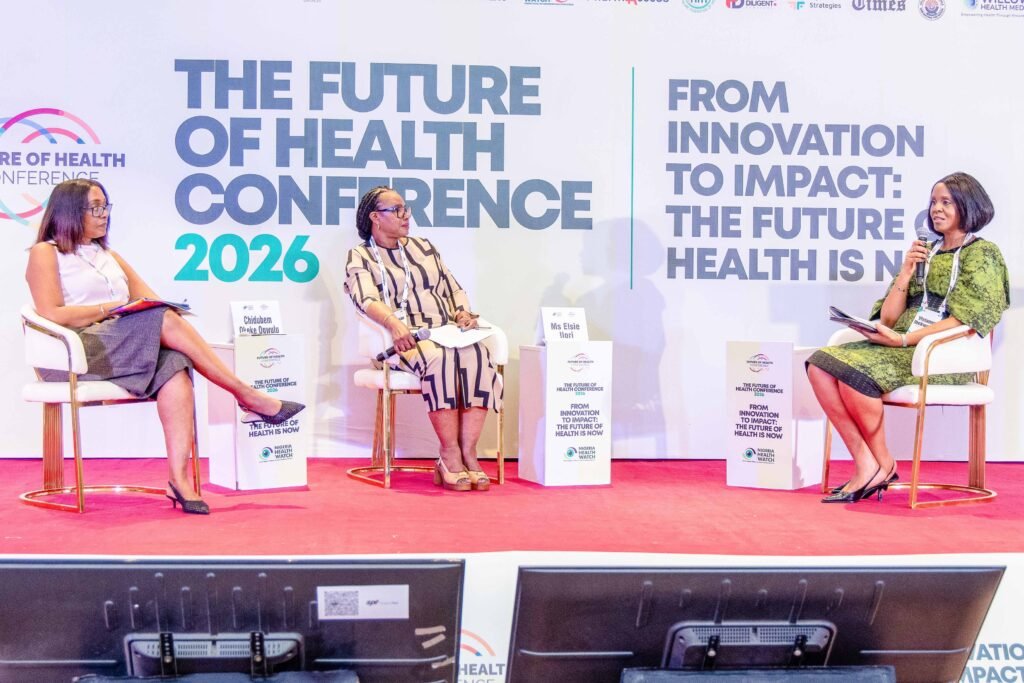
During Nigeria Health Watch’s 11th Future of Health Conference, the “Signature Conversation” convened by the Coalition for Epidemic Preparedness Innovations (CEPI) examined how scientific advances translate into public health protection. Discussions explored how CEPI’s investments and partnerships can strengthen Africa’s epidemic preparedness, and what countries need to do to ensure their populations benefit from advances in vaccine research.
Preparing before the clock starts
“Scientific innovation alone does not protect people,” said Dr Chidubem Okeke Ogwulu, Senior Manager, Resource Mobilisation at CEPI. “It takes partnership, investment, and the right capabilities to translate innovation into real public health impact.”

CEPI was established in 2017 to address gaps in vaccine development, particularly for epidemic threats where commercial incentives are limited. It brings together governments, philanthropists, scientists, vaccine developers, industry and civil society to mobilise resources, support promising science and share risks that individual partners may be unable or unwilling to carry alone.
CEPI’s 100 Days Mission aims to have safe, effective, and accessible vaccines ready for initial authorisation and manufacturing at scale within 100 days of identifying a new pandemic threat. This does not mean completing vaccination campaigns within that period. Meeting the target without compromising safety requires scientific and operational preparation before an outbreak.
“The work required to deliver a vaccine in 100 days must begin years before those 100 days start,” Ogwulu said.
Using evidence to guide preparedness
Preparation also requires understanding the diseases already affecting communities. Health facility records tell us less about people who never seek care or whose symptoms do not prompt testing. Community studies can help fill those gaps.
CEPI and its partners launched the Enable programme in 2019 to understand the burden of Lassa fever in West Africa and inform vaccine trial design. The first phase, Enable 1.0, ran from 2020 to 2024. Researchers followed participants aged two and older for 18 to 30 months in Benin, Liberia, Nigeria and Sierra Leone.
The Enable 1.0 findings, published in July 2026, showed that children aged 2–17 had nearly twice the adjusted incidence rate of symptomatic Lassa fever observed in adults aged 18 and older. That comparison used data from Benin, Liberia and Nigeria. The researchers noted that requiring participants to report fever to qualify for testing may have left some cases undetected.
Enable 1.5 began in 2024 to answer questions the first phase left open. It includes children under two so researchers can estimate the burden of Lassa fever in an age group Enable 1.0 did not enrol. It also considers symptoms other than fever when identifying suspected cases and examines how often Lassa fever and malaria occur together, building on the co-infections documented in the first phase.
At the conference, Mrs Elsie Ilori, National Coordinator for the Enable Programme in Nigeria, recalled a participant who reported tiredness as their only symptom and tested positive for Lassa virus. Her account illustrates why relying on reported fever alone can miss cases.

Community involvement helped sustain this work. Residents contributed ideas about how research activities should be organised, supporting the relationships needed to follow participants over time.
The next challenge is using the evidence. “Countries need to translate the findings into stronger national Lassa fever strategies,” Ilori said.
For public health authorities in West African countries, the findings should prompt a review of which cases routine surveillance may miss, how reported fever is used to identify suspected cases, and whether preparedness plans adequately account for children. Any change to national guidance should draw on the wider evidence, including results from Enable 1.5 as they become available.
Building the capacity to act
Understanding disease burden helps guide vaccine research; conducting that research requires capable institutions. Laboratories must process samples reliably, clinical trial teams must generate robust evidence, and regulators must assess it.
The CEPI 3.0 strategy connects three priorities: vaccine development across viral families, adaptable vaccine technologies and networks ready to respond. Knowledge of related viruses and technologies adaptable to new threats can support preparedness for Disease X, a currently unknown pathogen that could cause a future epidemic or pandemic.
“The whole system must be ready, not just vaccine development,” Ogwulu said. For African countries, this includes generating clinical evidence and contributing to vaccine development that addresses their needs. Researchers and institutions conducting Lassa vaccine trials in West Africa are already contributing to that work. Maintaining their teams and facilities can also support research on other epidemic threats.
Planning for vaccine access can begin while research is still under way. The West African Health Organisation (WAHO) leads the regional Lassa fever coalition, with support from CEPI. WAHO’s Regional Lassa End-to-End Access Roadmap gives countries and their partners a framework for planning how a vaccine could reach people at risk.
Sustaining the work between outbreaks
Keeping research teams, laboratories and trial sites ready requires funding between outbreaks. Sustained investment helps maintain the capabilities and partnerships needed to rapidly advance vaccine development and clinical trials in the event of a new outbreak.
As Ogwulu observed, “investment often follows a crisis”. Funding secured during an outbreak can support the immediate response, but training teams, equipping facilities and establishing research partnerships take time.
Country ownership includes planning how to keep trial sites operational between outbreaks. Where a research grant covers trial-site operations, the host hospital or research institute should determine the cost of retaining staff, maintaining equipment, conducting quality assurance, and keeping essential services running.
Before the grant ends, the host institution and its funding authority should agree which costs the institution can cover through its regular budget and who will fund the rest. For a public institution, that agreement should involve the ministry or level of government responsible for its budget.
Host hospitals and research institutes, with their funders, need to keep trial sites operational between outbreaks. Before a vaccine becomes available, health ministries and national immunisation programmes, working with local and regional partners, need to plan who would receive it first, how doses would be paid for and how they would reach people at risk if the vaccine is authorised.
Governments and their partners should budget for trial readiness and plan for equitable vaccine access before the next outbreak. That preparation will help countries test vaccine candidates when a threat emerges and reach people most at risk if a vaccine is authorised.
Leave a Comment
Your email address will not be published. Required fields are marked *