
One Vision, One Future: Why Africa’s Health Financing Is a Global Reset
Related Stories
Health financing has long shaped whether universal health coverage remains an ambition or becomes a reality. Across many African countries, governments are still spending far below what is needed to provide essential health services to their citizens, leaving them vulnerable to shifts in external funding and competing national priorities. This vulnerability was a result of political choices in which health was deprioritised in domestic budget negotiations, with the funding gaps filled by external donors, and national governments were never incentivised to close them.
What was once a financing risk became a financing reality in 2025. At the 78th World Health Assembly in Geneva in May 2025, a side event titled “The Future of Domestic Financing for Health is Now: Africa’s Pathway to Sustainable Health Systems” convened African health and finance leaders to discuss the growing reality of declining donor support. The timing was significant; the United States government was cutting funding to USAID, and Nigeria had sponsored a resolution adopted by the Assembly on Strengthening Health Financing globally. It urged countries to boost domestic resources for health at the very moment when the cost of not having done so had become impossible to ignore, reducing out-of-pocket spending and investing more in primary healthcare.
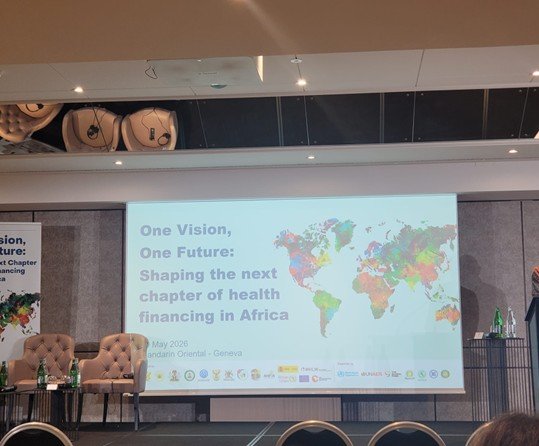
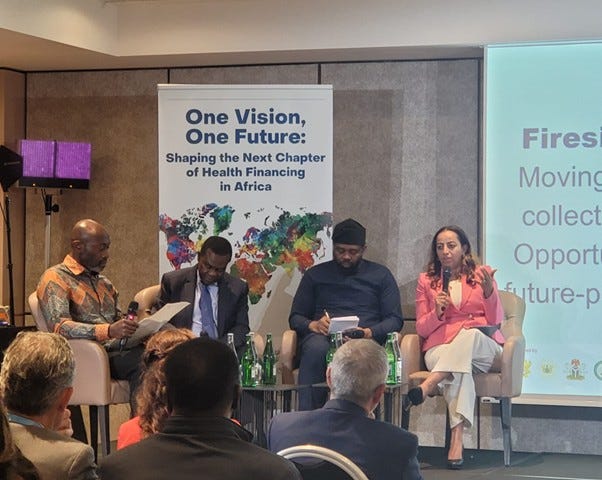
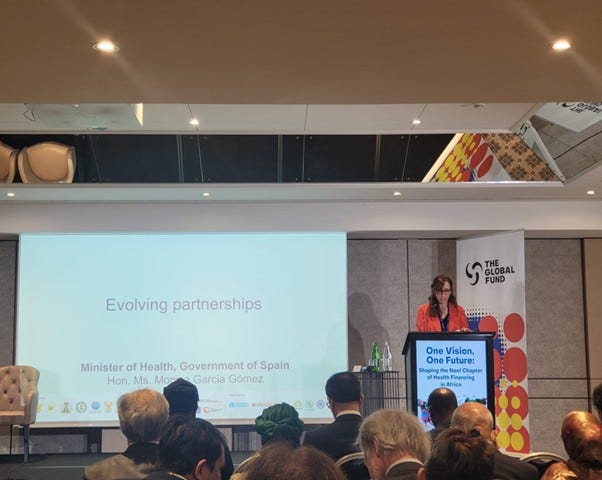
A year later, at the 79th World Health Assembly, a high-level side event titled “One Vision, One Future: Shaping the Next Chapter of Health Financing in Africa” was co-hosted by the governments of Uganda, Nigeria, Ethiopia, South Africa, Ghana, Spain, and Japan, in addition to the African Union, the EU Commission, Afro Champions, and the Alliance for Health Financing in Africa, with support from World Health Organization (WHO), UNAIDS, and the Global Fund. The session aimed to advance delivery on both the Accra Reset and the African Union’s Africa Leadership Meeting (ALM) Declaration.
When the global health system is being reshaped
To open the discussions, Dr Donald Kaberuka, African Union High Representative, put it to the delegates that “this is not a cyclical downturn or the consequences of a single election in one country. It reflects deeper political and economic currents in high-income countries.”Kaberuka described two competing narratives in circulation, the apocalypse reading, where the contraction of external financing signals irreversible collapse, and the cliff reading, which acknowledges the danger but frames it as a structural transition rather than sudden collapse.
He insisted this moment was always coming, partly because the architecture that built Africa’s health gains was never designed for long-term country ownership. His verdict was, this is a cliff, not an apocalypse, and the distinction matters for how Africa responds. This is a sentiment he echoed during the 2025 side event, where he warned against ‘analysis paralysis’ and emphasised that funding cuts were becoming inevitable.
Kaberuka’s framing was a direct challenge to the global health architecture itself, the constellation of multilateral institutions, vertical disease programmes, and bilateral aid flows assembled over the past quarter century. The WHO’s own document on reform of the global health architecture and the UN80 Initiative, which went before the Assembly, calls for a joint process to transform that architecture into a country-led, coherent, and inclusive ecosystem. The side event, in many ways, showed what this change looks like on the ground.Peter Sands, Executive Director of the Global Fund, reinforced the importance of innovations like Lenacapavir that offer the promise of turning HIV from a growing burden to a declining one, making the transition to domestic financing meaningfully more achievable. Nigeria is one of the first nine countries to receive the treatment, as a direct result of the kind of health system strengthening that Ohiri described.
Ethiopia: Investing before the cliff arrives
When asked whether Ethiopia was facing an apocalypse or a cliff, Minister of Health, Ethiopia, Dr Mekdes Daba, outlined a reform agenda that was being carried out in Ethiopia. She described a strategy built across five areas: health care financing strengthening, health workforce reform, domestic resource mobilisation, local production, and increasing data visibility through digitalisation. “Whenever we talk about health, we don’t just position it as social expenditure…
We have to ensure that investment in health is an investment in social economics. It’s economics for the whole country”.
On financing, her government introduced co-financing compacts including a one-to-one government match for maternal and reproductive health investments, mobilising close to $300 million over three years. Community-based health insurance now covers 69 million Ethiopians, close to half the population.
Dr Mekdes equally outlined that data is foundational to everything else. Without domestically owned data systems, health ministers cannot make the investment case to finance ministers. She described building that case early and consistently, tying health budget arguments to economic returns on employment, the pharmaceutical sector and gender outcomes. Ethiopia’s public health system employs nearly half a million workers, of whom nearly 70 per cent are women. That, she argued, is an economic argument and not just a social one.
Nigeria: Financing shocks and the push for structural change
Dr Kelechi Ohiri, Director General of the National Health Insurance Authority (NHIA) in Nigeria, mentioned that when the financing cliff arrived in 2025, Nigeria mobilised approximately $200 million to address immediate gaps. But the data disruption that followed revealed structural vulnerabilities that went beyond funding. Ohiri stated that when USAID support was suspended, health information systems in several countries effectively went dark, exposing how much of the data infrastructure had been built and owned by external actors.
Nigeria’s response went well beyond plugging holes. A national health financing dialogue brought together the Ministry of Finance, legislators, civil society, and the private sector. The Nigerian Senate has officially passed the Basic Health Care Provision Fund (BHCPF) Amendment Bill, increasing the BHCPF from 1% to 2% of the Consolidated Revenue Fund. Emergency obstetric care was made free and reimbursed nationwide by the NHIA, including in the country’s far north. Health insurance is now mandatory. The Global Fund is piloting the integration of HIV and TB treatment financing through the national insurance architecture in five states, with a national rollout planned. “You can’t wait until the progressive realisation of universal coverage before you address certain critical health issues,” Ohiri stated.
Peter Sands, Executive Director of the Global Fund, reinforced the importance of innovations like Lenacapavir that offer the promise of turning HIV from a growing burden to a declining one, making the transition to domestic financing meaningfully more achievable. Nigeria is one of the first nine countries to receive the treatment, as a direct result of the kind of health system strengthening that Ohiri described.
Spain and Japan: Donors making clear their role
The session featured open reflections from donor country representatives. Spain’s Minister of Health, Hon. Monica Garcia Gomez, was direct about what the current moment demands from partners. She acknowledged that aid has sometimes created parallel structures that weakened national systems rather than strengthening them. Spain, she said, supports a properly funded WHO at the centre of global health governance, less fragmentation, and financing that is predictable, flexible, and aligned with national plans. “Partner countries must accompany, not replace. Support, not direct”
Dr Satoshi Ezoe, Senior Assistant Minister of Global Health, Ministry of Health, Labour and Welfare of Japan, offered Japan’s own trajectory as evidence that universal health coverage is not a reward for economic success but a precondition for it. Japan achieved UHC in 1961, before its economic boom. The UHC Knowledge Hub, developed jointly with the World Bank and WHO, is designed to share that experience with African and Asian countries, engaging both health and finance ministers in building the domestic financing case from evidence.
Both interventions reflected a deeper shift that the WTO’s Dr Bright Okogu clearly set out. If the global health architecture has for decades been shaped by donor priorities, then health sovereignty requires African countries not only mobilising more resources domestically, but also claiming a seat at the table where the rules of trade and intellectual property are written.
Redesigning the global health architecture
The questions that organised the side event converged on a single conclusion. The global health architecture must change, and Africa must help write the new chapter. The WHO’s proposal for a joint task force on Global Health Architecture (GHA) reform, with its four phases and a final report due at the 80th Health Assembly in 2027, provides the multilateral mechanism. The Accra Reset, the ALM Declaration, and Nigeria’s national health financing dialogue provide the country-level delivery infrastructure. What brings them together is a simple point Kaberuka made at the end of his remarks, “A well-designed reform that is poorly implemented will not save lives. Donor-funded systems that are not anchored in national institutions will not outlast the funding.”
Leave a Comment
Your email address will not be published. Required fields are marked *